What You Bought
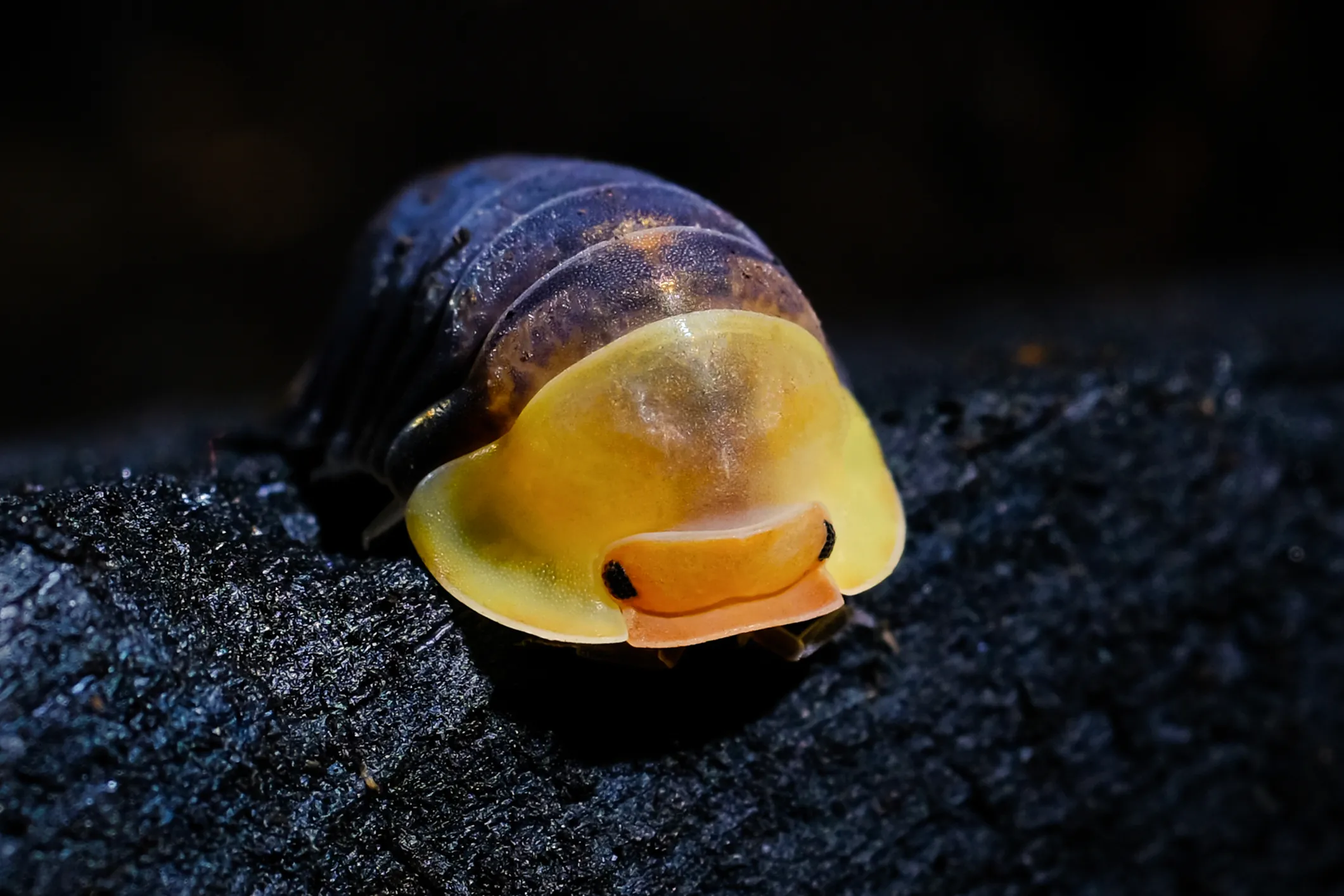
Ardentiella are the isopods that don’t act like isopods. Most of the hobby’s prized species — the Cubaris cave morphs especially — are nocturnal burrowers you’ll glimpse a few times a month. Ardentiella are active in daylight, out on the surface, and climbing — which is most of the reason a colony costs what it does. You’re buying an isopod you actually get to watch.
The genus comes from the humid forests of Vietnam, southern China, and Laos. Every morph in the hobby — Pastel, Black Hole, Red Ember Bees, and the rest — is an undescribed population, which is why the correct name is Ardentiella sp. followed by the morph name in quotes. Nobody has formally described these animals yet. Any listing giving one a full species name is making it up.
The genus name comes from the Latin ardens — “burning” — for the fire-streaked coloration that runs through the group. It fits.
Merulanella or Ardentiella?
Both names refer to the same animals, and you’ll see both for years yet. Here’s what happened.
Until 2025, the hobby sold all of these as Merulanella. A taxonomic reassessment that March (Kästle & Regalado Fernández, in Natural History Collections and Museomics) examined the historical specimens and found the old genus had been holding animals that didn’t belong together. Merulanella proper was restricted to three species from New Caledonia — none of them hobby animals — and the Southeast Asian species everyone actually keeps were moved to a new genus: Ardentiella.
So: every “Merulanella” morph you’ve seen for sale is an Ardentiella now. Many shops still use the old name in listings and URLs a year and a half later. Neither name will confuse an experienced seller, but Ardentiella is correct, and it’s the name this guide uses.
The Three Morphs
We work with three Ardentiella lines. Care is identical across them — the differences are looks, price, and how forgiving they are of a new keeper.
| Morph | Looks | Notes |
|---|---|---|
| Pastel | Cream shading into pale orange and pink — soft, almost painted tones that vary between broods | No two broods color up quite the same |
| Black Hole | Deep, velvety black; the color intensifies with each molt | Often written “Blackhole” — same animal |
| Red Ember Bees | Black base streaked in red and orange, with little to none of the standard Ember Bee’s yellow | A selected red line of the Ember Bee morph — same care, deeper color, higher price |
On that last one: “Ember Bee” and “Red Ember Bees” are related but not interchangeable. The standard Ember Bee carries bold yellow-orange striping and is widely considered the most forgiving animal in the genus. The Red line has been selected away from yellow toward saturated red-on-black, and it trades at a serious premium for it. Nothing about its husbandry differs — you’re paying for the color, not a different animal.
What to Expect, Week by Week
Week 1 — settling. Even a day-active genus hides after shipping. Leave the colony alone: no digging, no rearranging, no daily lid-lifting. Moisture, food, and darkness on one side of the enclosure do more for a stressed colony than checking on it does.
Weeks 2–4 — surface activity. This is where Ardentiella diverge from every Cubaris you’ve kept. You should start seeing animals out in daylight — grazing on litter, climbing the cork, working the walls. If the colony is established and you never see anyone by week four, something about the setup is off — usually ventilation. See troubleshooting.
First broods — months, not weeks. These are slow, deliberate breeders. Working from the most detailed published breeding data in the genus (PostPods, the UK breeder), colonies reach breeding maturity at roughly 8–12 months, produce broods of 30–60 juveniles every 4–8 months, and take 12–18 months to become genuinely self-sustaining. An established colony may also produce several broods and then pause for months. A pause is not a crash — see troubleshooting before assuming the worst.
If a listing implies an Ardentiella culture will be booming by spring, it’s selling optimism. The slow timeline is exactly why started colonies cost what they do.
Where to Keep It
Temperature: 66–79°F, and the cooler end is the safe end. Room temperature in an air-conditioned house is ideal. Published seller guidance genuinely splits here — several UK and EU shops run these warmer, into the low 80s — but the sources with the deepest genus experience hold the line at about 79°F and warn that sustained heat above ~81°F causes stress, stalled breeding, and die-offs, while the cool end merely slows things down. Heat kills faster than cool ever will, so we err cool. No heat mat. A sealed container in a warm room is already closer to overheating than to chilling.
Humidity: 60–75%, built as a gradient. Dampen one end of the substrate, leave the other merely moist, and let the animals choose. If you keep our other isopods, note the number: Ardentiella run drier than the swampy end of Cubaris care. A uniformly soaked enclosure is one of the two fastest ways to kill this genus.
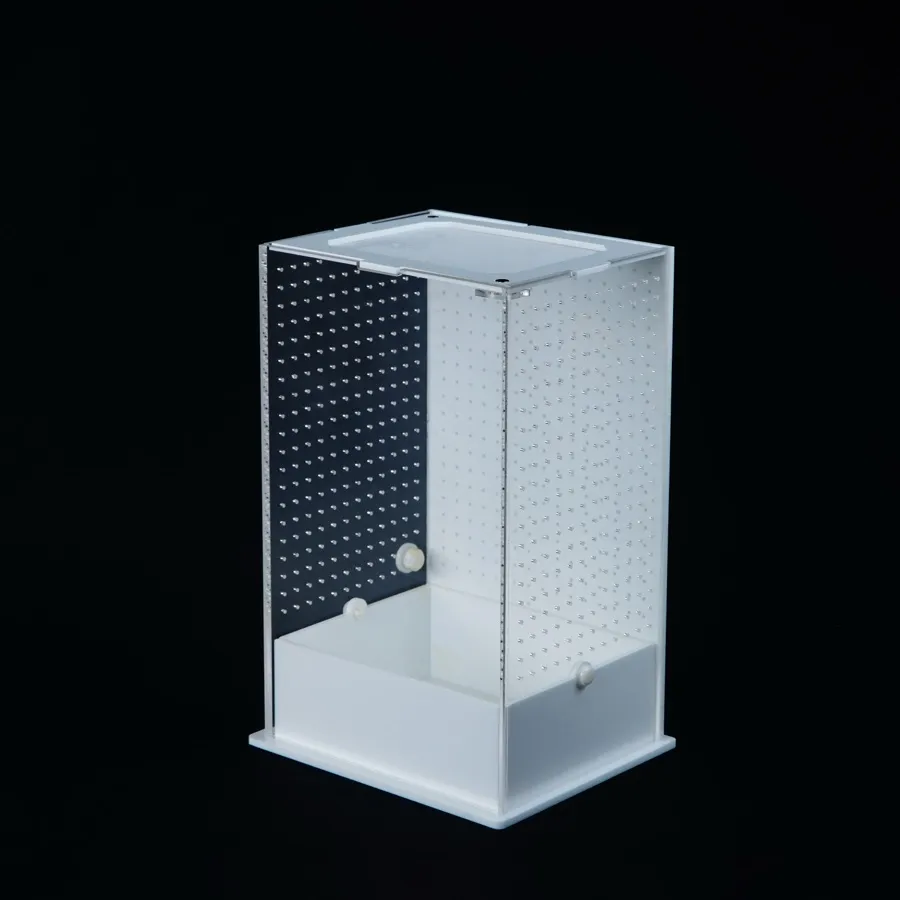
Ventilation is the whole game. The defining challenge of Ardentiella care is holding real humidity and real airflow at the same time. Every credible source lands on the same requirement: cross-ventilation — fine mesh on two opposing sides of the enclosure, not a few lid holes — so air moves across the substrate without the box drying out. Stagnant humid air is the other fastest way to kill this genus: it breeds mold and bacterial film, and colonies quietly decline in it.
One more thing the genus does that most isopods don’t: climb. Smooth plastic and glass do not stop them, and juveniles fit through gaps that look sealed. The lid needs to close properly, and any ventilation mesh needs to be genuinely fine.
Substrate and Climbing Space
The floor of the enclosure follows the standard tropical-isopod recipe; the difference is what you build above it.
- Base, 2–3 inches: organic topsoil cut with coconut fiber, patches of sphagnum moss, and a generous amount of white-rotted hardwood — soft, pale, crumbling wood. This is food as much as structure.
- Surface: a real layer of hardwood leaf litter — oak, beech, magnolia. Litter is the staple diet, not decoration.
- Vertical: cork bark slabs, branches, bark tubes — leaned and stacked. A surface-active, climbing genus uses the vertical space, and it’s where you’ll see them. An Ardentiella enclosure with nothing to climb is half empty.
- Calcium, permanently available: cuttlebone, crushed oyster shell, or limestone. They build a calcium-carbonate shell and molt to grow; without a calcium source you get failed molts and stalled colonies.
Feeding
Leaf litter and rotting wood do the everyday work. Supplement lightly:
- Soft vegetables — squash, zucchini, carrot, sweet potato — a small piece once or twice a week
- Protein, rotated and small — dried shrimp, a pinch of fish flake — once or twice a week
- Remove anything uneaten within 24 hours. In a humid, ventilated box, leftover protein is a mold farm.
One diet claim worth knowing about: PostPods — who have published more on this genus than anyone — consider lichen close to non-negotiable, reporting that colonies without it “look okay but never truly thrive.” No other source we’ve reviewed goes that far, so treat it as one experienced breeder’s strong opinion rather than settled fact. Dried lichen on bark is cheap and the colonies do graze it, so we offer it and suggest you do too — just don’t panic if you can’t source it this week.
Troubleshooting
Why are my Ardentiella dying off?
The two killers, in order: stagnant air (box too sealed — mold film, sour substrate, deaths without obvious cause) and wrong moisture at the extremes (uniformly soaked, or bone dry after the mist schedule slipped). Fix the airflow first — mesh on two opposing sides — then rebuild the moisture gradient. Sustained heat above ~81°F is the third killer, and it’s a hard one to walk back once a colony is stressed.
They’ve stopped breeding. Is the colony done?
Probably not. Established colonies produce in pulses — several broods, then a quiet stretch that can run past three months. Check the fundamentals (calcium present, litter deep, gradient intact, temperature under 80°F), then wait. Constant digging around to check is itself a common reason colonies stall.
Why won’t the colony start breeding at all?
Usually one of: not enough animals, not enough time, or not enough size. Start with 10–15 animals — a slow-breeding genus punishes small groups, because a bad sex ratio in a group of five can mean no pairs at all. Then give it the full timeline: 8–12 months to maturity is normal.
I found one outside the enclosure.
They climb glass, and mancae fit through fine gaps. Check the lid seal and the mesh gauge. This is prevention-only — escape-proofing after the escape is the standard Ardentiella rite of passage.
There’s mold on the substrate.
Small white patches on new wood are normal and usually get grazed. Spreading fuzz on the substrate surface means airflow is losing to moisture — increase ventilation, pull any uneaten food, and let the wet end dry down a notch.
Frequently Asked Questions
Is it Merulanella or Ardentiella?
Ardentiella, since the March 2025 reassessment split the Southeast Asian hobby species into their own genus. “Merulanella” listings are the same animals under the old name. See the naming section above.
How many should I start with?
10–15. Five is the absolute floor, and small groups gamble on sex ratio in a genus that breeds too slowly to recover from a bad draw.
Are they beginner isopods?
No — but not because the day-to-day is hard. The care is specific (gradient + real cross-ventilation) and the breeding is slow, so mistakes cost months instead of weeks. A keeper who has run a springtail culture or a hardy isopod colony first will find them very manageable. If you want the most forgiving entry into the genus, that’s the standard Ember Bee line.
What’s the difference between Ember Bee and Red Ember Bees?
Same morph family, same care. The Red line is selectively bred away from the standard yellow striping toward deep red-on-black, and it commands a premium for the color. Some sellers call the strongest examples “Super Red.”
Can I keep them with other isopods, or in a reptile vivarium?
One isopod species per enclosure — always, and for Ardentiella specifically the answer is a harder no. They’re an escape-capable, climate-specific display animal, not a cleanup crew: a reptile vivarium runs the wrong temperatures, and an un-escape-proofed tank won’t hold them. Keep them in their own dedicated, ventilated enclosure and give the vivarium job to springtails.
Do they bite? Are they safe to handle?
No isopod can break human skin. Handle them rarely anyway — a climbing, surface-active animal is easy to drop, and colony stress adds up.
How long do they live?
Honest answer: nobody has published an Ardentiella lifespan figure yet — the genus is too new to the hobby. Comparable slow tropical isopods run a few years. As our colonies age we’ll publish what we actually observe.
What to Order Next
An Ardentiella colony is a display centerpiece, not a workhorse — so the supporting cast matters. A springtail culture handles mold inside the enclosure without competing with the colony, and our general isopod guide covers the substrate, calcium, and gradient fundamentals shared by every species we keep.