Feeder care guide.
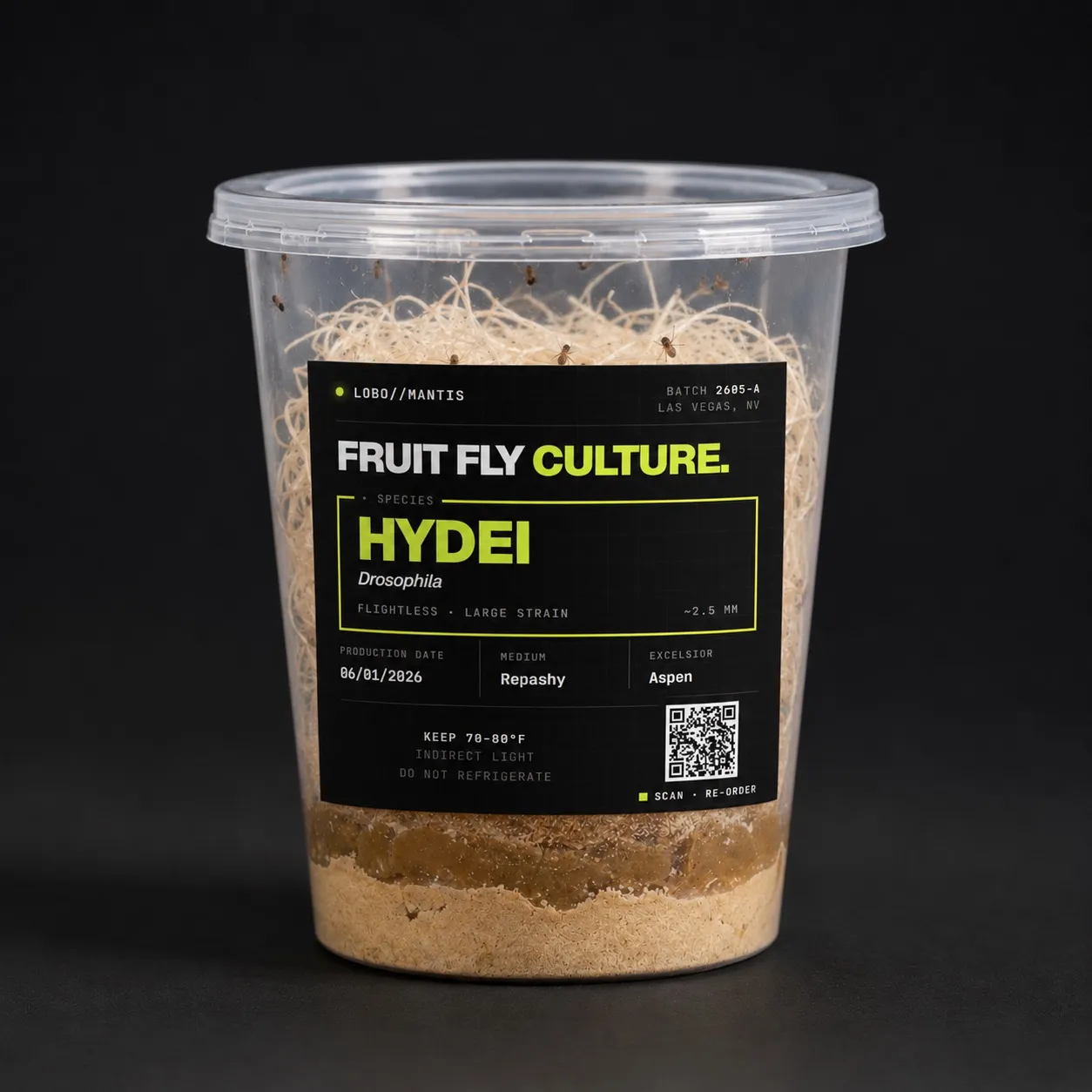
Fruit fly cultures, spikes, and which feeder fits which animal. Bred and shipped from Las Vegas.
Match the feeder to the mouth.
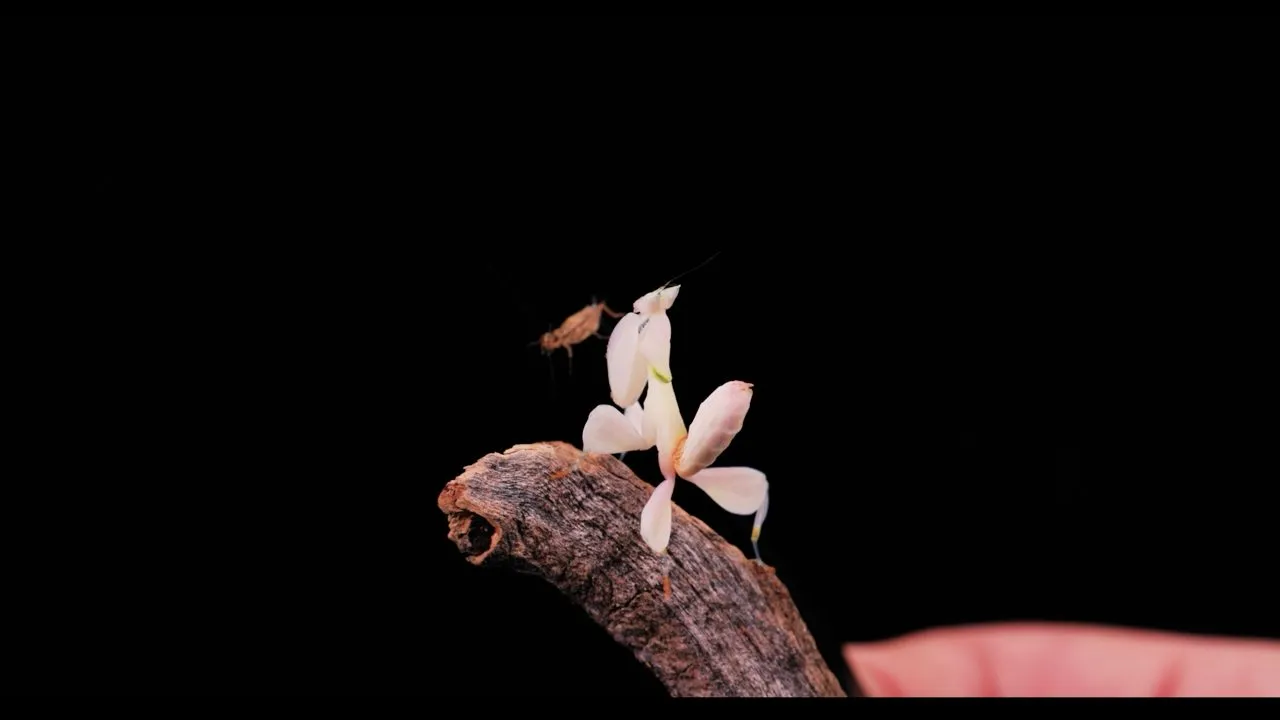
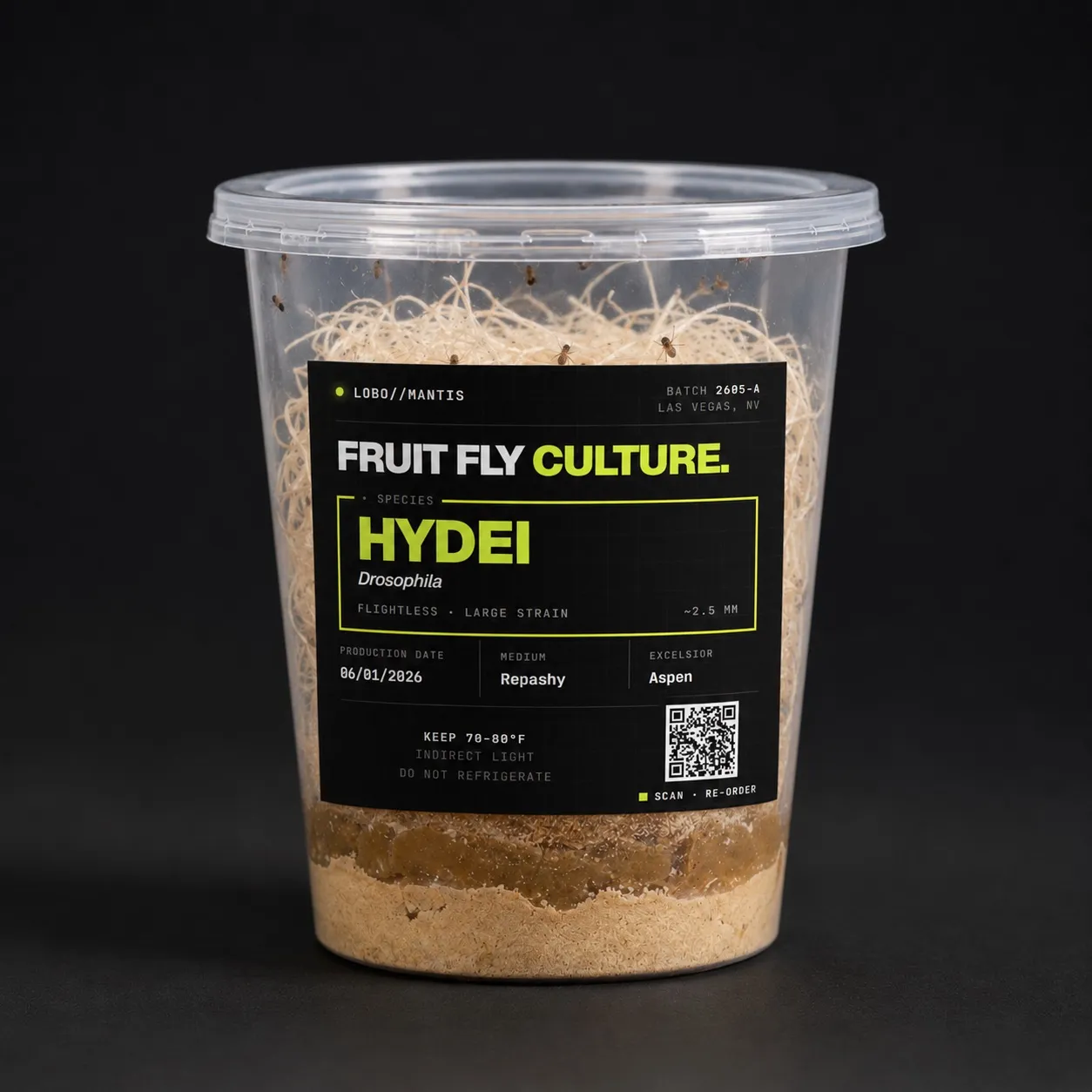
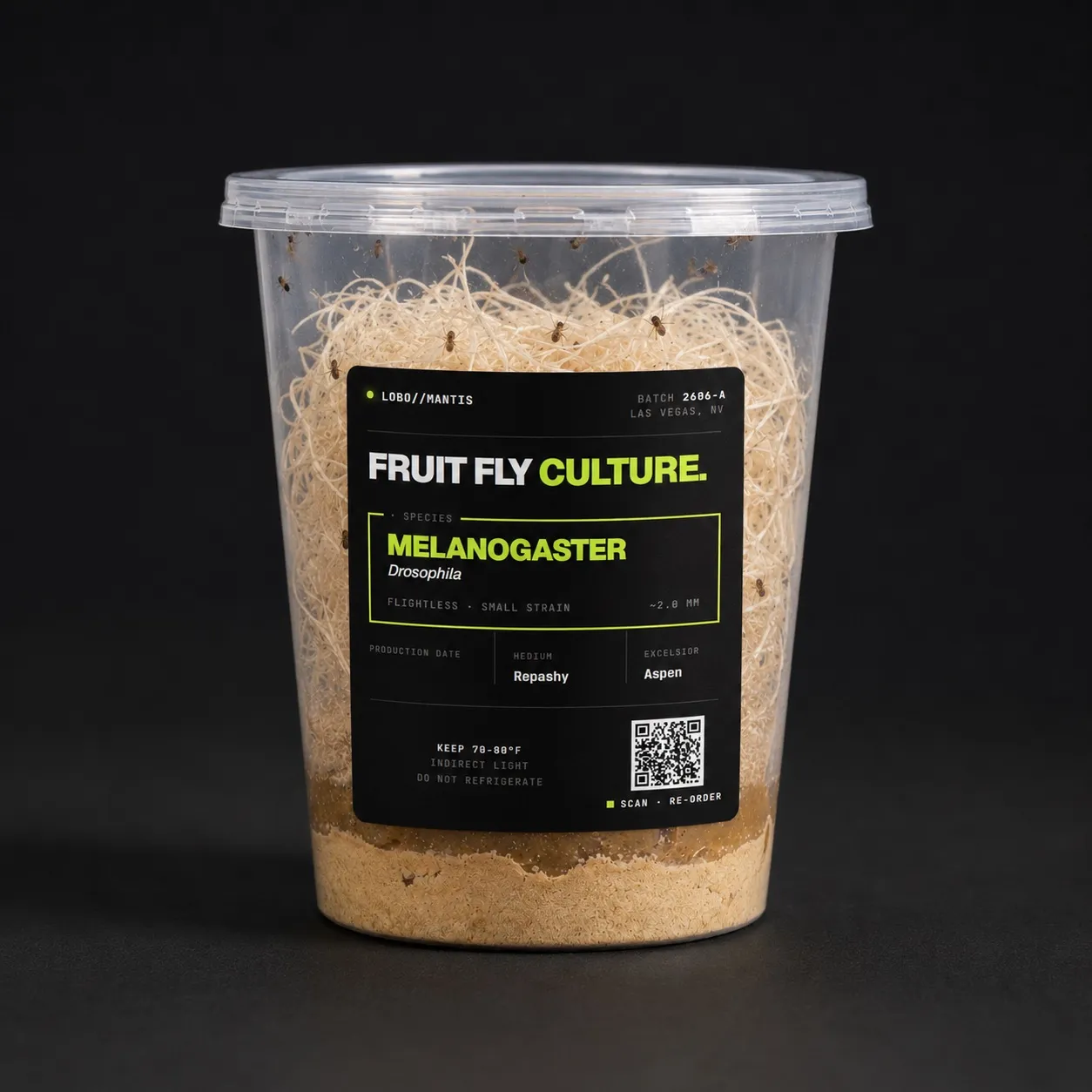
Prey should be no more than a third of the animal's body length. Smaller is always fine; too big gets ignored, or worse, fights back. A fresh L1 mantis wants melanogaster. By L3 it can handle hydei. Once it is taking bottle flies, a fruit fly is a snack, not a meal.
Keep two cultures going at all times, started a couple of weeks apart. A culture peaks, then fades, and a crash never announces itself. When the first one slows down, the second is already producing, and you seed a third from it. One culture is a countdown. Two is a supply.
| ANIMAL | FEEDER | NOTES |
|---|---|---|
| L1–L2 mantis nymphs | D. melanogaster | Flightless, about 2 mm. Keep a few in the cup at all times. |
| L3–L5 mantis nymphs | D. hydei | Bigger fly, about 3 mm. Four to six per feeding. |
| L6 to adult mantis | Blue bottle / green bottle spikes | Let the spikes hatch into flies first. Green bottle is the smaller fly, blue bottle the larger. |
| Jumping spiders & dart frogs | D. melanogaster, then D. hydei | Start on melanogaster and move up to hydei as the animal grows. |
Every feeder guide.

Post the photo.
Someone's seen
it before.
The Discord exists for exactly this. Whatever the issue is, take a clear photo, tag the channel, and someone with more experience will respond.
- ·Which feeder (melanogaster, hydei, spikes)
- ·Culture age
- ·Temperature where it sits
- ·Media brand or recipe
- ·Any mites or mold visible
- ·Clear photo of the culture