

What You Bought
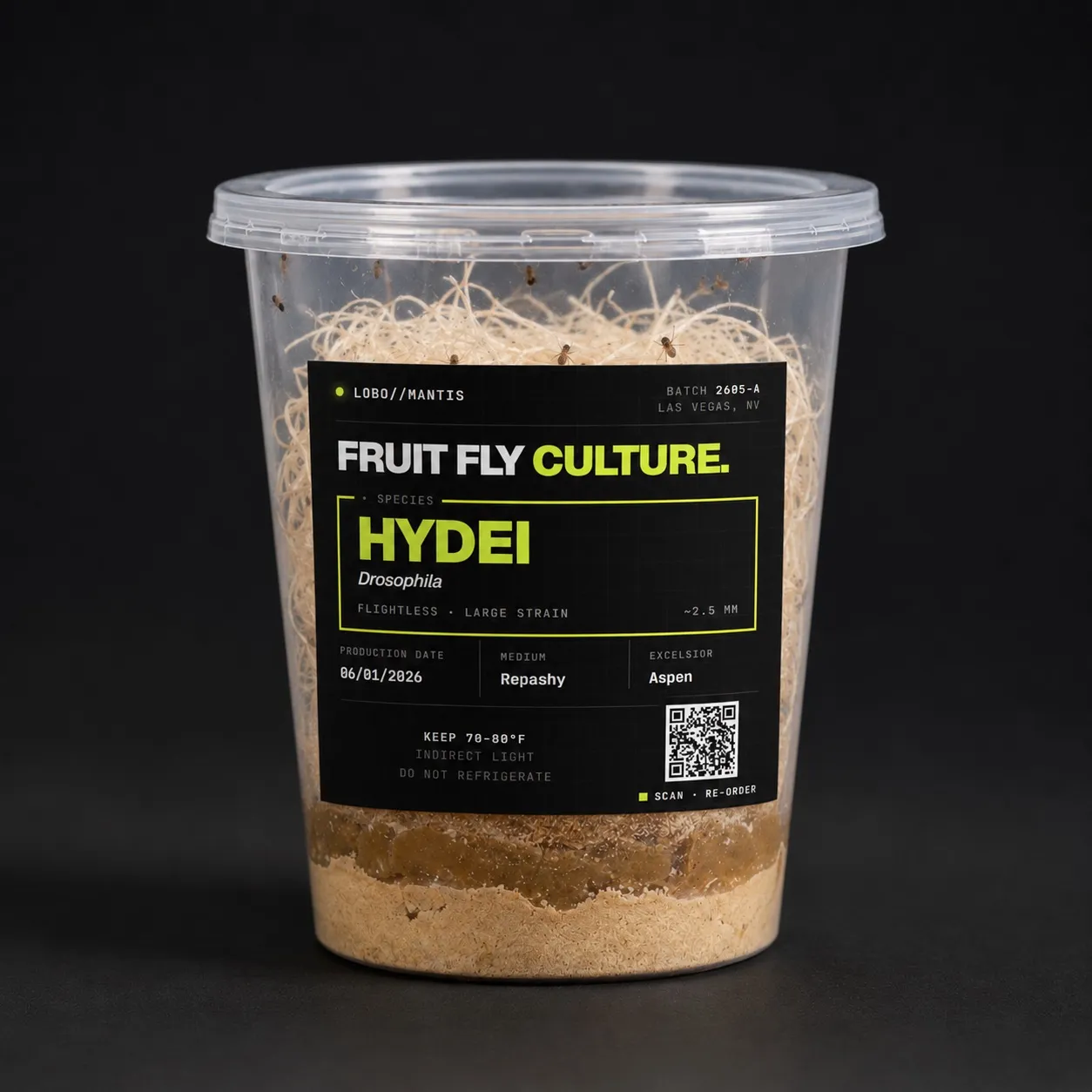
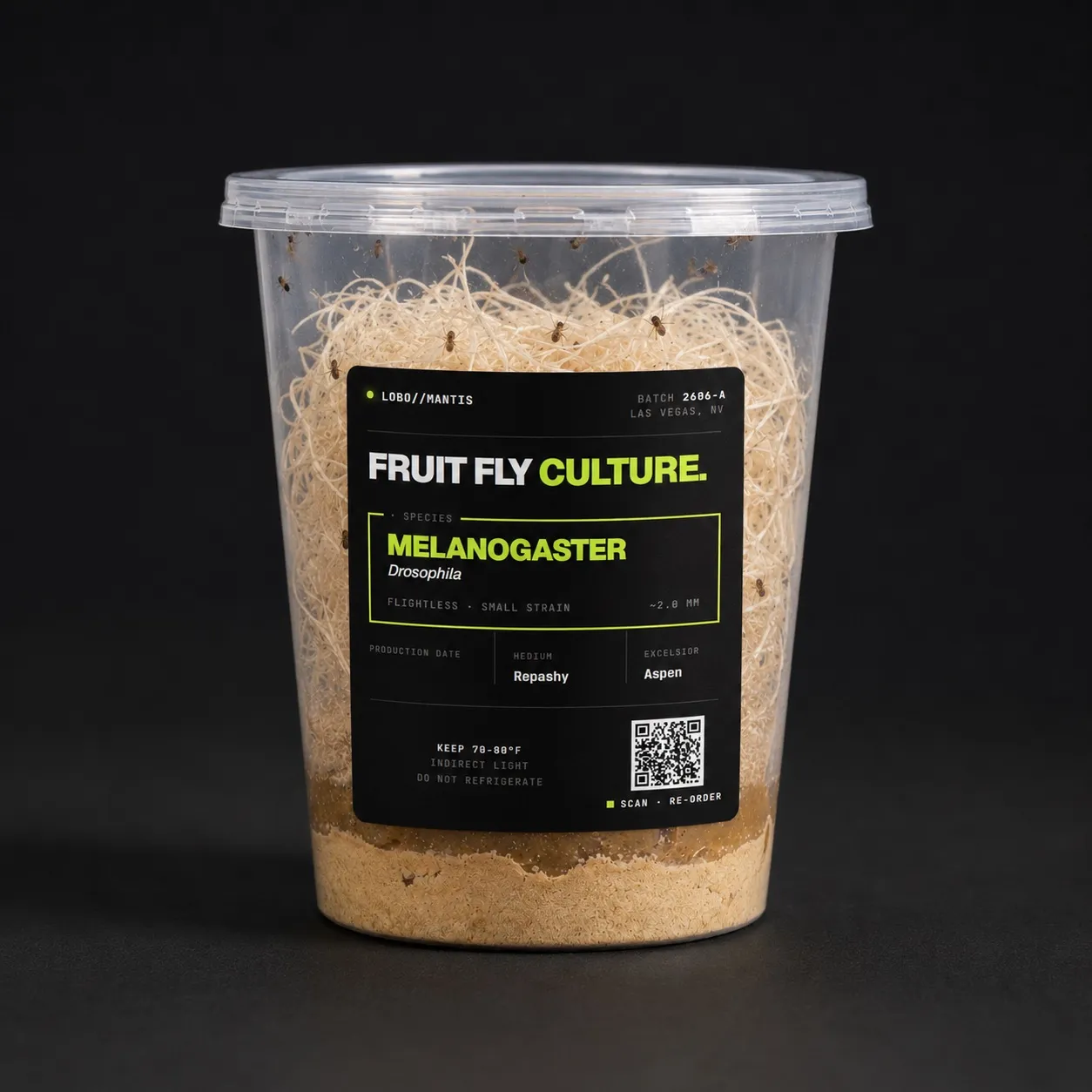
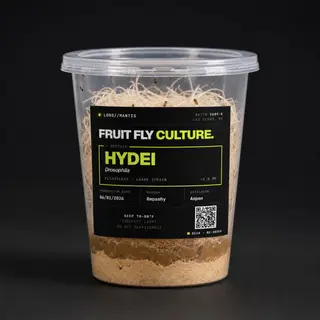
A fruit fly culture is a 32 oz vented cup containing three things: a layer of nutrient media (the brown mush at the bottom), an excelsior cup-filler that the flies climb on, and a starter population of a few dozen laying adults on media that is already seeded with eggs, so the adult count on day one matters less than for a split you start yourself (seed those with 40–100). Within the first week, those adults will lay hundreds more eggs in the media. Larvae hatch, eat their way through the food layer, pupate on the cup walls or the excelsior, and emerge as the next generation. That second wave is what you’ll be harvesting from for the next three to four weeks.
You’re not buying flies. You’re buying a self-replicating insect colony in a cup. Treat it that way and one culture will outproduce a tub of store-bought feeders many times over.
What to Expect, Day By Day
Two species, two clocks. The days below are for melanogaster, the faster of the two. Hydei runs roughly a week behind at every stage: larvae from day 8–12, first new adults around day 19–25 rather than day 14, and the whole culture stays productive correspondingly longer. If you bought hydei, add about a week to everything here. Getting this wrong is the most common reason a keeper thinks a healthy hydei culture has failed.
Day 0: Arrival. Cup is sealed with a vented lid. Adults are visible on the excelsior and on the cup walls. The media looks wet and uniform.
Days 1–4: Egg laying. Adults mate, females lay eggs in the media. Activity in the cup peaks. You can feed from these flies but don’t go overboard. You want them laying.
Days 5–10: Larval stage. The media surface starts to look churned-up, almost like the cup has been “stirred.” That’s hundreds of larvae burrowing. You’ll see white maggot-looking grubs near the top of the media. The adult population starts to die off naturally. This is normal.
Days 11–13: Pupation. Brown pupal cases appear on the cup walls and on the excelsior. Adult numbers are at their lowest. The cup looks dead. It’s not dead. This is the quiet phase. (If it genuinely stopped, see why a fruit fly culture stops producing.)
Days 14–20: Emergence (hydei: ~19–25). New adults emerge by the hundreds. You’ll see them on every surface inside the cup. This is your peak harvest window.
If you’re on day 16 of a hydei culture looking at an empty-seeming cup, nothing is wrong. It hasn’t started yet.
Days 21–27: Second harvest. The new generation is laying eggs of its own. You can sometimes get a partial third wave from this generation if conditions are good, but yields drop.
Day 30–40: Decline. Media exhausts and production tails off. Melanogaster is usually finished around day 30–35; hydei commonly runs past day 40. Don’t bin a culture on a date. Bin it when it stops producing, or when one of the signs below shows up. Start the replacement well before this, though: see the splitting section.
Where to Keep It
Fruit fly cultures want what most cool rooms in your house already have:
- Temperature: 70–80°F. Production slows sharply below ~65°F and effectively stops near 60°F; above 80 accelerates it but also accelerates mite outbreaks and contamination. Room temperature is fine. Don’t put cultures on top of a fridge (warm + vibration), in a garage (temperature swings), or next to a heating vent.
- Light: indirect. Fruit flies don’t need a light cycle. Direct sunlight will overheat the cup. A bookshelf, closet, or counter that gets ambient room light is perfect.
- Humidity: mostly hands-off. The cup has its own microclimate and the vented lid handles gas exchange, so you don’t mist a culture. The one exception is a very dry climate, where the media can dry out. See Daily Maintenance below.
- Ventilation: don’t block the lid. The fine poly-fabric vent lid is what keeps the cup from suffocating its own population. It breathes freely while blocking flying contaminants like fungus gnats and phorid flies, and keeps your adults in. It does not stop grain mites, though. Those arrive in contaminated media, on reused cups, or from adjacent infested cultures, not through the air, so mite prevention is about clean media and isolation (see Troubleshooting). Don’t stack anything on top of the lid.
- Orientation: upright. Always. Tipping a culture on its side mixes media into the excelsior and kills the colony.
A wire rack or open shelf in a temperature-stable room is the ideal setup. Stacking is fine as long as you don’t block any vents.
Daily Maintenance
For the first three weeks: none. Look at it once a day to confirm nothing is wrong (see troubleshooting). That’s it.
You don’t feed a culture. You don’t mist it. You don’t open it except to harvest. The less you handle a healthy culture, the better it produces.
The one exception: dry media. In an arid climate (Las Vegas, where these ship from, is one) the media can dry out and crack instead of staying moist. On a culture under about three weeks old, if the surface looks dry and cracked rather than like wet oatmeal, trickle about a teaspoon of dechlorinated tap or distilled water down the inside wall of the cup: just enough to restore the moisture, never enough to pool. Soggy media drowns the larvae, so when in doubt, add less. Dry, cracked media pulling away from the sides on a culture past four weeks is end-of-life. Replace it rather than rehydrate it.
Harvesting Flies for Feeding
There are two harvesting methods. Use whichever fits your enclosure and animal.
Method 1: Tap-and-pour. Hold the culture upright. Sharply rap the bottom against your palm (or a tabletop covered with a towel) two or three times. This knocks adult flies off the excelsior and onto the side of the cup, away from the media. Quickly invert over the open enclosure and tap again. The flies fall out. Close the lid before too many escape. This method is fast and works for any cup-style enclosure.
Method 2: Stick-walk. Insert a perch (a chopstick, a cork bark sliver, a wood skewer) into the culture. Wait 10 seconds. Adult flies climb onto it. Lift the stick out, transfer to the enclosure, gently shake off into the prey area. This method gives precise dosing and is best for sensitive animals or small nymphs where 50 flies dropping in at once would be excessive.
How many to give: depends entirely on the predator and its life stage. Our praying mantis feeding guide breaks down portions stage by stage. A single L3 mantis nymph wants 4–6 hydei dropped near it every 2 days. An adult dart frog will eat 30–50 in a sitting and want more the next day. Watch the animal. Flies are cheap, but a fly graveyard in the enclosure means uneaten prey is fouling the substrate.
Best harvest window: mornings, before the cup warms up. Flies are sluggish and easier to handle when cool. They get much more active once the cup hits 75°F.
Hydei vs. Melanogaster: Which to Buy
Both species are flightless captive-bred variants. The flies you receive cannot fly even if a few have wings. They’re a genetic flightless strain. The difference is size and yield:
Drosophila melanogaster:
- Adult size: ~2 mm
- Generation time: ~14 days
- Yield per culture: roughly 400–700 flies/week at peak, depending on temperature and starter density
- Best for: L1–L2 mantis nymphs (fine at L3 if you offer more), jumping spider slings, small dart frog froglets, springtail-sized predators
Drosophila hydei:
- Adult size: ~3 mm (about half again as big as melanogaster)
- Generation time: ~21 days
- Yield per culture: roughly 300–500 flies/week at peak, depending on temperature and starter density
- Best for: L3 through L4 mantis nymphs (longer for small species), sub-adult dart frogs, juvenile chameleons, adult jumping spiders, mature spiderlings
For most mantis keepers, hydei is the workhorse. Melanogaster is what you reach for during the L1–L2 window when nymphs are too small to subdue a hydei, exactly the stage you’re in with delicate beginner species like the ghost mantis or orchid mantis. Many keepers run one culture of each at all times so they always have the right size on hand. If you’re still choosing your first mantis, our best beginner mantis guide walks through the easiest species to feed and raise.
Making a New Culture (Splitting)
A culture peaks around day 14 and starts declining by day 28. If you want a continuous supply of flies, you need to start a new culture on day 14–17 so it’s hitting its peak right as the old one fails.
You need:
- A clean 32 oz cup with a vented lid
- About 1/2 cup of fresh culture media (we ship on Repashy SuperFly; any premix from a feeder supplier works for splits, or use the DIY recipe below)
- A handful of excelsior or coffee-filter strips for climbing surface
- Starter flies from your existing culture (40–100 adults; hydei wants the top of that range)
Steps:
- Mix media with hot water per the package instructions until it has the consistency of wet oatmeal. Hot water hydrates the starch properly and reduces contamination. Let it settle and cool before adding flies.
- Pour into the bottom of the clean cup. About 3/4 inch deep is right.
- Sprinkle a small pinch of dry baker’s yeast on top of the media. The yeast jumpstarts microbial activity that the larvae will feed on.
- Drop in the excelsior on top of the media.
- Tap 40–100 adult flies from your existing culture into the new cup. Err high, especially with hydei. The first flies to emerge skew heavily one sex, so a small starter group can end up with too few females to seed properly.
- Seal with the vented lid. Label with the date.
- Place on your culture shelf. Don’t disturb for 5 days.
In about two weeks, the new culture will be producing. Repeat this process every 2–3 weeks and you’ll never run out.
DIY media recipe (if you want to skip buying premix):
- 1 cup instant mashed potato flakes
- 1/2 cup powdered milk or brewer’s yeast: don’t skip this
- 1/4 cup sugar
- 1/2 teaspoon methylparaben (mold inhibitor, available from chemistry suppliers)
- 1 cup hot water
- A pinch of baker’s yeast
The powdered milk or brewer’s yeast is the part people leave out, and it’s the part the larvae actually grow on. Potato flakes are starch and sugar: bulk and energy, but not protein. A recipe without a protein fraction gives you thin cultures and poor yields, and it’s the usual reason a homemade mix underperforms the shop premix.
Use hot water, not cold. It hydrates the starch properly and knocks back contamination going in. Dissolve the methylparaben in a little of it first (or buy it predissolved) so it distributes evenly. Sprinkling dry powder in leaves untreated spots where mold takes hold. Then mix until just hydrated. Drier media is better than soupy.
Troubleshooting
My culture isn’t producing any new flies.
Most likely causes, in order:
- Too cold. Production slows sharply below ~65°F and effectively stops near 60°F. Move the culture to a warmer spot and give it a week.
- Too few starter flies. Seed with 40–100 adults (hydei at the top of that range). Fewer than ~25 is a gamble; 15–20 is a last-ditch rescue, not a plan.
- Bad media. Old or improperly mixed media doesn’t support larvae. If the surface looks dry, cracked, or moldy on day 5, the media is the culprit.
- You opened it too often. Every open is a temperature/humidity shock and an escape risk. Resist the urge to check progress.
The culture has tiny brown specks crawling on it. Mites?
Yes. Grain mites are the most common culture killer. They get in through contaminated media, through reused cups that weren’t sterilized, or from neighboring infested cultures.
Light mites on a spent cup are normal. Retire it. Mites on a young cup: move 15–20 clean adults to fresh media immediately (a last-ditch rescue, not a plan) and bin the original. The clean cup will start a fresh, mite-free colony.
To prevent mites going forward:
- Use new cups, not reused ones (or sterilize reused ones in boiling water and dry completely).
- Store media dry and sealed.
- Keep cultures on a dedicated shelf, not next to bird seed, dog food, or any grain product.
- Retire a culture once production drops: usually 4–5 weeks (melanogaster) or about 6 (hydei); mites move in on spent media.
There’s white mold growing on the media surface.
A light fuzz on fresh media in the first few days usually burns off as the colony establishes; light mold on a spent late-cycle cup is harmless. Spreading, persistent mold at any age means the media was too wet or had no inhibitor (methylparaben). Start over.
Flies are escaping when I open the cup.
A few escapes are inevitable. To minimize:
- Harvest when the cup is cool (mornings work best).
- Tap-and-pour over the enclosure with the enclosure lid immediately ready to close.
- Keep a small dish of apple cider vinegar nearby in the room. Escapees congregate there and you can dispose of them.
If you’re losing huge numbers of flies on every harvest, your flies are likely a leaky strain (rare, but happens with low-quality cultures). The next culture you buy should be from a different source.
My culture smells bad.
Healthy cultures smell faintly yeasty/sweet. Strong sour, ammonia, or rotting smells mean contamination: usually bacterial. The colony is probably dying. Transfer 15–20 surviving adults into a clean cup with new media to salvage the genetic line.
The flies look smaller/weaker than what I got.
Generation drift is real but slow. After 3–4 generations of in-house culturing, you may notice a slight drop in size and vigor. The fix is to buy a fresh culture from a breeder once or twice a year as a “starter refresh.” This injects new genetics and bumps the colony back to factory specs.
When to Throw a Culture Out
- No new adults emerging and the media is spent: around day 30–35 for melanogaster, day 40 or later for hydei
- Visible mite infestation past the rescue point (whole cup crawling)
- Strong rotting smell
- The excelsior is sitting in liquid (media has broken down completely)
Dispose by sealing the cup in a plastic bag and freezing for 24 hours before throwing in the trash. This kills any remaining flies and prevents an outdoor escape.
What to Order Next
Once you’ve kept fruit fly cultures running for a few months, you’ll start to anticipate the rhythm: order ahead, split before peak, throw out before mites. It becomes routine.
For more help across the full mantis-keeping workflow, see:
- Praying Mantis Feeding Guide: what to feed at every life stage
- Molting Guide: how to recognize molts and avoid the mistakes that cause failed ones
- Shipping & Arrival: what to do when your live shipment lands
- Getting Started: overall mantis keeping basics
- Isopod Care: display colonies for a bioactive enclosure
- Springtail Culture Care: mould control, and why they are not feeders
Frequently Asked Questions
How long does a fruit fly culture last?
About 3–4 weeks of harvestable flies; melanogaster is done around day 30–35, hydei often runs to day 40 or beyond. Peak yield runs days 14–21, tapering by day 28. After that, the media is exhausted and yields drop sharply. If you want a continuous supply, start a new culture from the existing one around day 14.
Can a fruit fly culture sit on the shelf at room temperature?
Yes. Room temperature (70–80°F) is exactly what they want. No special equipment needed. Avoid direct sunlight, heating vents, and the tops of appliances.
Should I add water to my fruit fly culture?
Usually no. The vented cup holds its own moisture. But in a dry climate the media can dry out and crack. On a culture under about three weeks old, if it looks dry rather than like wet oatmeal, trickle about a teaspoon of dechlorinated tap or distilled water down the side of the cup. Never make it soggy. Wet media drowns the larvae. On a culture past four weeks, dry cracked media is spent. Replace it.
Do flightless fruit flies bite or carry disease?
No. Flightless Drosophila don’t bite humans, don’t sting, and don’t carry any human-relevant pathogens. They’re a food source, not a pest insect. Some people are mildly allergic to large concentrations of fly debris (skins, wings). If you handle many cultures daily, work in a ventilated area.
Why are my fruit flies still flying?
Almost always: the culture is too warm. Flightless strains still grow wings (they’re clearly visible, just not functional) and above about 80°F a meaningful share of the flies develop working ones anyway. Move the culture somewhere cooler and the next generation goes back to normal. That’s the whole fix, and it’s free.
“Flightless” also doesn’t mean wingless, so seeing wings on your flies is not itself a sign of anything. Genuine strain degradation over many generations does happen, but it’s far down the list. Check the temperature first before you buy a replacement culture you probably don’t need.
Can I feed wild fruit flies to my mantis?
Don’t. Wild fruit flies may carry pesticide residue, parasites, or pathogens picked up from rotting fruit outdoors. Always use captive-bred culture flies for feeding insect pets.
What’s the difference between melanogaster and hydei flies for feeding?
Melanogaster is smaller (~2 mm) and faster-reproducing: best for very small predators like L1–L2 mantis nymphs and jumping spider slings. Hydei is larger (~3 mm, about half again as big) and slower-reproducing: best for L3–L4 mantis nymphs, dart frogs, and any predator that finds melanogaster too small to be worth chasing. Most keepers run both.
How many fruit flies do I get from one culture?
A healthy hydei culture produces roughly 300–500 flies per week at peak (days 14–21, tapering by day 28). A melanogaster culture produces roughly 400–700 per week. Yields depend heavily on temperature and starter density. Total over the productive life of the culture: 1,500–2,500 flies depending on species and conditions.
Can I refrigerate a fruit fly culture to slow it down?
Only briefly. A quick 10–15 minutes in the fridge will slow and stun the adults so they’re easier to harvest. Don’t refrigerate a culture you intend to keep producing. Sustained cold stresses or kills the adults and chill-damages the developing larvae and pupae, which hurts future yield. And never freeze a culture you want to keep.
Do I need to keep the culture in the dark?
No. Indirect ambient room light is fine. Direct sunlight will overheat the cup. A bookshelf, closet, or counter works equally well.
When should I order a new culture from LOBO//MANTIS?
If you’re not splitting your own cultures: order a new one every 2–3 weeks so the new one peaks as the old one declines. If you split your own cultures: order a fresh “starter” once or twice a year to refresh the genetics and keep yields high.