

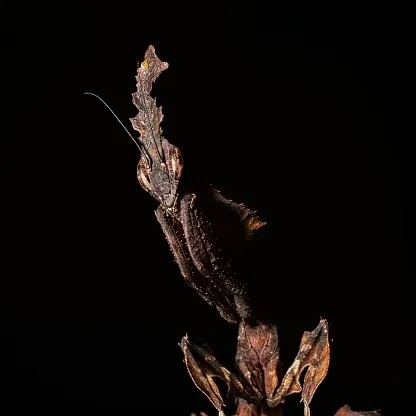
If you’re looking to buy a Ghost Mantis, you’ve already done the smartest thing a new keeper can do: pick the species that actually wants to cooperate. Phyllocrania paradoxa is the benchmark. Room-temperature tolerant. Humidity-forgiving. Communal-capable. Long-lived. And wrapped in some of the most absurd camouflage evolution has ever produced, a full-body dead-leaf costume complete with a forked head crest and tattered-wing lobes on every limb.
This is not a fragile display piece that dies if your space heater cycles off at 2 AM. This is a hardy, captive-bred praying mantis that thrives in the same conditions you live in. If you want a Ghost Mantis for sale from a breeder who hatches them here in Las Vegas and ships them overnight with a live arrival guarantee, you’re in the right place.
Why Buy a Ghost Mantis
The Ghost Mantis is our easiest species overall, one we’d hand to someone who’s never kept an invertebrate and say “you’ll be fine.” Here’s why.
Communal housing actually works, as nymphs. Most mantis species will cheerfully eat their siblings by the third instar. Ghosts are one of the few exceptions. Keep flies constantly available and space adequate, and a group of similar-size Ghost nymphs will coexist from L3 up to sub-adult. Separate them around L5; adults live alone. That means you can run a group grow-out enclosure, which looks incredible and makes this species unmatched for classrooms, science fairs, and bioactive setups. First mantis? Start with one, communal is an experienced-keeper setup.
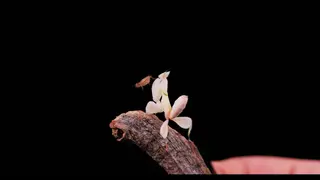
The camouflage is unreal. We’re not talking about “greenish and sits on a leaf.” We’re talking about an animal that looks like a crumpled piece of dead foliage blowing in the wind. They sway when they walk. The head crest, the flattened femoral lobes, the mottled brown-to-green coloration, it all adds up to one of the most convincing mimicry jobs in the insect world. Guests will stare at your enclosure for a full minute before they realize they’re looking at a living animal.
Forgiving husbandry. 70-80 degrees Fahrenheit. 60-70% humidity. That’s it. No misting six times a day, no heat gear in a normal home (only if nights drop under 68°F). Ghosts handle normal household fluctuation without skipping a beat.
Long lifespan for a mantis. Total lifespan runs 8–12 months for males, 12–18 for females, well over a year for a well-kept female. That’s real time with your animal, enough to watch them through multiple molts, develop feeding routines, and actually bond with the experience of keeping them.
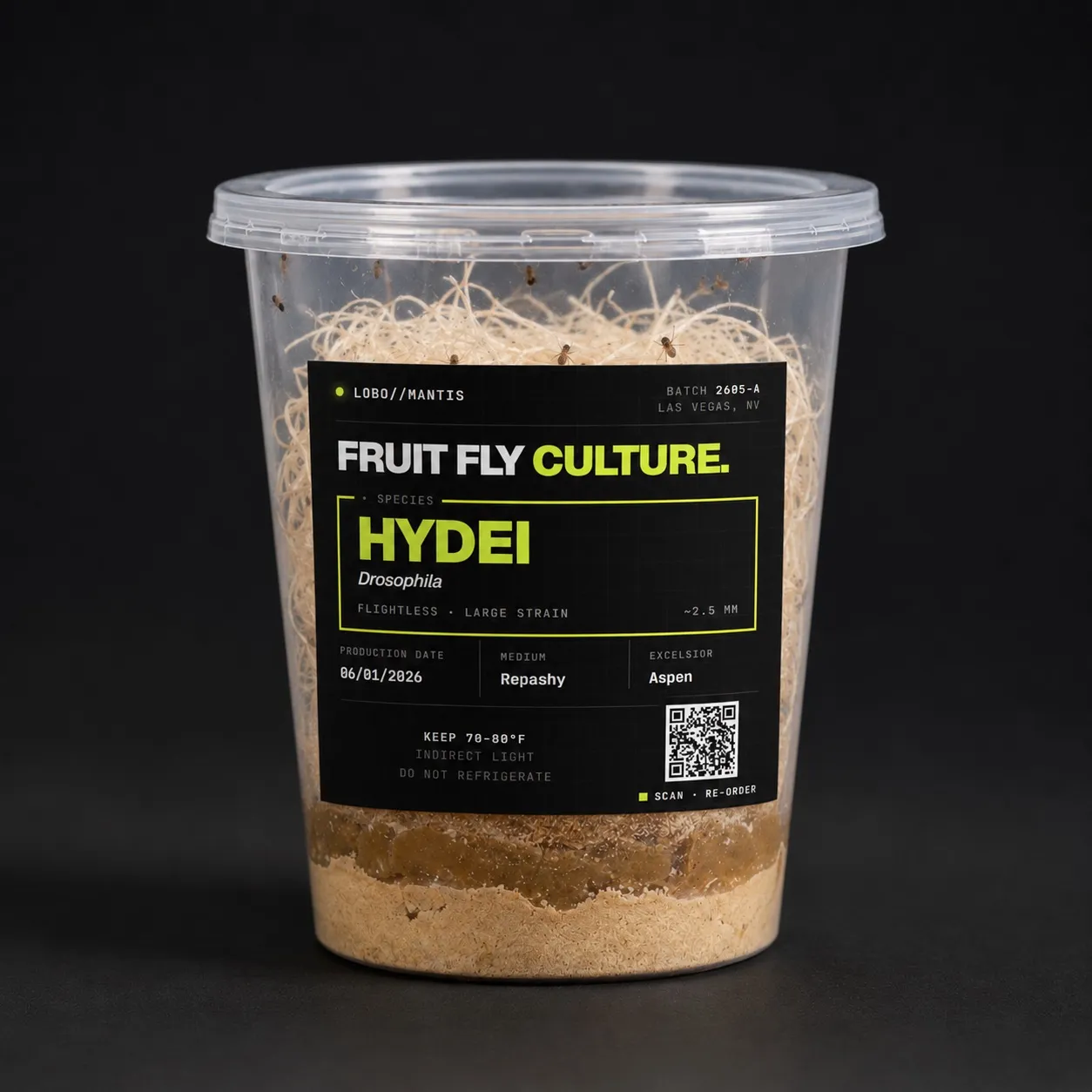
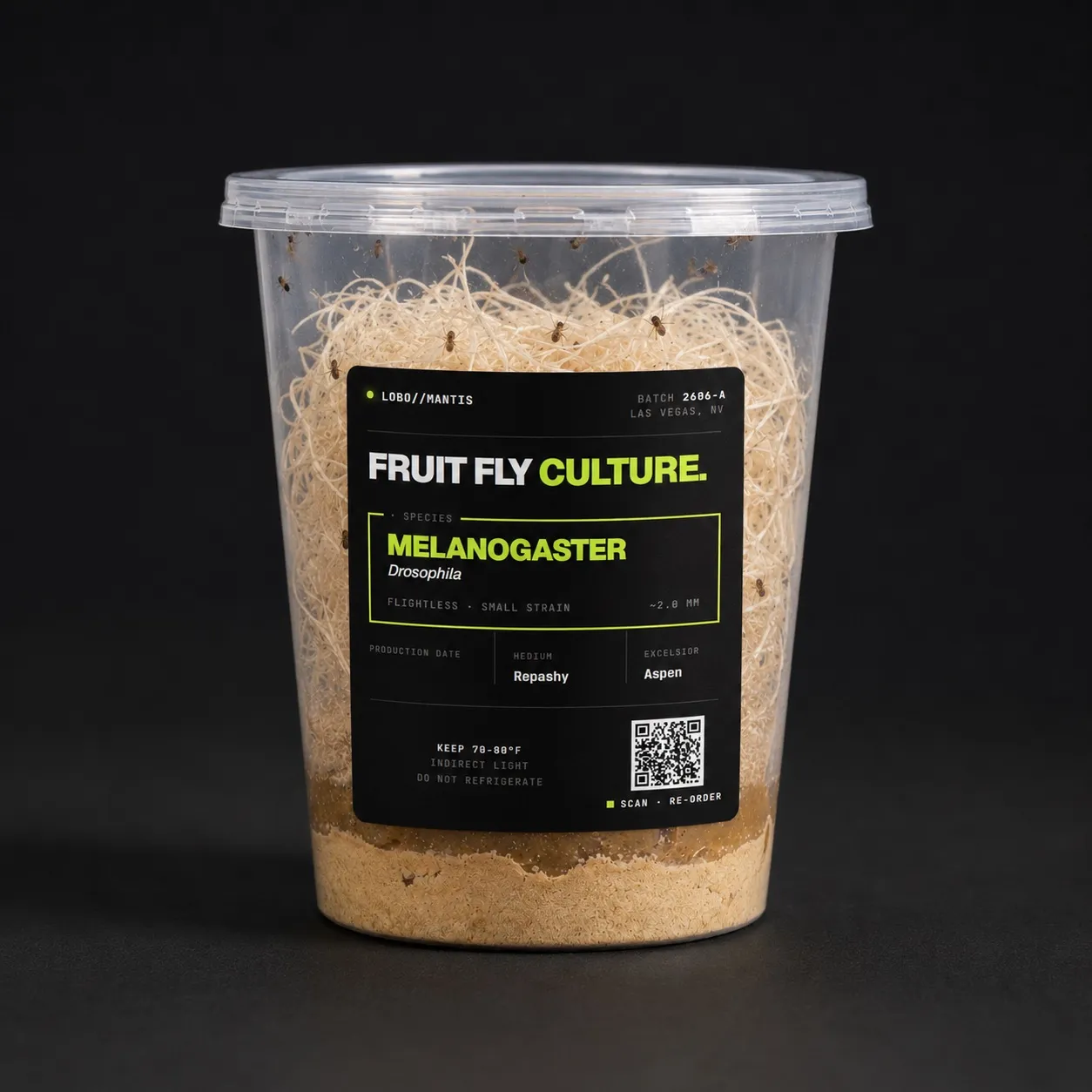
Diet is simple. Fruit flies for young nymphs, houseflies and bottle flies as they grow. They prefer flying prey (they’re ambush hunters that strike upward), but they’re not picky about species. No special gut-loading required.
What You’ll Receive
Every Ghost Mantis for sale from LOBO//MANTIS is captive-bred in our facility in Las Vegas, Nevada. We do not import, and we do not middleman from other breeders.
You’ll receive a healthy, established nymph, past the fragile hatchling stage and already feeding on its own. Exact stage varies with each hatch. Each nymph is individually housed in a ventilated deli cup with a small piece of cork bark or fake foliage for grip during transit.
Your package includes:
- One (or more, if you’re buying a communal group) live Ghost Mantis nymph
- Insulated shipping container, with a free heat pack added automatically when your forecast low is 40°F or lower, or a free ice pack when your forecast high is above 85°F
- Printed quick-start care card with QR link to our full Ghost Mantis care guide
- Live arrival guarantee (details below under Shipping)
Nymphs ship unsexed. We don’t offer sexed animals or adults, you raise yours from a nymph.
Pricing & Availability
We sell Ghost Mantis as nymphs for $30, one price per species; the listing above always shows the live price and current stock. We don’t ship sub-adults or adults.
Availability is not constant. We hatch in controlled cycles and release nymphs in periodic drops.
How to not miss a drop: New stock is released in periodic drops; new stock typically ships on the next ship day. Sign up for the waitlist on any sold-out listing and you’ll get an email the moment stock goes live. Follow us on Instagram for drop announcements. If you’re seeing “sold out” right now, that’s normal, get on the waitlist.
We do not hold animals or accept deposits on unhatched ooths.
Shipping
We ship live Ghost Mantises from Las Vegas, Nevada.
Shipping cost: Flat-rate, $60 Priority Overnight (live arrival guaranteed) or $30 2-Day (ships at buyer’s risk, no live-arrival guarantee, and not offered when your forecast low is 40°F or lower). That covers the insulated box, any heat or ice pack, and label; we don’t profit on shipping.
Ship days: every Monday and Tuesday. Orders placed after the 8 AM PT cutoff go out on the next ship day. This ensures your package never sits in a carrier facility over a weekend.
Weather: We check the forecast along your route before every shipment. At 90°F or higher, or 40°F or lower, we don’t hold the order, we re-route the overnight box to a staffed FedEx counter for same-day collection (heat), or add a free heat pack (cold). Above 85°F, a free ice pack goes in the box. We only hold a shipment for severe weather or a carrier alert, and we email you if that happens.
Live arrival guarantee: If your mantis arrives dead, record a continuous unboxing video and file your claim within 24 hours of unboxing at lobomantis.com/claim, we’ll send a replacement, or refund the animal’s price if we can’t restock soon. Covers Priority Overnight orders only; post-arrival death isn’t covered, and the package must be collected or received the day it is delivered or marked ready for pickup, a cup baking on a porch all afternoon in summer heat is outside the guarantee.
Packaging: Insulated box, individual deli cups with ventilation and grip surfaces, and a free heat pack when your forecast low is 40°F or lower, or a free ice pack when your forecast high is above 85°F. A signature may be required depending on your area.
Is the Ghost Mantis Right for You?
If you’re a first-time exotic keeper, yes. Full stop. There is no better entry point into mantis keeping than Phyllocrania paradoxa, it tops our roundup of the best pet mantis for beginners. The care requirements are minimal, the animal is visually spectacular, and once you’ve raised one, the communal option lets you keep a group of nymphs together.
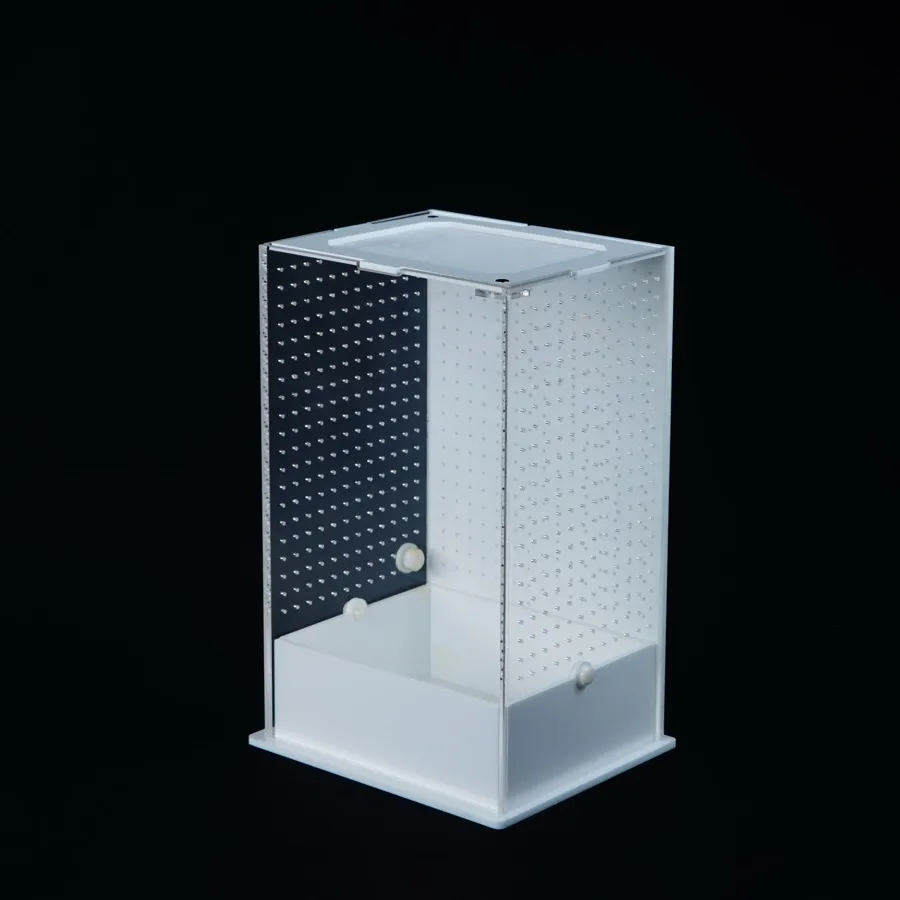
If you’re experienced and looking for a communal grow-out species, also yes. A group of four or five similar-size Ghost nymphs in a well-planted 12x12x18 enclosure is one of the most visually striking setups in the hobby, until you split them around L5.
If you want something with more aggressive feeding behavior, the African Twig Mantis actively chases its prey and shares the same beginner-friendly care requirements. And if you’re after visual drama in the same difficulty tier, the Spiny Flower Mantis delivers a jaw-dropping eyespot threat display without demanding expert-level husbandry. But for the intersection of beauty, ease, and unique behavior, the Ghost Mantis is hard to beat.
For detailed husbandry, enclosure setup, temperature gradients, feeding schedules, molt troubleshooting, and breeding, head to our complete Ghost Mantis care guide.
Frequently Asked Questions
How much does a Ghost Mantis cost?
$30 per nymph, one price, no instar or sex tiers. The listing above always shows the live price and current stock. We don’t ship sub-adults or adults.
Can Ghost Mantises live together?
As nymphs, yes, this is one of the very few mantis species where communal housing is genuinely viable. Group similar-size nymphs from L3, keep flies constantly available (dust the enclosure with fruit flies daily), and provide enough perching surfaces so they’re not crowded on top of each other. Separate them around sub-adult (L5); adults live alone. Cannibalism risk is never zero. First mantis? Start with one, communal is an experienced-keeper setup.
How long do Ghost Mantises live?
8–12 months for males, 12–18 for females, from hatch to natural death. Nymph development takes 4–6 months in both sexes; the difference is the adult stage, where a male gets 2–6 months and a female 6–12. This is notably long for a mantis, many popular species top out at six to eight months.
Are Ghost Mantises good for beginners?
They are the single best mantis species for beginners. Tolerant of temperature and humidity fluctuation, easy to feed, unlikely to refuse food, and hardy through molts. If you can keep a houseplant alive, you can keep a Ghost Mantis thriving.
Can I pick my Ghost Mantis’s color?
No. We don’t sort or sell Ghosts by color, so we can’t pick one for your nymph. Our care guide shows what a young nymph looks like.
Where can I buy a Ghost Mantis?
You’re already here. LOBO//MANTIS breeds Ghost Mantises year-round in Las Vegas, Nevada, and every animal is captive-bred. We ship to most US states by Priority Overnight with a live arrival guarantee, or by 2-Day without one (2-Day isn’t offered when your forecast low is 40°F or lower); checkout will tell you if yours is a state we can’t ship to. Local pickup in the Las Vegas valley is free. If the listing is sold out, join the waitlist.