

You want to buy an African Twig Mantis. Good. You picked one of the two easiest species we sell, and the one for a dry home. Popa spurca is the species we hand to every first-time buyer who walks in nervous about humidity controllers and misting schedules, because it doesn’t need any of that. It tolerates your house the way it already is, it hunts its own food instead of starving next to a motionless feeder, and females live close to a year. Only the Ghost comes close on ease, and the Twig wins in a dry house.
We breed African Twig Mantises year-round at our facility in Las Vegas. Every nymph ships captive-bred, healthy, and feeding. If you’re searching for an African Twig Mantis for sale from a breeder who actually keeps the species (not a reseller flipping someone else’s stock), you found the right page.
Why Buy an African Twig Mantis
Most mantids are ambush predators. They sit on a perch and wait for prey to wander into strike range. The African Twig Mantis doesn’t play that game. Popa spurca actively stalks and chases its food. That single trait eliminates the number-one cause of death in captive mantises: starvation from refusing stationary prey. Your nymph will eat. Reliably. From day one.
Dry-air tolerant. Skip the humidity gear, not the water: a few droplets on a twig a few times a week is how it drinks. This species thrives at 40–60% relative humidity, the ambient range inside most American homes. No fogger, no screen-top condensation dripping into the enclosure, no mold. A light mist one to three times a week, dried out fully between, is all it asks.
Temperature flexible. Anything from the mid 70s to mid 80s Fahrenheit works. Room temperature is fine. A small heat mat on the side wall of the enclosure, on a thermostat, handles cooler rooms in winter, but plenty of keepers never bother.
Long lifespan. Females live 10–12 months. Males 6–9. That’s significantly longer than many exotic species that burn through their lifecycle in five or six months. You get more time with the animal and more value for your money.
Hardy. Bad molts, random die-offs, sensitivity to minor husbandry mistakes: those are problems you run into with species like orchids or violin mantises. The African Twig Mantis shrugs off imperfect conditions. Missed a misting? It’s fine. Room dropped to 72 overnight? Still fine. This is the most forgiving exotic mantis you can keep.
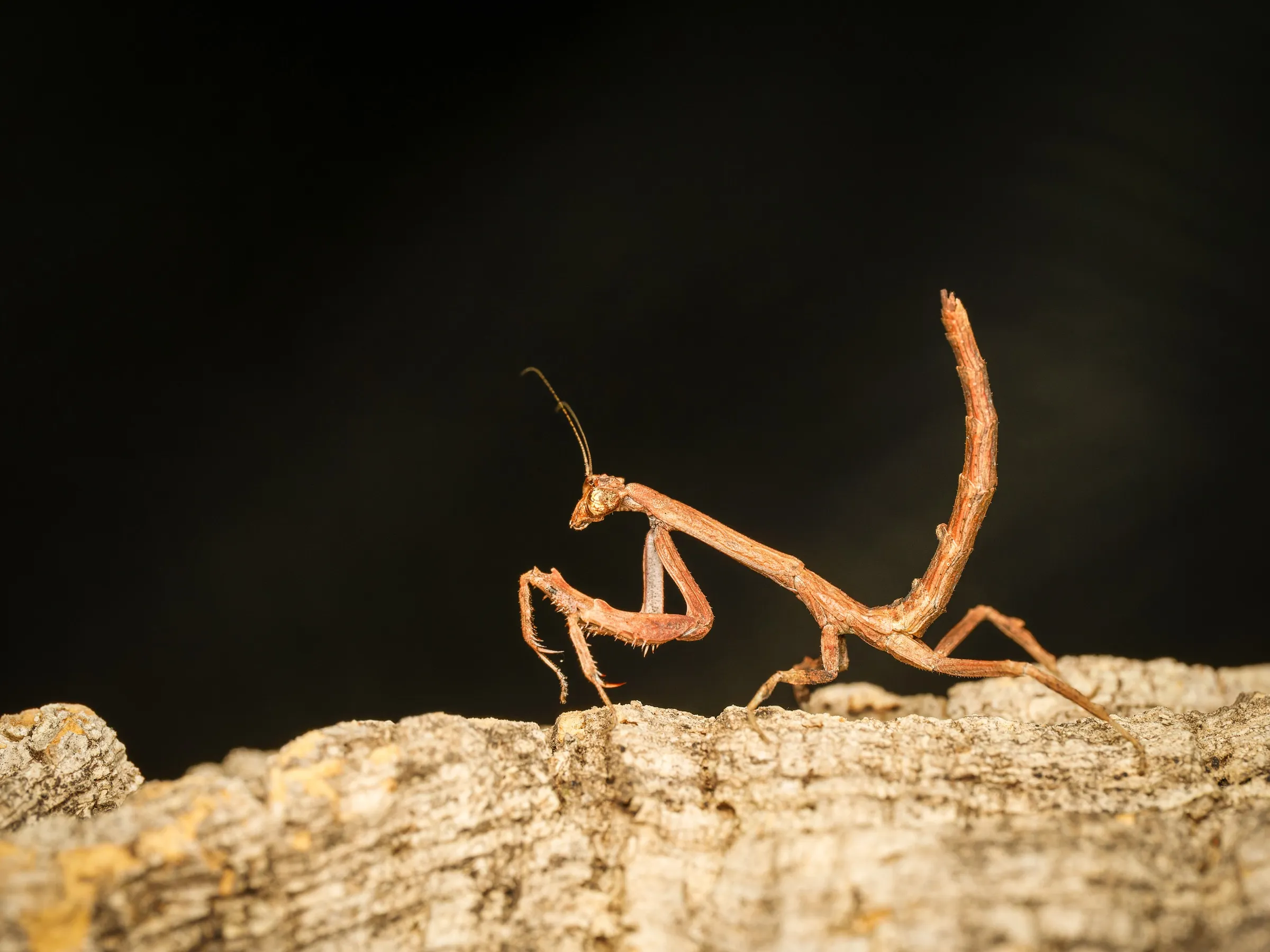
Incredible camouflage. Adults develop bark-textured exoskeletons that make them nearly invisible against branches and cork bark. Watching one disappear in plain sight inside its enclosure never gets old.
What You’ll Receive
You’ll receive a healthy, established nymph, past the fragile hatchling stage and already feeding on its own. Exact stage varies with each hatch. By the time a nymph leaves our facility, it has demonstrated a consistent feeding response.
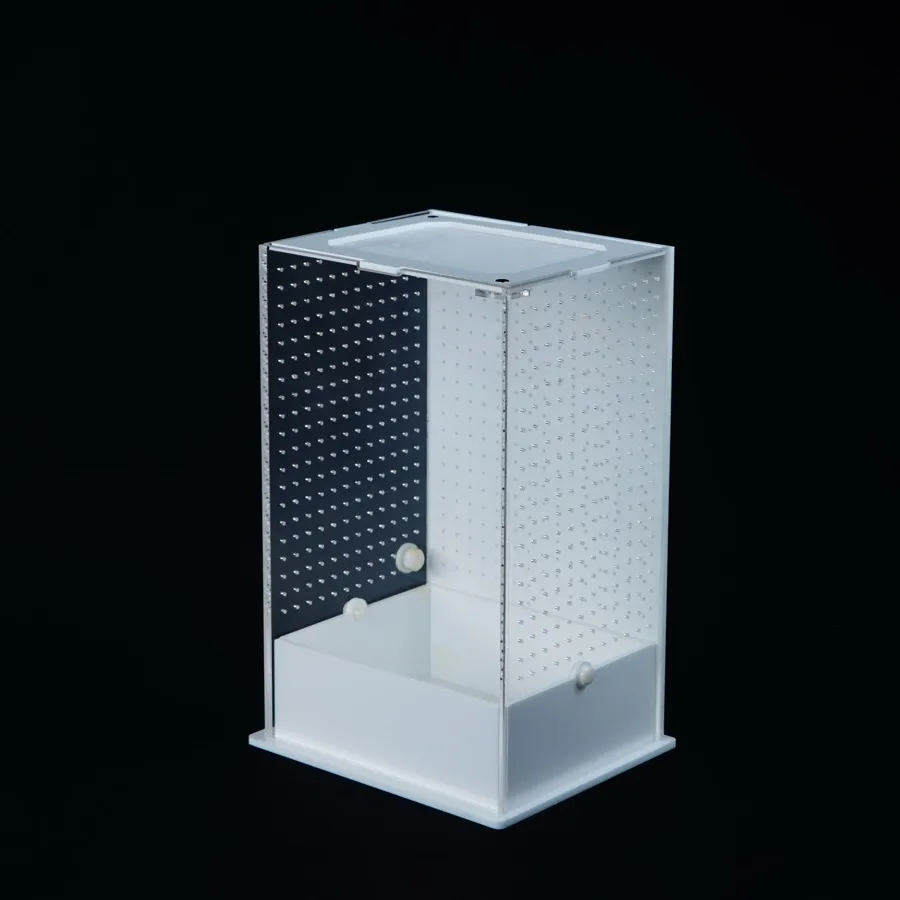
Your order arrives in a deli cup with ventilation, a climbing substrate, and thermal protection appropriate for current weather conditions. Each container is labeled with species, instar, and hatch date.
If you find it on the floor not moving, it’s playing dead, a normal defence. Wait a few minutes.
Live arrival guarantee. If your mantis arrives dead on arrival (DOA), file your claim within 24 hours of unboxing at lobomantis.com/claim with a continuous unboxing video and we replace it, or refund the animal’s price if we can’t restock soon. Priority Overnight orders only. No runaround.
Pricing & Availability
We sell African Twig Mantis as nymphs for $45. The listing above always shows the live price and current stock. Pricing reflects the weeks of feeding, housing, and labor that go into getting each nymph past the fragile earliest instars before it ships.
Periodic drops. New stock is released in periodic drops; nymphs typically ship on the next ship day. Follow us on social or join the waitlist to get notified the moment African Twig Mantises are back in stock.
When stock is sold out, use the waitlist button on this page. You’ll get a one-time email the next time Popa spurca is available. No spam, no newsletter. Just a restock alert.
Shipping
All live mantises ship Priority Overnight from Las Vegas, Nevada. Orders go out every Monday and Tuesday, so your package never sits in a facility over a weekend.
- Ship days: every Monday and Tuesday. Orders placed after the 8 AM PT cutoff go out on the next ship day.
- Carrier: FedEx Priority Overnight, which usually arrives the next business day. A signature may be required depending on your area.
- Weather: We check the forecast along your route before every shipment. At 90°F or higher, or 40°F or lower, we don’t hold the order; we re-route the overnight box to a staffed FedEx counter for same-day collection (heat), or add a free heat pack (cold). Above 85°F, a free ice pack goes in the box. We only hold a shipment for severe weather or a carrier alert, and we email you if that happens.
- Heat pack: A free heat pack is included automatically when your forecast low is 40°F or lower. You don’t need to add it to your cart.
- Shipping cost: Flat-rate, $60 Priority Overnight (live arrival guaranteed) or $30 2-Day (ships at buyer’s risk, no live-arrival guarantee). It covers the insulated box, any heat or ice pack, and label; we don’t profit on shipping.
Orders placed before the 8 AM PT cutoff on a ship day go out that day. Orders placed after it go out on the next ship day.
Is the African Twig Mantis Right for You?
If your home runs dry, this is the one to start with. It does not demand specialized equipment, it does not require daily misting, it does not refuse food, and it does not die because your room was two degrees too cool on a Thursday night.
If you’re an experienced keeper looking for a low-maintenance species to add to your collection without adding another high-maintenance enclosure to your daily rounds, this also works.
The only scenario where the African Twig Mantis is the wrong choice is if you specifically want a large, flashy display species. At 7–8 cm, Popa spurca is medium-sized and built for camouflage, not spectacle. It’s beautiful in a subtle, textured way, not in a “look at my neon orchid mantis” way.
If you want a second beginner species to keep alongside it, the Ghost Mantis offers communal housing and equally forgiving care. Or if you want something bigger that hits even harder at feeding time, the Double Shield Mantis is nearly as easy once its routine is set, lives up to 18 months, and eats like a heavyweight.
Ready to dive deeper into husbandry details? Check out our full African Twig Mantis care guide for enclosure setup, feeding schedules, and molting tips.
Frequently Asked Questions
How much does an African Twig Mantis cost? An African Twig Mantis is $45 as a nymph at LOBO//MANTIS, one price, no instar tiers. Check this page for live pricing and stock; it updates with each periodic drop. For a full breakdown of what mantises cost and why, see our guide on how much a praying mantis costs.
Are African Twig Mantises good for beginners? Yes. With the Ghost, the easiest exotic mantis for a first-time keeper. Pick the Twig if your home is dry or you worry about feeding. It tolerates low humidity, eats aggressively, handles temperature fluctuations, and females live close to a year. If you can keep a houseplant alive, you can keep a Popa spurca alive. See how it compares in our guide to the best pet mantis for beginners.
How long do African Twig Mantises live? Females live 10–12 months from hatch. Males live 6–9 months. Compared to many exotic mantis species that max out at 5–6 months, the African Twig gives you significantly more time with the animal.
Where can I buy an African Twig Mantis? You’re in the right place. LOBO//MANTIS breeds Popa spurca year-round in Las Vegas and ships captive-bred nymphs via Priority Overnight to most US states; checkout will tell you if yours is one we can’t ship to. Join the waitlist if current stock is sold out.
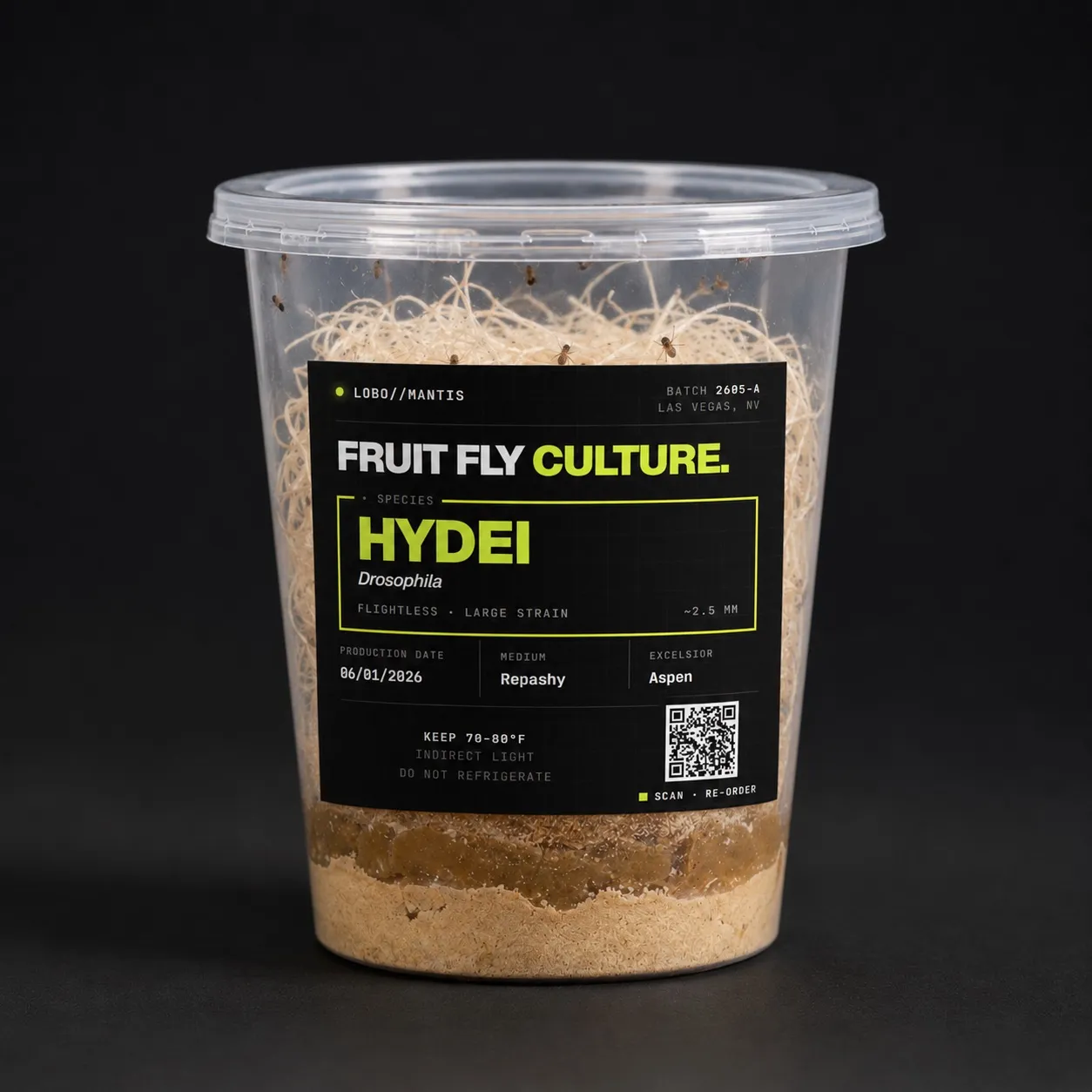
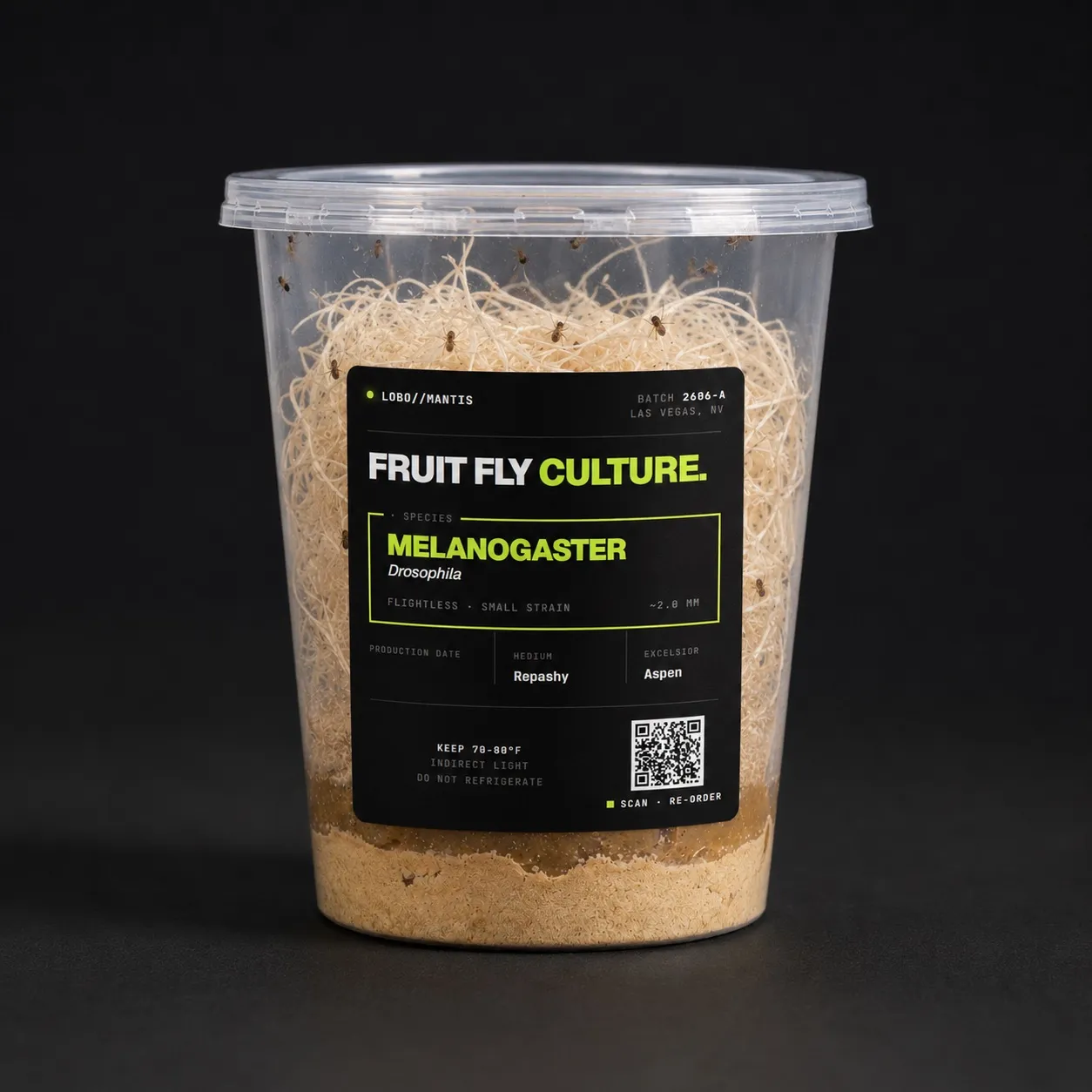
What do African Twig Mantises eat? They eat fruit flies (melanogaster and hydei), house flies, and small roach nymphs. We don’t feed crickets; see the feeding guide for why. Unlike many mantis species, Popa spurca actively chases prey, so even if a feeder insect isn’t sitting perfectly still on the wall of the enclosure, your mantis will hunt it down.