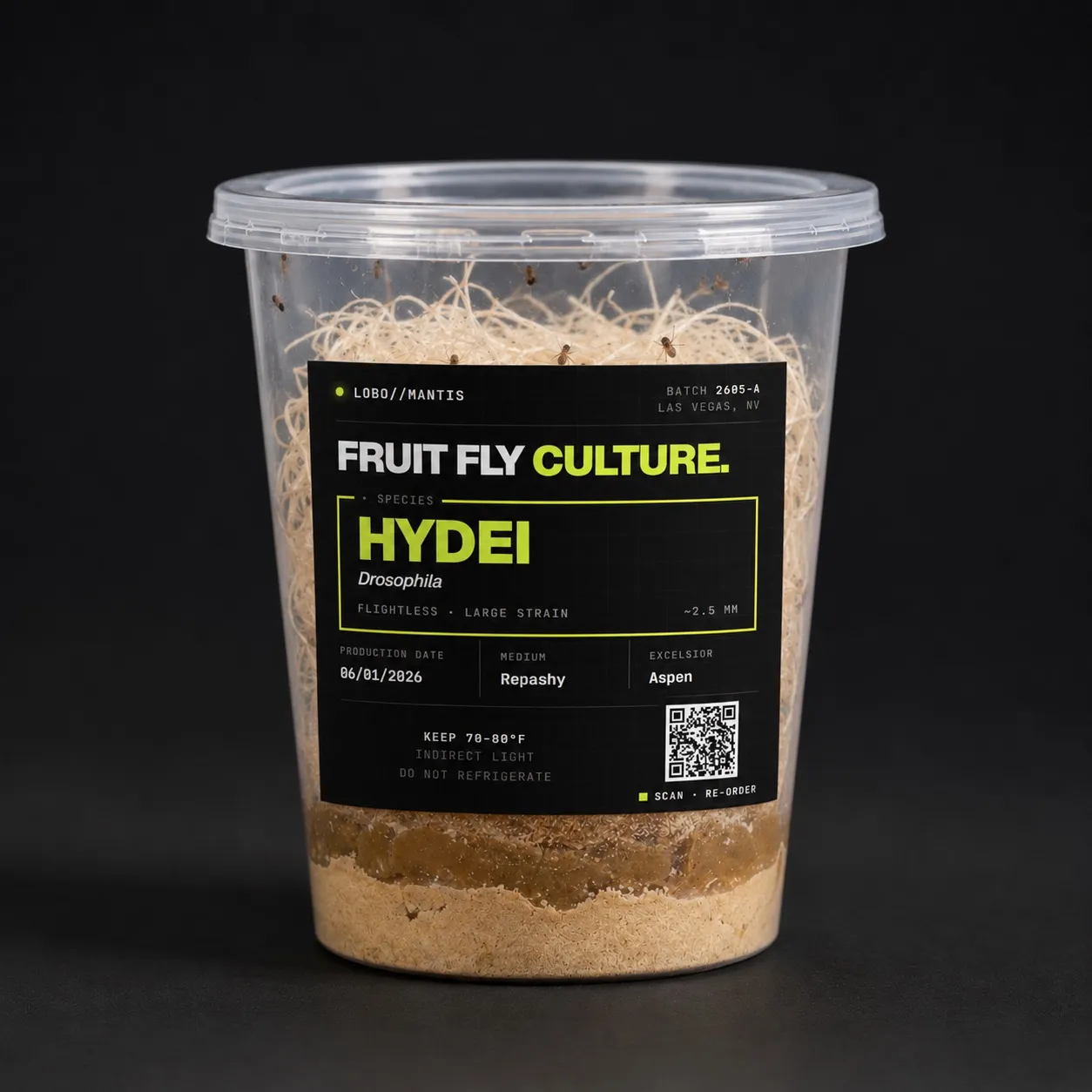
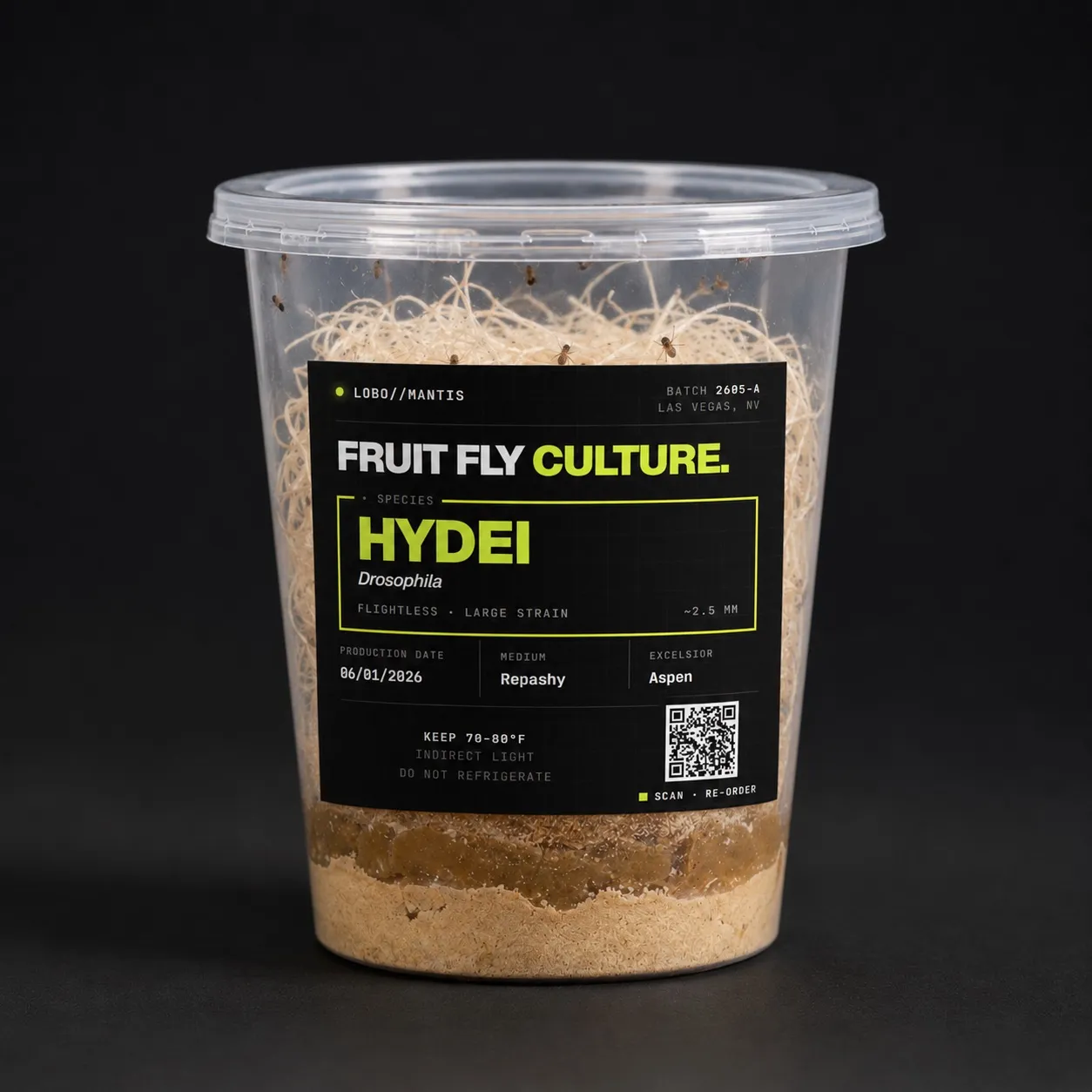
The backbone of any mantis keeper’s feeding routine. Drosophila hydei is the larger of the two common feeder fly species — big enough for L3+ nymphs, prolific enough to keep a colony going for weeks from a single culture. If you keep mantises past their first couple of instars, hydei is the feeder you’ll reach for most.
Why D. hydei? Flightless, not wingless: they have visible wings but can’t fly, so they can’t escape your enclosure or fill your home with fruit flies. Keep the cup under about 80°F; above that some of the next generation can regain flight. Each culture produces hundreds of flies a week at peak and stays productive for about 3–4 weeks (hydei often runs past day 40), with the first new wave emerging around day 19–25 — about a week behind melanogaster. At roughly 3 mm — about half again as big as melanogaster — they’re a substantial mouthful for a growing nymph — more calories per fly than melanogaster, which means less time chasing food and more growth.
Who They’re For
- L3–L4 mantis nymphs (longer for small species).
- Dart frogs and other small amphibians.
- Jumping spiders past the sling stage.
- Small reptiles and anything that takes a soft-bodied flying insect.
For very young L1–L2 nymphs and spider slings, the smaller D. melanogaster is the right call. Once your animals outgrow hydei, step up to green or blue bottle spikes.
How to Feed & Get the Most From a Culture
Tap a few flies out onto a smooth surface or directly into the enclosure — they’ll walk up perches and walls where your mantis hunts. No dusting needed for mantises: the flies feed on vitamin-enriched culture media and that is all a mantis needs. (Calcium dusting is for frogs and reptiles.)
To keep flies coming for weeks, store the culture upright at 70–80°F (21–27 °C) out of direct sun. Tapping the cup before opening knocks flies down so fewer wander. A single producing culture feeds one nymph for about a month — roughly one to two instars. For full upkeep — media, humidity, mold prevention, and re-culturing before a colony crashes — follow our fruit fly culture care guide.
Storage & Arrival
Every culture ships in a vented 32 oz deli cup with established media and a producing adult population. Ships Ground on its own (no live arrival guarantee on Ground); ships free when it’s part of a mantis order (the Live Arrival Guarantee covers the mantis, not the culture). It arrives with a laying adult population you can feed from on day one (go easy — they seed the next wave); new flies emerge from about day 19–25. Keep it upright and warm. Don’t store a culture in the fridge — sustained cold collapses the colony — though a 10–15 minute chill to slow adults before harvesting is fine.
Looking for smaller flies? Check out our D. Melanogaster cultures — D. melanogaster at ~2 mm is the right size for L1–L2 mantis nymphs, jumping spider slings, and dart frog froglets.
Frequently Asked Questions
What’s the difference between D. hydei and D. melanogaster?
D. hydei is the larger fruit fly (≈3 mm, about half again as big) and suits L3+ mantis nymphs and small predators; D. melanogaster is smaller (≈2 mm) and right for L1–L2 nymphs and spider slings. Hydei cultures are longer-lived; melanogaster cultures peak about a week earlier.
Are D. hydei fruit flies flightless?
Yes — flightless, not wingless: they have visible wings but can’t fly, so they can’t fly out of the enclosure or escape into your home. Keep the cup under about 80°F; above that some of the next generation can regain flight. They still climb, so tap the culture down before opening it.
How many flies does one culture produce?
A healthy hydei culture produces hundreds of flies a week at peak — well over a thousand across its productive life of about 3–4 weeks, often longer. The first new wave emerges around day 19–25, about a week behind melanogaster. That’s enough to feed one nymph for about a month. Keep it upright, warm, and out of direct sunlight.
What size mantis can eat D. hydei?
L3 nymphs and older — the staple through L4, and longer for small species. For newly hatched L1–L2 nymphs, start with D. melanogaster. See the feeding guide for stage-by-stage sizing.