

The short answer
To care for a praying mantis, house it alone in a ventilated enclosure about 3× its body length tall, keep it at 70–80°F, and mist the walls lightly every other day. Feed it live prey no longer than a third of its body every few days, and leave it completely alone while it molts.
Praying mantis care at a glance
- Enclosure: about 3× your mantis’s body length tall (never under 2.5×) and 1.5–2× as wide, with a mesh top it can hang from
- Temperature: 70–80°F for most beginner species, nights 68°F or warmer
- Misting: a light mist on the walls every other day that dries within a couple of hours. Never mist the mantis
- Water: it drinks the mist droplets. No water dish
- Food: live prey, mostly flies, no longer than a third of its body
- Feeding: small nymphs every 1–2 days, larger nymphs every 2–3, adults every 3–4
- Molting: when it stops eating and hangs still, remove all prey and leave it alone
- Housing: one mantis per enclosure
Are praying mantises easy to care for?
Yes. A mantis needs a few minutes a day: a light mist, a meal every few days, and a quick look to spot a molt coming. They don’t smell, don’t need UV lighting, and never need a walk. What they do need is the right setup from the start, because most problems trace back to the enclosure or the misting, not to anything you do day to day.
Mantises don’t bite in any meaningful sense; they grab with the front legs. A big adult female can give a sharp pinch that occasionally nicks skin; no venom, no danger.
Compared to tarantulas (they sit still for weeks) or reptiles (lighting, heating and vet care), a mantis hits a sweet spot: it watches you back, hunts its food in front of you, and transforms with every molt. The catch is the lifespan. Most species live 6–12 months in total (lifespan by species →). Think of it as a seasonal pet with a year of intense personality.
The enclosure: height matters more than size
If we could tell every new keeper one thing, it would be this: height matters more than size. A mantis molts hanging upside down from the top of its enclosure. The new body has to drop fully clear of the old skin before it hardens, and a mantis without enough room below it ends up with kinked legs, a bent pronotum, or a stuck molt it can’t survive.
The rule: aim for 3× the mantis’s body length in total height and never go under 2.5×, with at least 2× of clear drop below where it hangs, and 1.5–2× the body length in width. Wide-bodied species like the Dead Leaf and Double Shield need about one more body length on top, so aim for 3.5–4×.
Bigger isn’t better past that point. In an enclosure that’s too large, a small nymph struggles to find its prey. Generous, not cavernous.
What the enclosure needs:
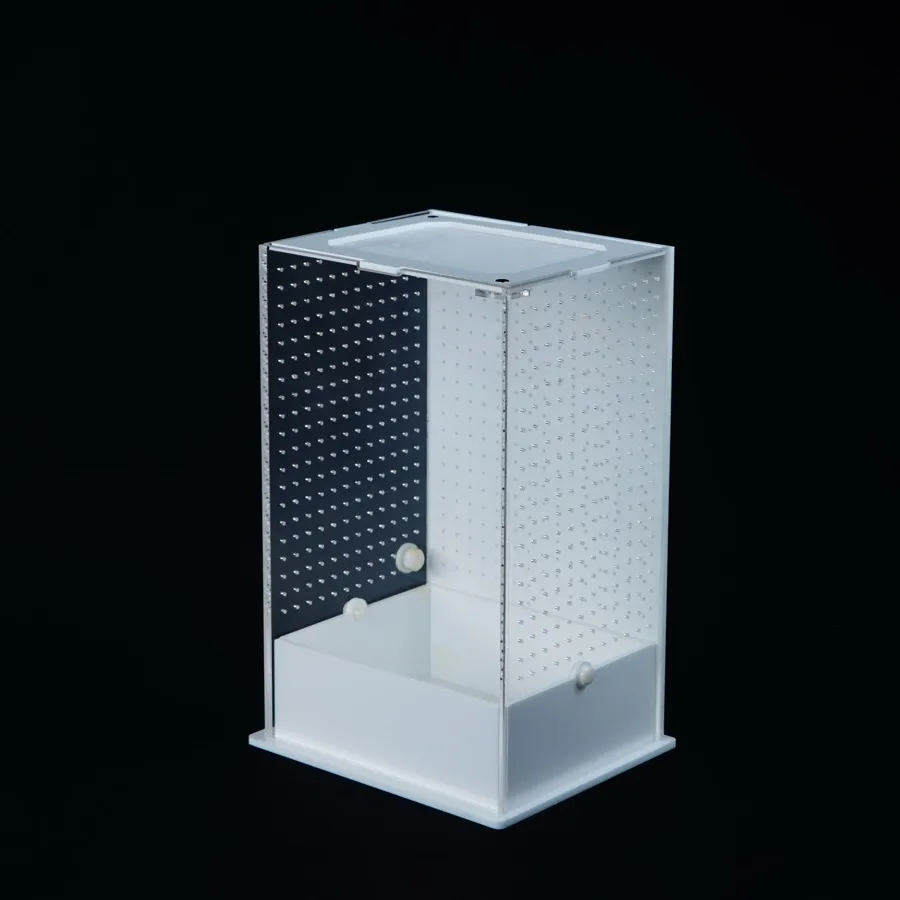
- A mesh top (or a mesh panel under the lid) for it to hang from, plus some side ventilation so air moves through
- Climbing surfaces: twigs, cork bark, or a silk plant
- Paper towel on the floor. It’s easy to swap weekly and makes droppings and leftover prey easy to spot
We raise our own nymphs in mesh-lid deli cups while they’re small, then move them up to taller enclosures as they grow. Size up with your mantis:
| Stage | Enclosure |
|---|---|
| L1–L2 | a 16-oz mesh-lid deli cup (small on purpose, so a young nymph finds its fruit flies) |
| L3–L6 | about 15 cm (6 in) tall: a 32-oz deli cup or the medium enclosure (10×8.5×15 cm) |
| L7 to adult | at least 20 cm (8 in) tall for species up to 8 cm: the large enclosure (12×10×20 cm) |
| Dead Leaf and Double Shield adults | 25–30 cm tall |
Move up when the mantis is about a third of the enclosure’s height. Our terrarium setup guide → walks through a full build.
Temperature, humidity and water
Temperature and light
The three beginner species are comfortable at 70–80°F by day with nights no colder than 68°F:
- Ghost Mantis: 70–80°F. Room-temperature happy; most homes need no extra heat
- African Twig Mantis: 72–86°F. Also fine in most homes without equipment
- Spiny Flower Mantis: 75–80°F by day. Not a room-temperature species: most homes need a little help to reach the high 70s
Below 68°F most mantises slow down and eat less. If your room runs cold, add gentle heat: a ceramic heat emitter above the mesh, or a small heat mat on a side wall (never underneath, and always on a thermostat). No heat lamps on plastic enclosures.
For light, normal room light on a day and night cycle is all a mantis needs. No UV. Keep the enclosure out of direct sun, which can overheat it fast.
Misting
Mist the walls, never the mantis. Our own routine is a light mist every other day, and the walls should dry within a couple of hours. How often you mist depends on the species and on how well your enclosure breathes:
- Ghost: 60–70% humidity. A light wall mist daily to every other day
- African Twig: 40–60%, the driest of the three. Mist lightly one to three times a week and let everything dry out in between
- Spiny Flower: 40–60%. Every other day, not daily
Too wet causes mold and fungal infections. Too dry causes failed molts. A cheap digital hygrometer takes the guesswork out while you learn.
Water
A mantis drinks droplets off the walls and plants after you mist. It rarely drinks from standing water, so skip the water dish: small nymphs can drown in one.
What to feed a praying mantis
Live prey, sized to your mantis. The rule: prey no longer than a third of your mantis’s body length, at every stage. When in doubt, go smaller.
| Stage | Prey | How often |
|---|---|---|
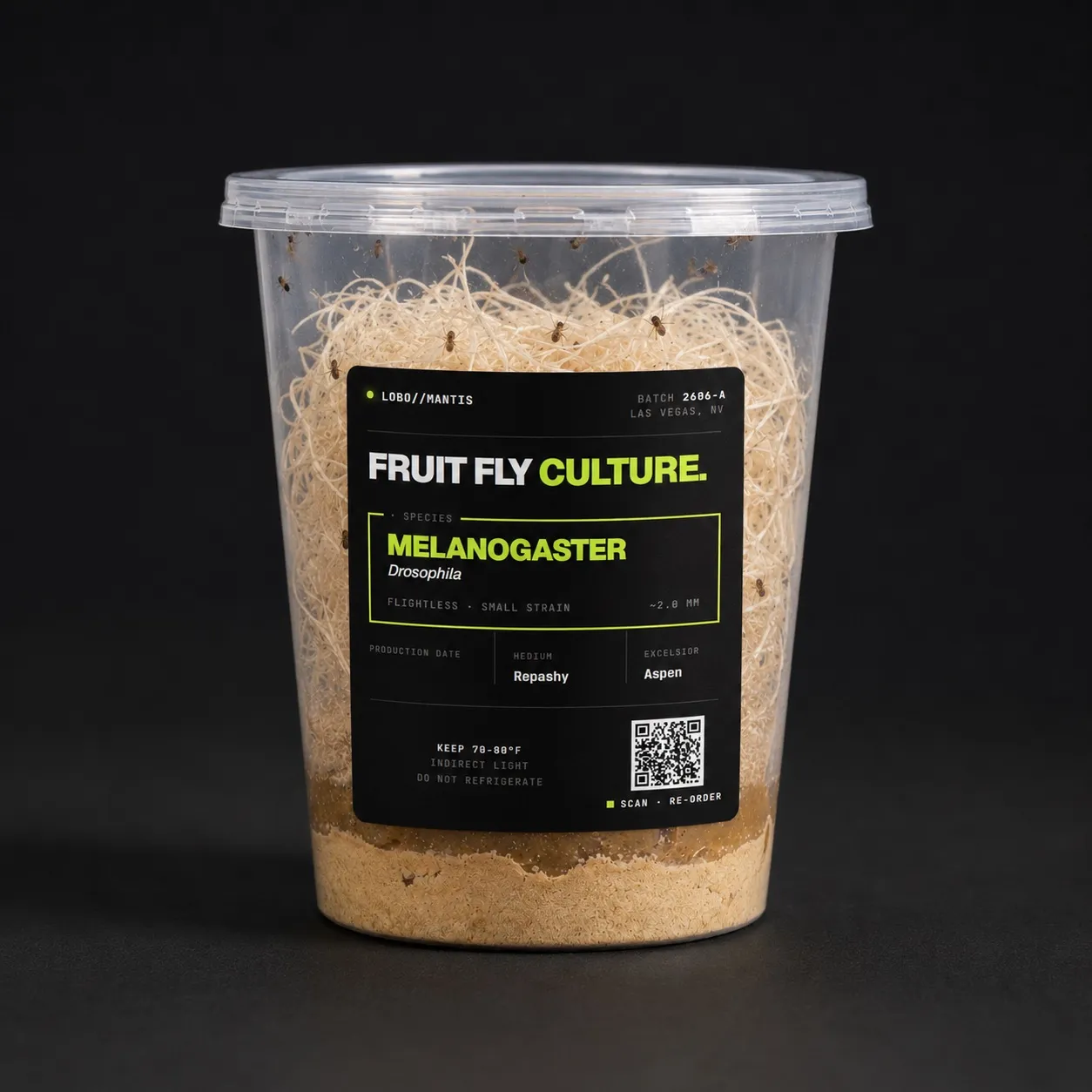
| L1–L2 | melanogaster fruit flies | 4–6 flies every 1–2 days, with a few always present |
| L3–L4 | hydei fruit flies | 4–6 every 2 days |
| L5–L6 | houseflies and green bottle flies, then blue bottles from L6 | 2–3 flies every 2–3 days |
| Adults | bottle flies, moths, dubia roaches | 1–2 prey every 3–4 days |
Adult females carrying eggs eat more, every 2–3 days. The easiest guide is the abdomen: skip a feeding if it looks round and full.
Remove any prey that hasn’t been eaten by the end of the day, and always before a molt. Live prey left in the enclosure can stress or injure a mantis that’s molting.
What not to feed, and why
- Anything caught outdoors. Wild insects can pass parasites and infections to your mantis when it eats them. The best documented is the horsehair worm: its larvae live inside wild insects, and a mantis that eats an infected one becomes the worm’s host, which is usually fatal. Wild insects can also carry pesticide residue from lawns and gardens, which can kill a mantis outright. That’s why we only feed cultured insects.
- Crickets. Plenty of care sheets recommend them; we don’t feed them to any mantis we raise. A cricket left in the enclosure will chew on a mantis, and a nymph that’s molting can’t defend itself. Crickets also jump and hide in decor, so it’s hard to be sure they’re all out before a molt, and cricket colonies are prone to disease die-offs, so their quality varies from batch to batch. Flies can’t hurt a mantis at all, which is why they’re our staple.
- Mealworms, superworms and waxworms. Mealworms have a tough shell and hooked jaws, superworms bite back, and waxworms are mostly fat. Not worth the injury risk.
- Spiders, ants and stinging insects. Some carry toxins, and most fight back.
The full breakdown by life stage is in our feeding guide →.
Molting
A mantis grows by shedding its skin, about 6–8 times before it’s an adult. Molts are when most mantises are lost, and nearly always because something disturbed them or the enclosure was too short.
The signs a molt is coming: it refuses food for a day or more and hangs still, often upside down near the top. Nymphs usually stop eating 2–7 days before a molt; before the final molt to adult it can be one to two weeks or more. Swollen wing buds on the back mean the next molt is the last one.
What to do:
- Remove all prey from the enclosure
- Mist the walls a touch more and keep humidity steady, but never spray the mantis
- Don’t tap the enclosure, don’t reach in, and don’t move it
After the molt: wait until your mantis is moving normally, gripping firmly, colour back up. That’s about 24 hours for a nymph and 48 hours or more for an adult. If in doubt, give it 48. The first meal after a molt should be a little smaller than usual.
After its final molt your mantis has wings and won’t molt again. Our molting guide → covers premolt signs in detail, and is my mantis dead or molting? → helps when you’re not sure.
Handling
You can hold a mantis, gently, from the day it arrives. Offer an open hand in front of it and let it walk on. Never grab it or pull it off a surface, which can damage its feet. Wash your hands first.
The one time to leave it alone is around a molt:
- In premolt, when it’s hanging still and refusing food
- Right after a molt, until it has hardened: about 24 hours for a nymph, 48 hours or more for an adult
A tip from our own mantises: if yours bends down while it’s on your hand, searching as if it’s looking for something, it’s usually thirsty. Give the enclosure walls a light mist and let it drink.
Some species suit handling more than others. African Twig males can fly as adults, so hold them over the enclosure. The Spiny Flower is a display animal, better watched than held.
Before your mantis arrives
Your first species
Start with one mantis. These three are the easiest:
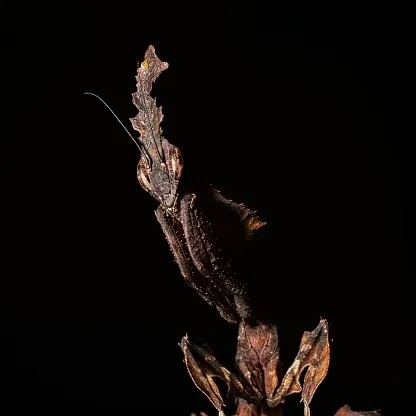
- Ghost Mantis: a leaf mimic with a forked head crest, about 5 cm as an adult. Females live 12–18 months, males 8–12. Care guide →
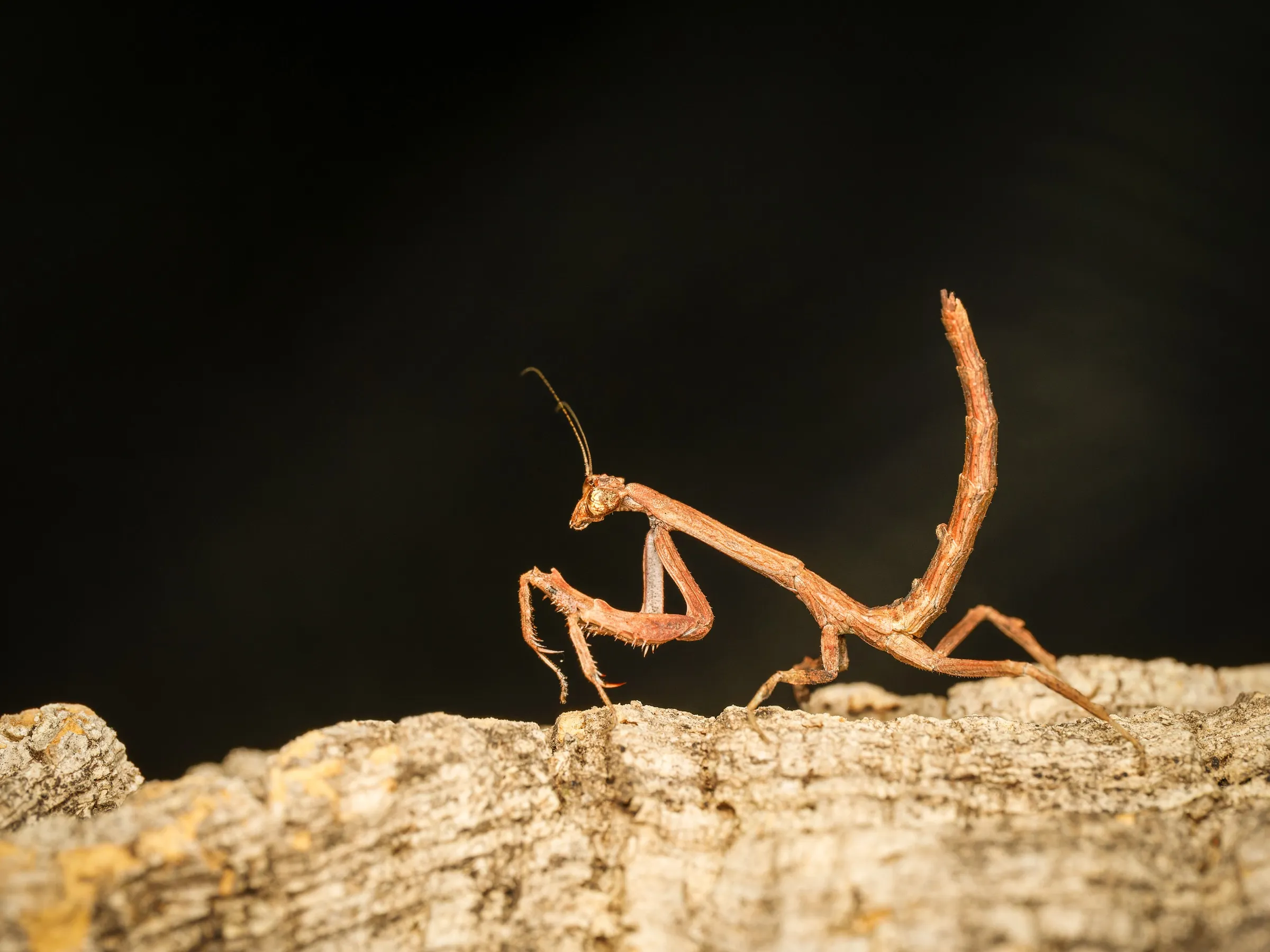
- African Twig Mantis: the most forgiving species we keep, and the pick if your home is dry. Females reach 7–8 cm and live 10–12 months (males 6–9). Care guide →
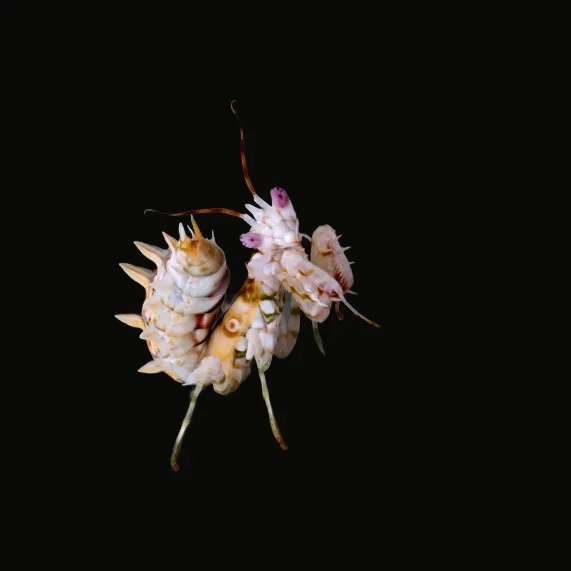
- Spiny Flower Mantis: small (about 5 cm) with a dramatic eyespot display. Needs warmth and a light hand with the mister. Care guide →
Save the Orchid and Dead Leaf for later: the Orchid is picky about prey and humidity, and the Dead Leaf needs more space and molts more riskily. The Double Shield makes a good second mantis once your routine is set. For a side-by-side comparison, see the best pet mantis for beginners →.
We ship established nymphs past the hatchling stage (the exact stage varies with each hatch), which gives a first-time keeper a sturdier start.
What to buy
Have these ready before the mantis ships:
- An enclosure sized for its stage (see the table above), or starter supplies →
- Paper towel for the floor
- Twigs, cork bark or a silk plant to climb
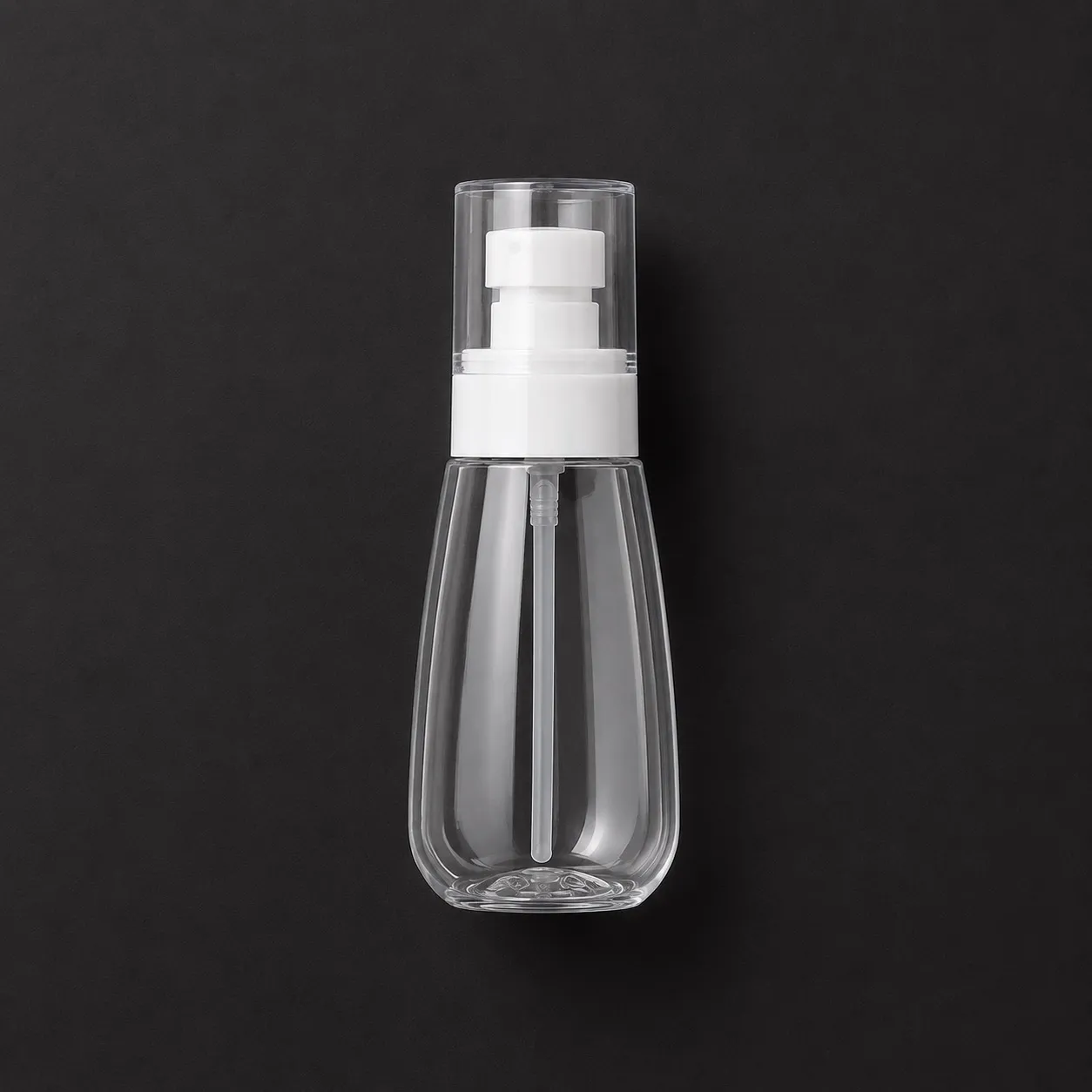
- A misting bottle that sprays a fine mist
- A digital hygrometer and thermometer (about $20 or less)
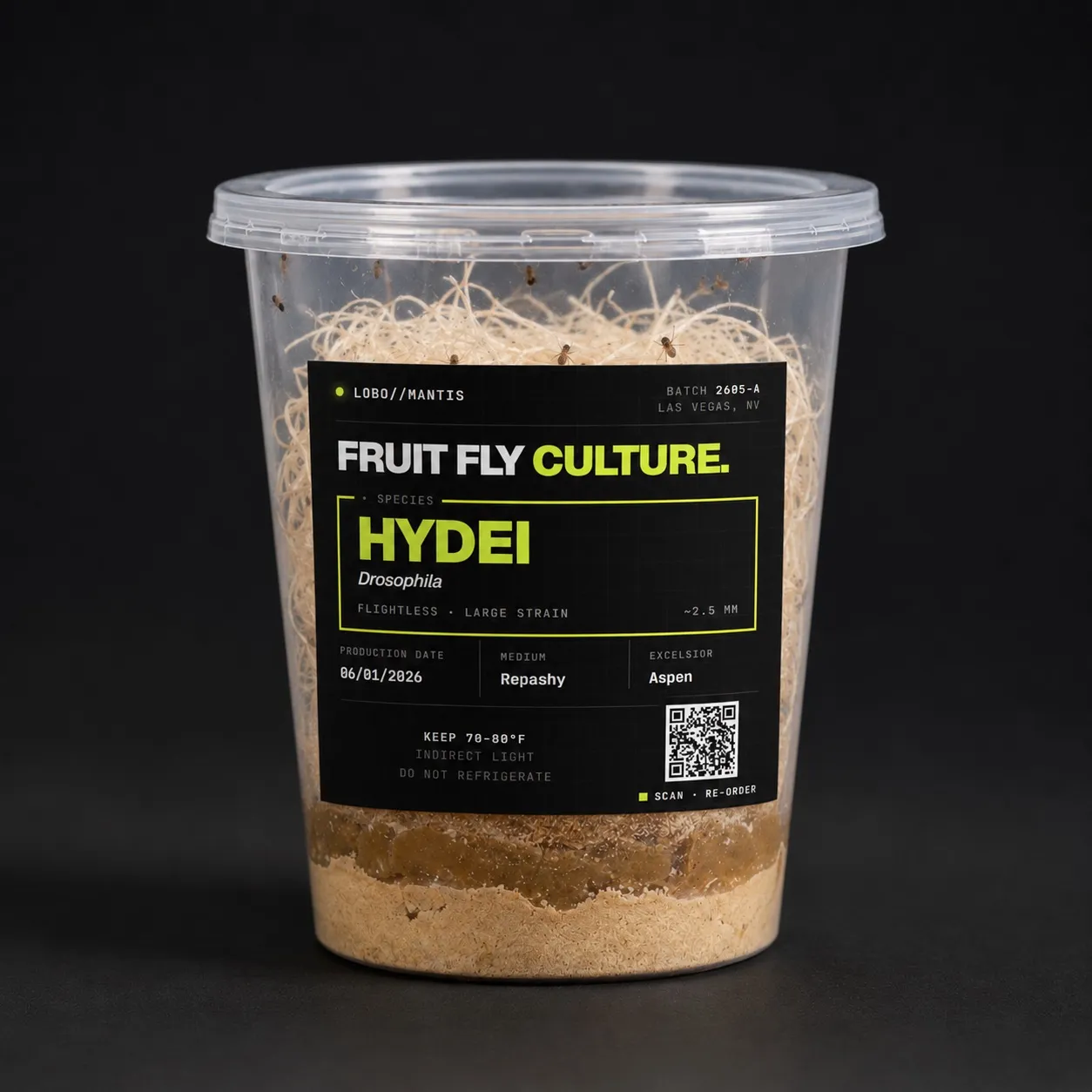
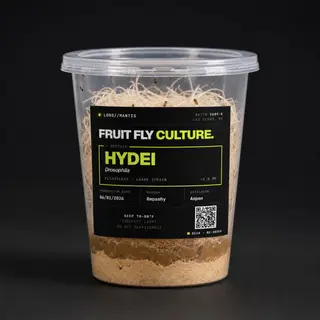
- Live feeders: melanogaster fruit fly cultures, or hydei for L3 and up
Set the enclosure up a day before the mantis arrives so the temperature has settled. The enclosure, misting bottle and decor run about $35–$70 in total, depending on the enclosure. For the mantis itself, see how much a praying mantis costs →.
Your first week
When the package arrives:
- Bring it indoors immediately. Don’t leave it on the porch.
- Start a video before you open anything: film the sealed box, then open it on camera in one continuous take. That clip is what backs a Live Arrival claim, so film it even if you’re sure everything’s fine.
- Open it promptly in a small, draft-free room with the door closed, and take out the heat pack if one was included. You can open the cup and get eyes on the mantis right away. A chilled mantis can look dead, so warm it gradually at room temperature, never with direct heat, sun, or a lamp. If it has genuinely died, you already have the proof on video: file a claim within 24 hours at lobomantis.com/claim.
- Move it into its enclosure whenever you’re ready. There’s no settling period. Tip the cup and let it walk out onto a dowel, your open hand, or straight into the enclosure. Don’t grab it.
- Mist the walls lightly. It has likely gone 18–24 hours without water in transit.
- Offer a correctly sized meal whenever you’re ready; the same day is fine. Refusing food for a day or two after shipping is normal: remove the uneaten prey and try again the next day.
By day 3 it should be eating reliably; if it isn’t, check the temperature first. Our shipping and arrival guide → has the full checklist.
The mistakes we see most
The two we see more than any others:
- An enclosure too short to molt in. It’s the most common cause of a failed molt. Measure your mantis and check the height rule before anything else.
- Over-misting. Walls that stay wet and air that doesn’t move lead to mold and fungal infections, especially in drier species like the Spiny Flower and African Twig. Mist lightly and let it dry.
Close behind:
- Prey that’s too big. Oversized prey gets refused or injures the mantis. Stick to a third of its body length.
- Disturbing a molt. Once it’s hanging still, it’s locked in. Hands off until it’s moving normally again.
Warning signs
- Not eating, but not in premolt: check the temperature first, then the prey size. More in why a praying mantis stops eating →
- A molt that goes wrong (stuck skin, a fall, bent limbs): see praying mantis molting problems →
- Pale or greenish blotches on the body: usually a fungal problem from an enclosure that stays too wet. Improve the airflow and mist less
- Dark fluid from the mouth or rear, or dark patches with lethargy: usually a serious infection. Keep it warm and undisturbed, and message us
- An old adult losing its grip or moving stiffly: usually age, not illness, near the end of its natural lifespan
Frequently Asked Questions
Do praying mantises bite?
Not in any meaningful sense. A mantis grabs with its front legs; a big adult female can give a sharp pinch that occasionally nicks skin, but there’s no venom and no danger.
Can you hold a praying mantis?
Yes, gently, from the day it arrives. Let it walk onto an open hand and never grab it. The one exception is a molt: leave it alone in premolt and until it has hardened afterward.
Can a praying mantis bond with you?
Not the way a dog or cat does. Many mantises do settle into gentle handling and will calmly walk onto an offered hand.
How long do pet praying mantises live?
Most species live 6–12 months in total, with females outliving males. A female Ghost Mantis can reach 18 months. See our lifespan by species guide.
How often do you feed a praying mantis?
Small nymphs every 1–2 days, larger nymphs every 2–3 days, and adults every 3–4 days. Skip a feeding if the abdomen looks round and full.
Do praying mantises need water?
Yes, but not in a dish. They drink droplets off the walls after you mist, so a light mist every other day covers it.
Do praying mantises need a heat lamp or UV light?
No UV, ever. Heat only if your room runs below 68°F, and then a ceramic heat emitter above the mesh or a heat mat on a side wall, on a thermostat.
Can two praying mantises live together?
Keep one mantis per enclosure. Most species eat each other. Ghost Mantises can share a large enclosure as nymphs, but that’s a setup for experienced keepers, not a first mantis.
How do I know my mantis is about to molt?
It stops eating for a day or more and hangs still, often upside down near the top. Remove any prey and leave it alone until it has molted and hardened.
Is it legal to keep a praying mantis?
Buying a captive-bred mantis from a US seller doesn’t require a permit of your own. Never release a pet mantis outdoors. See our guide to praying mantis laws.
I found a praying mantis outside. Can I keep it?
In the US it’s most likely a Chinese, European or Carolina mantis. They’re seasonal: an adult found in late summer or fall usually has weeks to a few months left. The same basics apply (a tall enclosure, light misting, live prey), and rules on keeping and releasing wild insects vary by state, so check our praying mantis laws guide. An adult female may also lay an egg case; our egg case guide covers what to do with one.
What’s next
- Pick your first species and read its care guide top to bottom before ordering
- Set up the enclosure and let it run for a day
- Order your mantis. We ship Priority Overnight on Mondays and Tuesdays, 8 AM PT cutoff; order after the cutoff and it goes out on the next ship day
- Read the feeding guide and molting guide before the first molt
That’s the playbook. Welcome to the hobby.