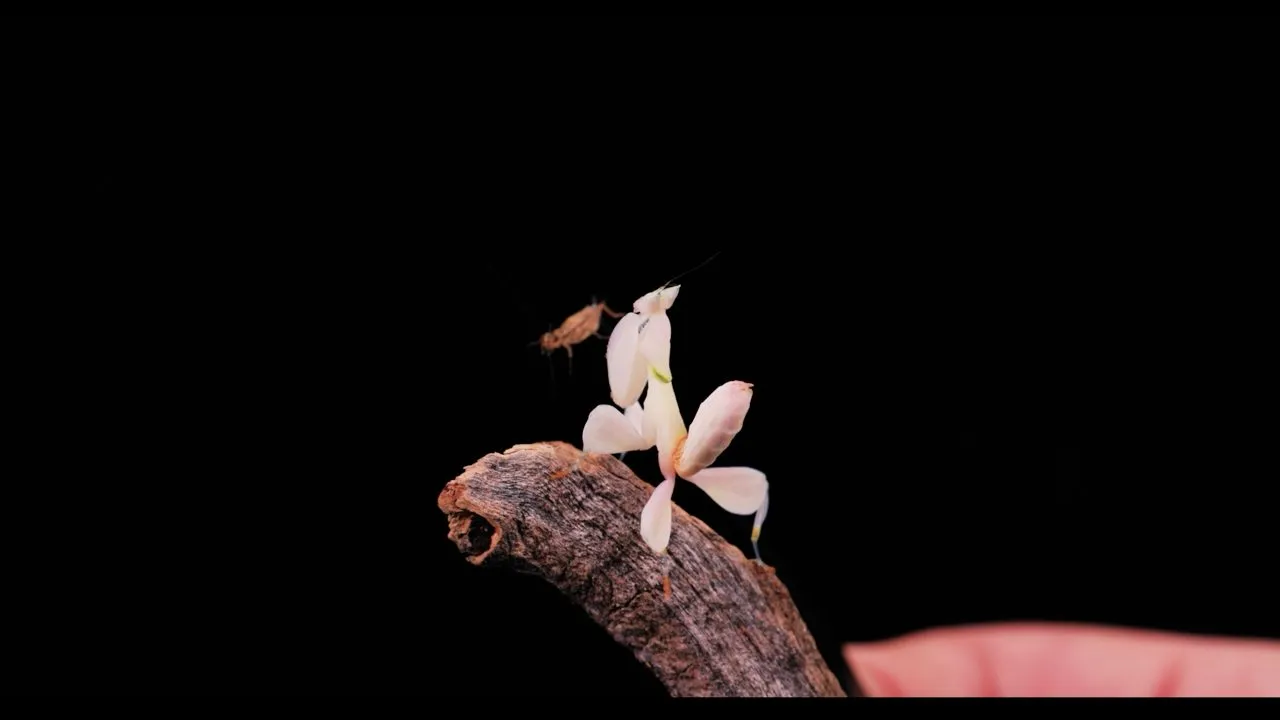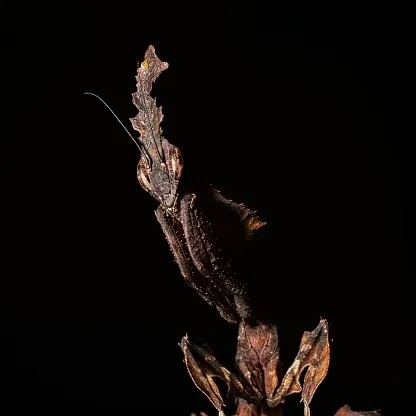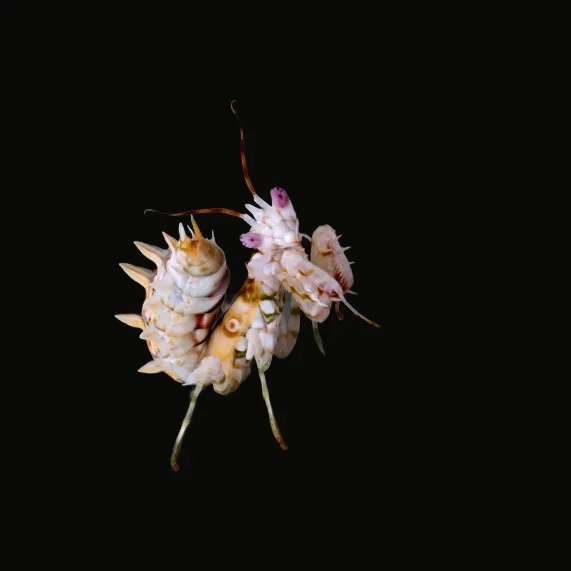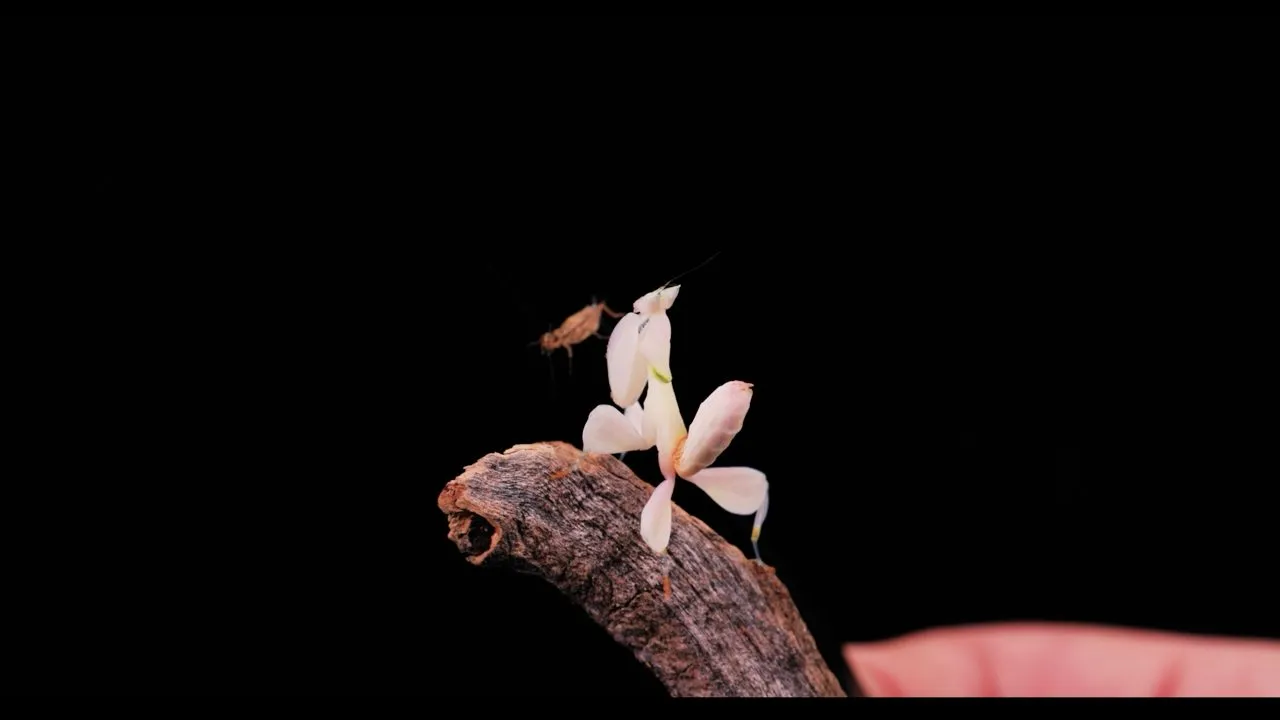
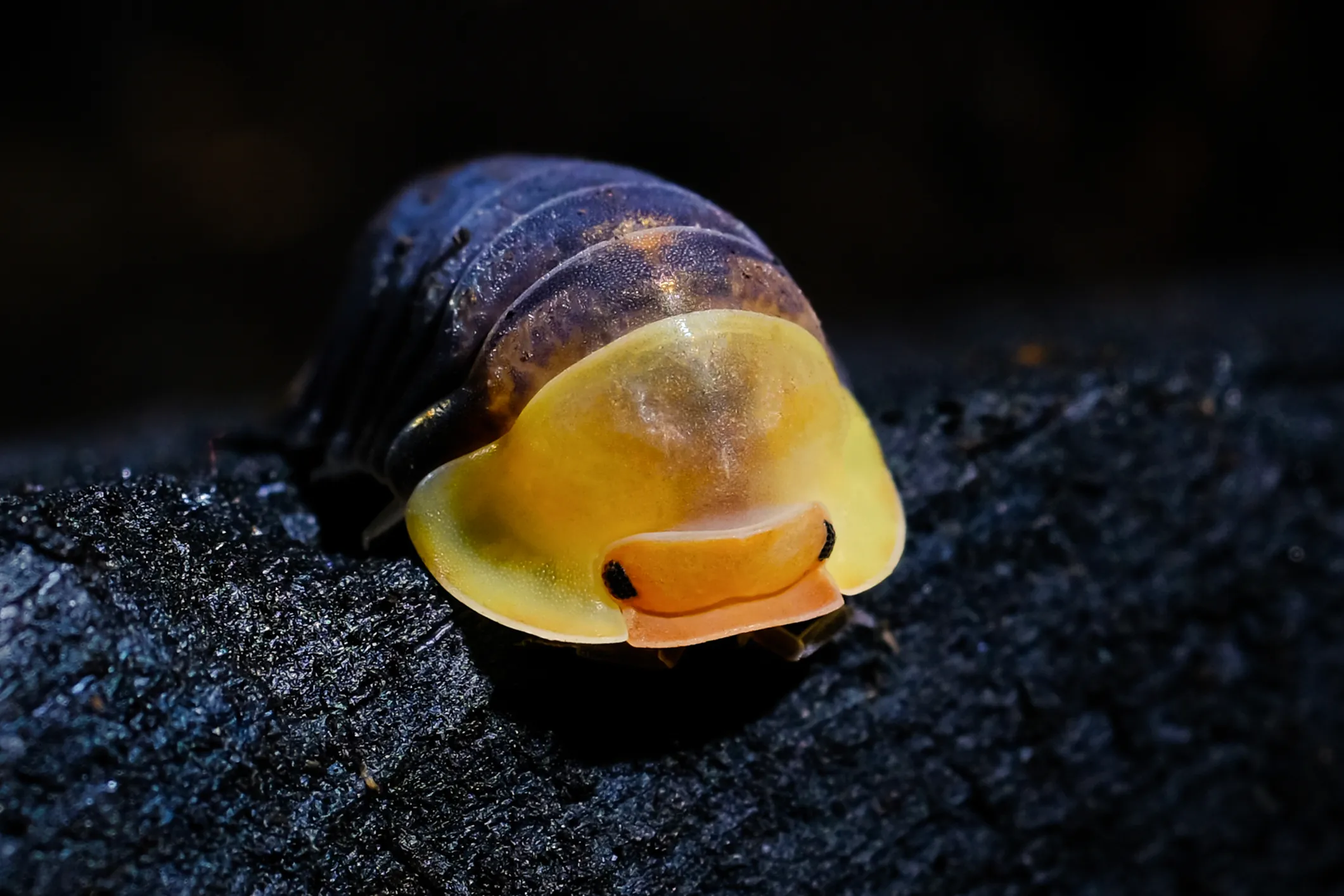
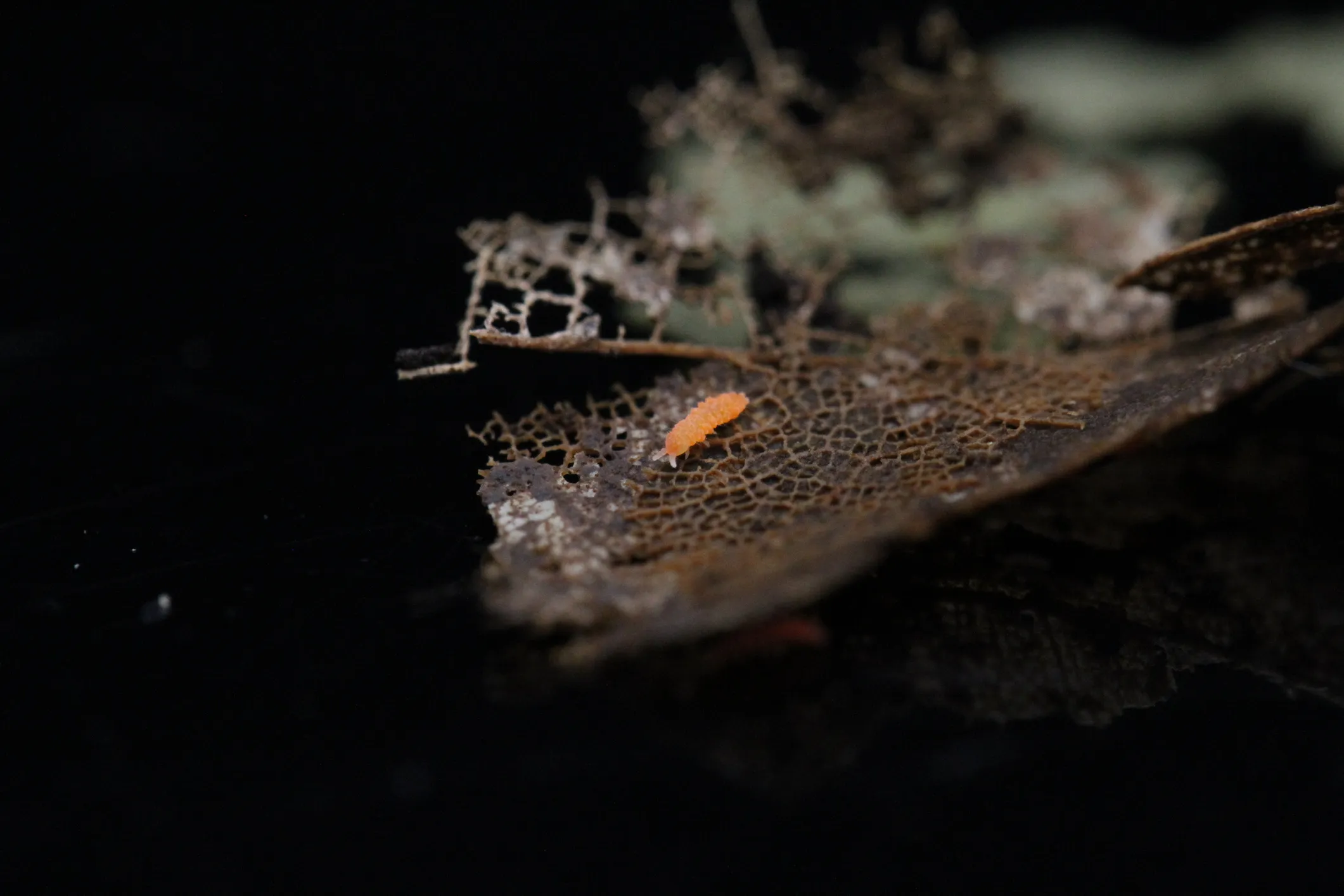
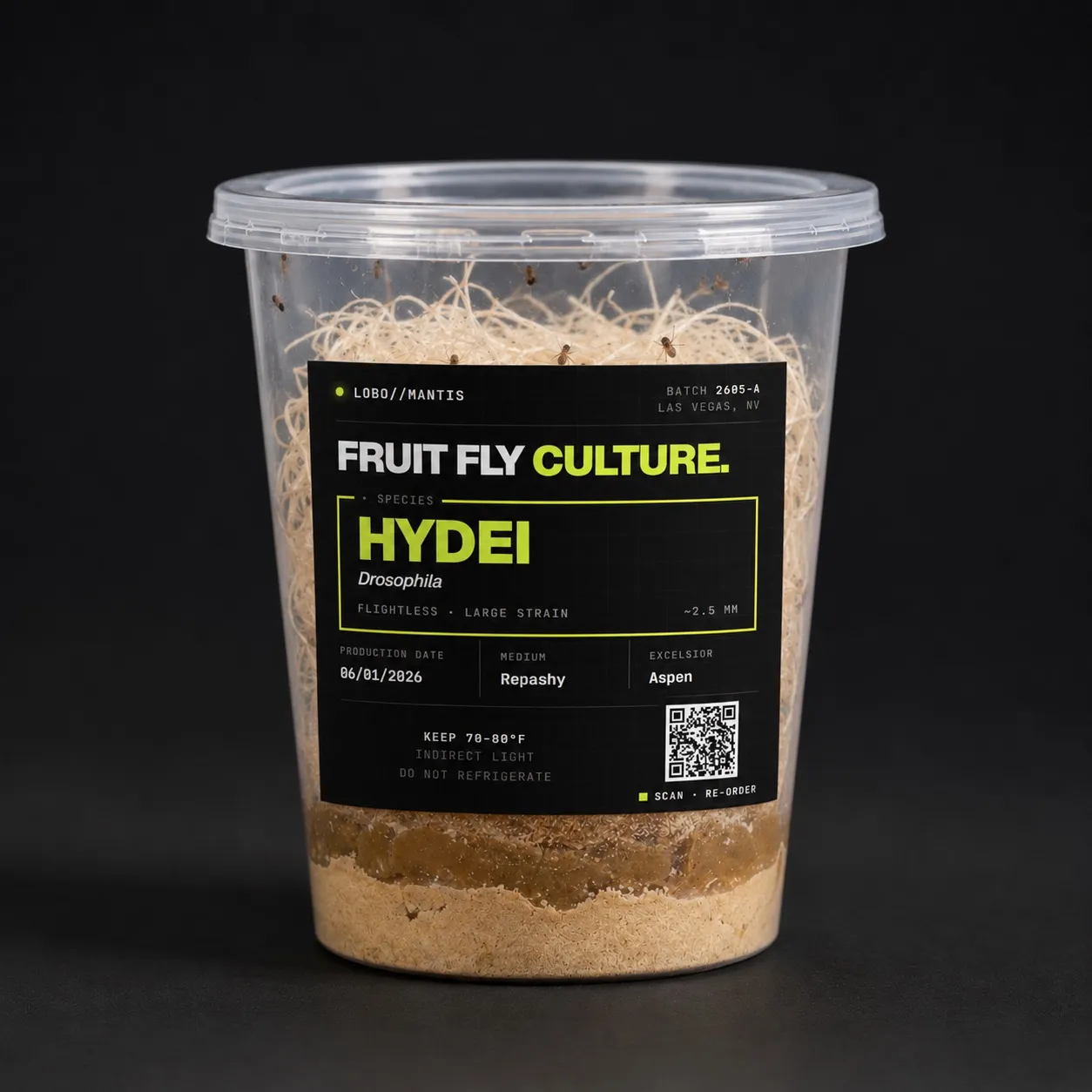
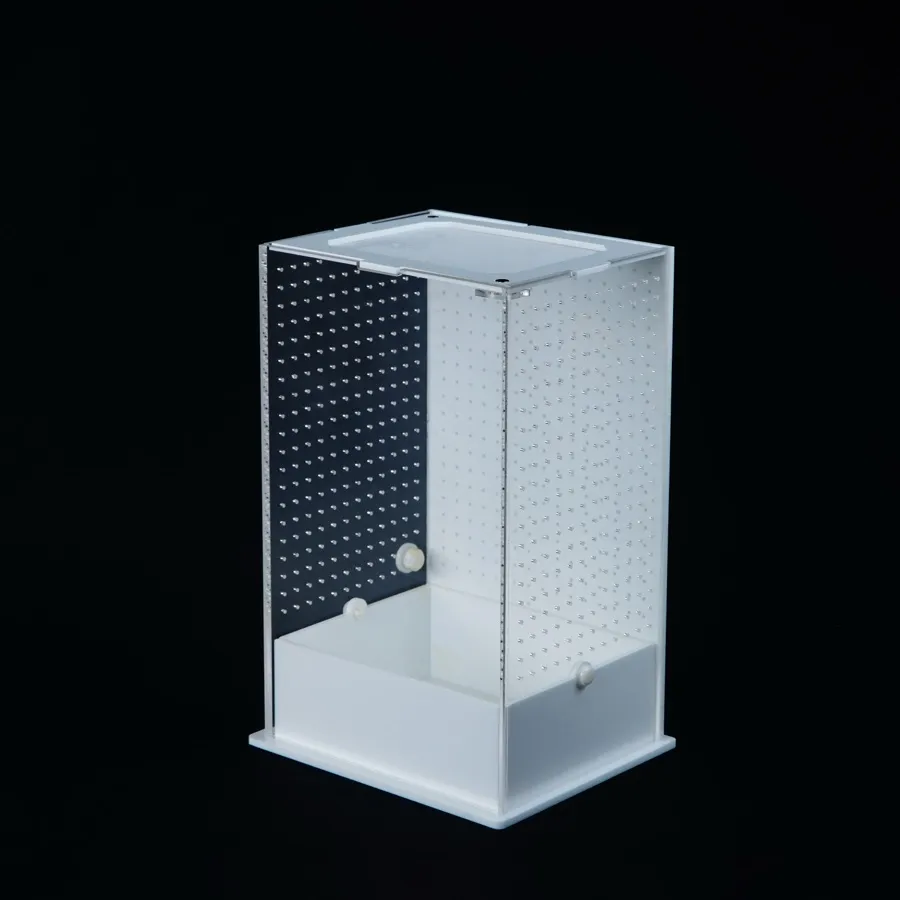
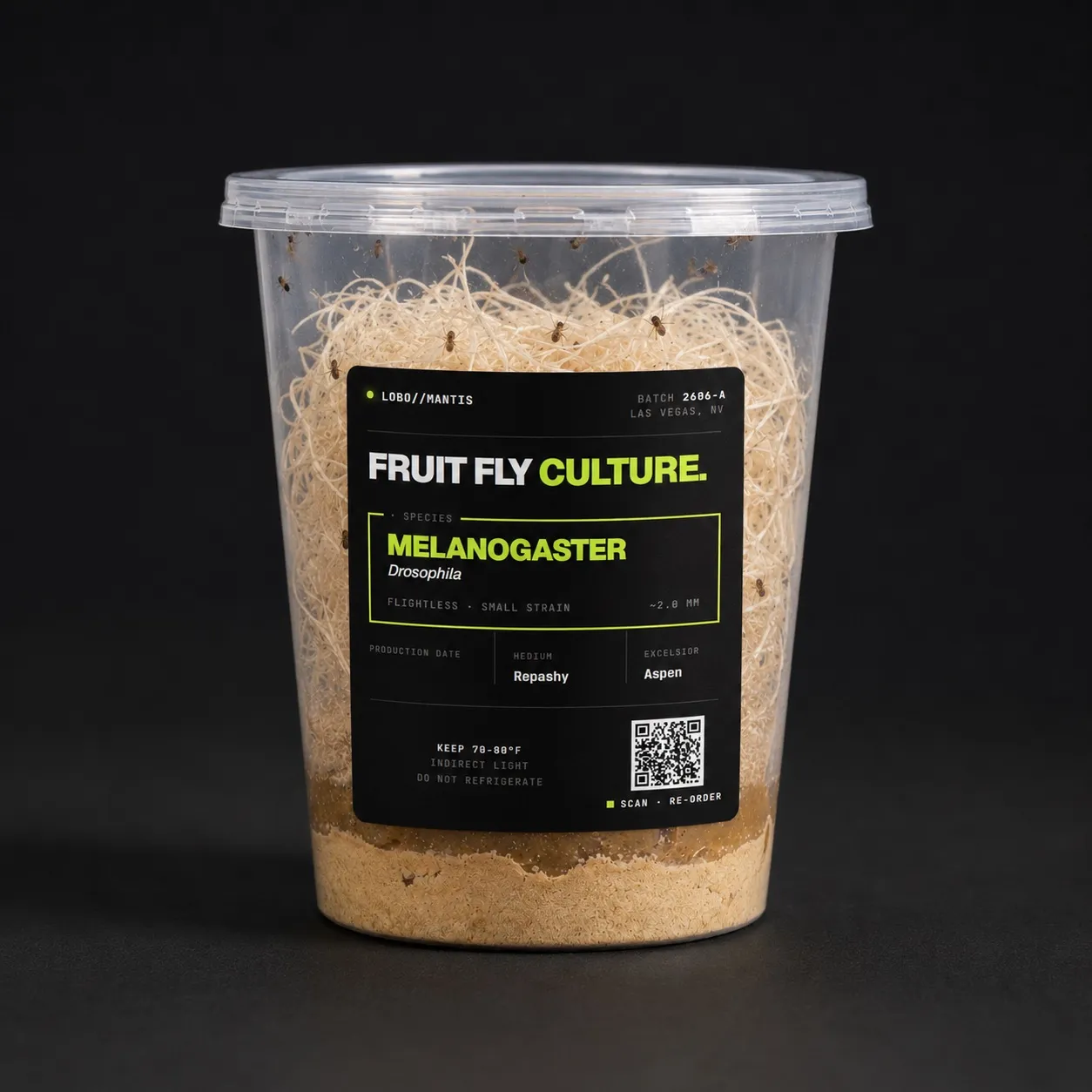
The right starter feeder for very small predators. Drosophila melanogaster is smaller than D. hydei — about 2 mm at the adult stage — which is exactly the size L1–L2 mantis nymphs can actually subdue and eat. Hand a freshly hatched mantis a feeder it can’t overpower and it simply won’t eat; melanogaster solves that, which is why it’s the first food almost every captive-bred nymph ever takes.
Why D. melanogaster? Flightless, not wingless: they have visible wings but can’t fly, so they can’t escape your enclosure. Keep the cup under about 80°F; above that some of the next generation can regain flight. Faster generation time than D. hydei — about a week ahead at every stage — and a high volume of small flies. It’s the classic strain mantis breeders, dart frog keepers, and jumping spider hobbyists rely on for early instars and slings.
Who They’re For
- L1–L2 mantis nymphs — the correct first feeder for newly hatched mantises of every species (fine to keep using at L3 if you offer more).
- Jumping spider slings and other small spiderlings.
- Dart frog froglets just out of the water.
- Any tiny predator that needs prey around 2 mm.
As your nymphs reach L3, graduate them to the larger D. hydei for more calories per fly, then on to green and blue bottle spikes as they grow.
How to Feed & Maintain a Culture
Tap a small number of flies into the enclosure near where your nymph perches. Because melanogaster are tiny, a pinch goes a long way — offer a few at a time so uneaten flies don’t stress a small nymph. No dusting needed for mantises — the culture media is already vitamin-enriched, and that is all a mantis needs. (Calcium dusting is for frogs and reptiles.)
Keep the culture upright at 70–80°F (21–27 °C), out of direct sunlight. Melanogaster cultures peak around days 14–21 — about a week ahead of hydei — but they also burn out sooner, finishing around day 30–35, so plan to start or order a fresh culture every 2–3 weeks if you’re feeding continuously. For media, mold prevention, and re-culturing tips, see our fruit fly culture care guide.
Storage & Arrival
Every culture ships in a vented 32 oz deli cup with established media and a producing adult population. Ships Ground on its own (no live arrival guarantee on Ground); ships free when it’s part of a mantis order (the Live Arrival Guarantee covers the mantis, not the culture). It arrives with a laying adult population you can feed from on day one (go easy — they seed the next wave); new flies emerge from about day 14. Store upright and warm. Don’t store a culture in the fridge — sustained cold collapses the colony — though a 10–15 minute chill to slow adults before harvesting is fine.
Need larger flies? Once your nymphs hit L3, graduate them to D. Hydei — bigger flies, longer-lived cultures, better calorie-per-fly for growing predators.
Frequently Asked Questions
What do you feed a baby praying mantis?
Newly hatched L1–L2 mantis nymphs eat flightless D. melanogaster fruit flies. They’re small enough (about 2 mm) for a tiny nymph to catch and subdue. Larger feeders are refused at this stage. Move up to D. hydei from L3 (melanogaster still works at L3 if you offer more).
Are D. melanogaster fruit flies flightless?
Yes — flightless, not wingless: they have visible wings but can’t fly out of the enclosure. Keep the cup under about 80°F; above that some of the next generation can regain flight. They climb, so tap the culture down before opening. That makes them safe and easy to use indoors.
How is D. melanogaster different from D. hydei?
Melanogaster is the smaller fly (≈2 mm) with a faster, shorter-lived culture — ideal for L1–L2 nymphs and slings. Hydei is larger (≈3 mm, about half again as big) with a longer-lasting culture — better for L3+ nymphs and bigger predators.
How long does a melanogaster culture last?
A melanogaster culture peaks around days 14–21 and stays productive for about 3–4 weeks, finishing around day 30–35. If you feed continuously, start or order a fresh culture every 2–3 weeks. Keep it upright, warm, and out of direct sun.