When your mantis, lizard, or amphibian has outgrown fruit flies, blue bottle spikes are the next size up. These are the soft-bodied larvae of Calliphora vomitoria — about 12–15 mm long, easy to grip, and packed with protein and moisture. They’re the largest feeder we sell short of ordering adult flies, and they bridge the gap between a fruit-fly diet and full-size prey for sub-adult and adult mantises.
“Spikes” is the keeper’s term for fly larvae (maggots) sold as feeders. Don’t let the name put you off — they are one of the cleanest, most nutrient-dense soft-bodied feeders you can offer, and predators that ignore dried or freeze-dried food will hammer a wriggling spike every time.
Who They’re For
Blue bottle spikes suit any predator big enough to handle a 12–15 mm soft body:
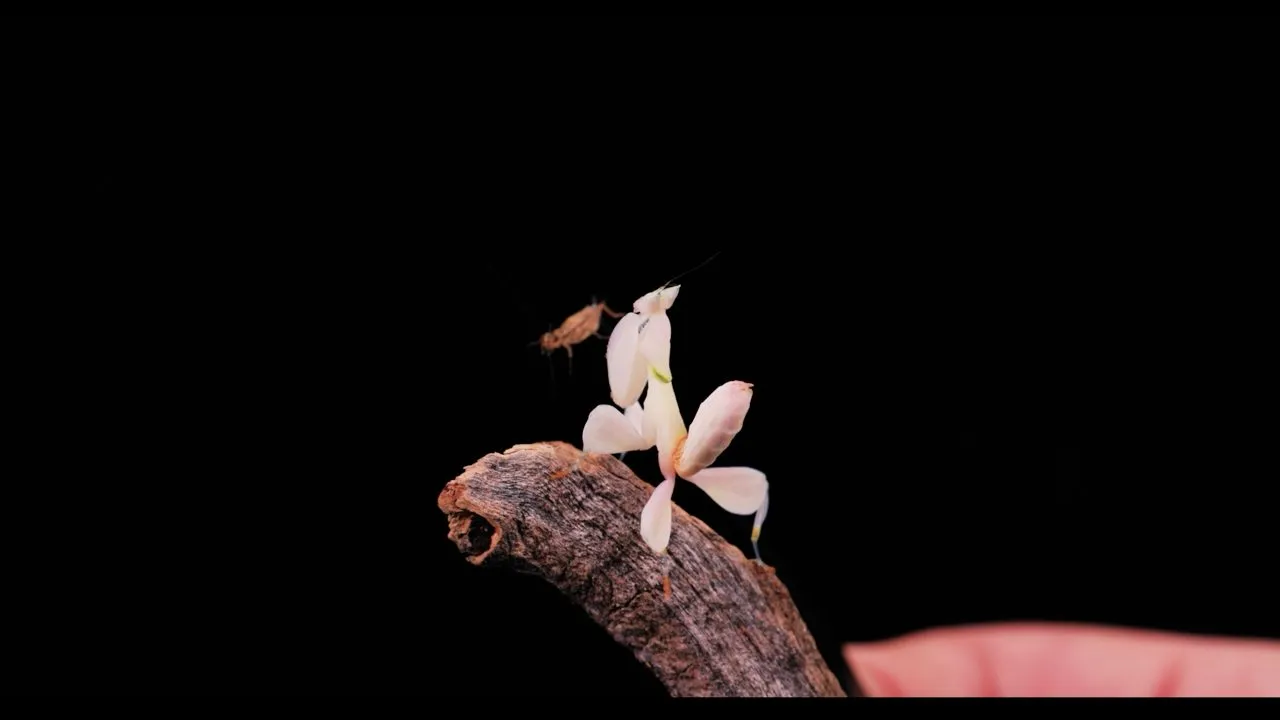
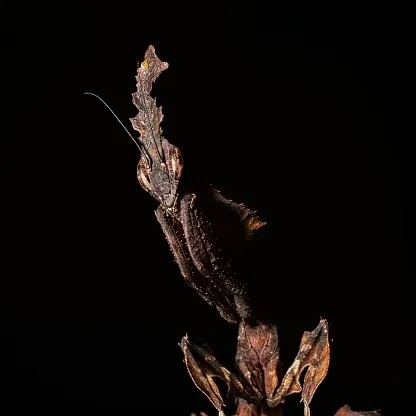
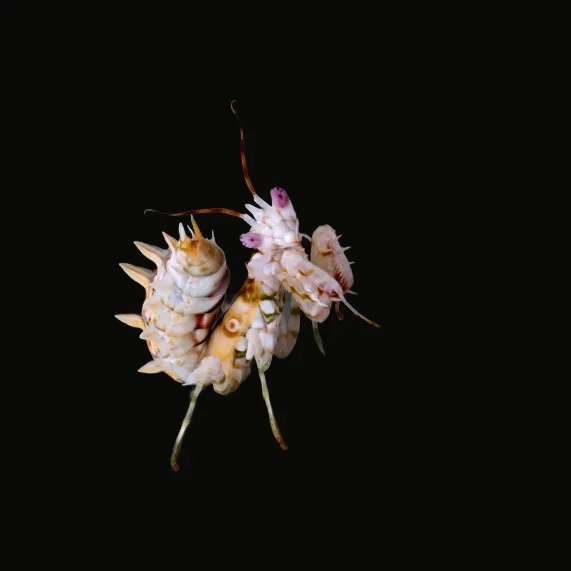
- L6+ and adult mantises — Ghost, Spiny Flower, Orchid, Dead Leaf, African Twig, Double Shield at their largest stages.
- Day geckos, crested geckos, and other small lizards looking for a soft, hydrating change from crickets.
- Dart frogs and larger amphibians, and jumping spiders of mature size.
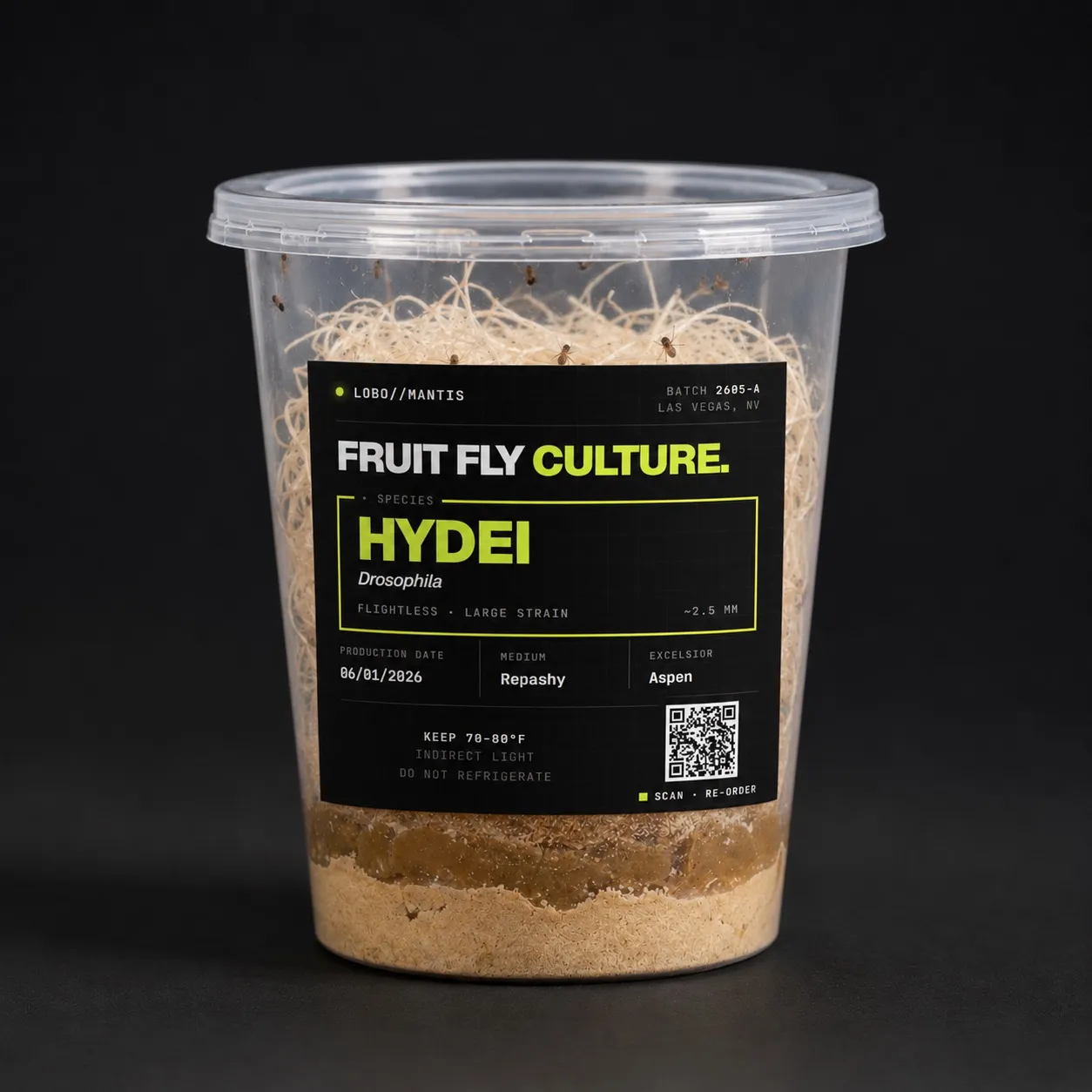
If your animal is still small — mantis nymphs below L6, jumping spider slings — these are too big. Start with D. melanogaster or D. hydei fruit flies, step up to green bottle spikes at L5–L6, and finish here from L6.
How to Feed Them
Tip a few spikes into a shallow dish or place them directly where your mantis can reach. The larvae move enough to trigger a feeding response but can’t climb smooth walls, so they stay put. For reptiles and frogs, a light calcium dusting once or twice a week balances the calcium-to-phosphorus ratio; mantises don’t need it.
Want flies instead of larvae? Leave a portion of the cup at room temperature and the spikes will pupate, then emerge as adult blue bottle flies in a few days — a great variety feeder for flying-insect specialists like mantises.
Storage & Shelf Life
Spikes ship in a vented cup with sawdust bedding. Refrigerate on arrival (the door of the fridge, around 4–8 °C) to slow their development if you aren’t feeding them out within 48 hours. Cold holds them at the larval stage for up to two weeks; at room temperature they’ll pupate within a few days. Pull out what you need, feed it, and return the rest to the fridge.
Frequently Asked Questions
What are blue bottle spikes?
Blue bottle spikes are the live larvae (maggots) of the blue bottle fly, Calliphora vomitoria. At 12–15 mm they’re a large, soft-bodied feeder used for L6+ and adult mantises, geckos, dart frogs, and other insectivores that have outgrown fruit flies.
How big are blue bottle spikes compared to green bottle spikes?
Blue bottle spikes are the larger of the two at 12–15 mm. Green bottle spikes (Lucilia sericata) are 8–10 mm — a half-step between fruit flies and blue bottles, suited to L5–L6 mantises and smaller reptiles.
How do I store fly spikes to keep them from turning into flies?
Refrigerate them. At around 4–8 °C the larvae stay dormant at the spike stage for up to two weeks. Left at room temperature they pupate within a few days and then emerge as adult flies — which is useful if you actually want flies for variety.
Can mantises eat blue bottle spikes?
Yes — mantises from about L6 onward, and adults, take blue bottle spikes. They’re too large for younger nymphs: fruit flies through L4, green bottle spikes at L5–L6, blue bottles from L6. See our feeding guide for stage-by-stage prey sizing.