

Praying mantis care guides.
Everything we tell new keepers in Discord, written down once, accessible forever. A field guide, protocols, species-specific tips, and the edge cases real keepers run into.
Tall, ventilated, simple.
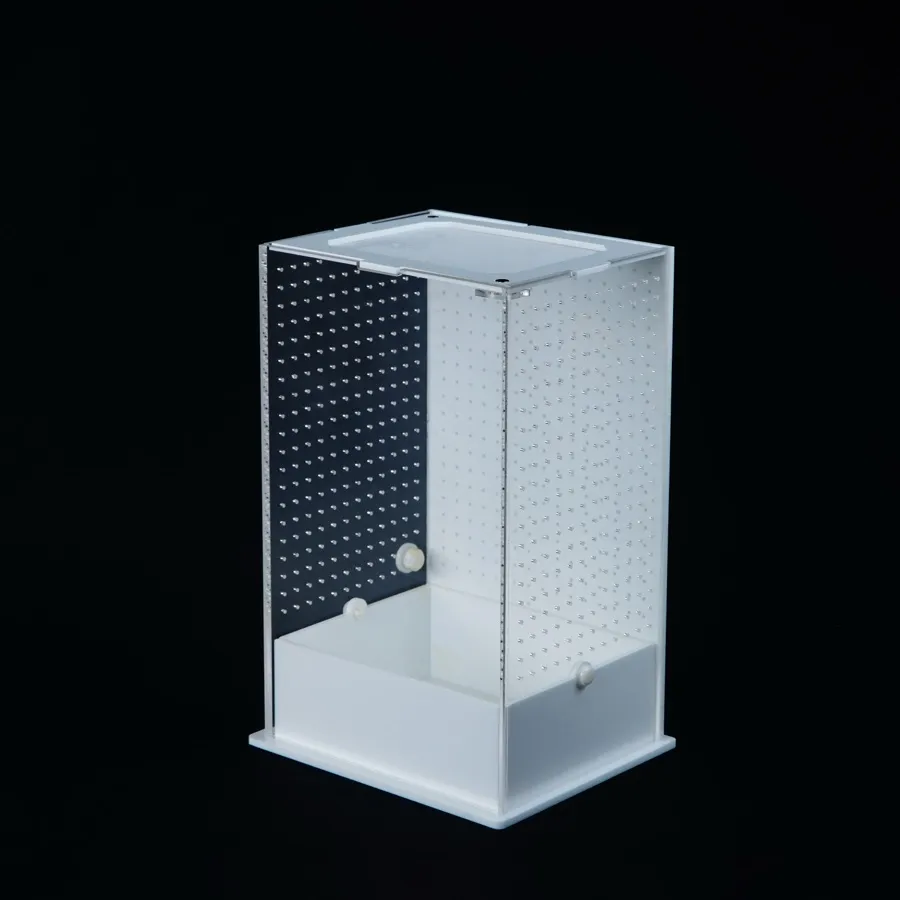
- · Height at least 2.5× body length (3× if you can), width at least 1.5×. Avoid oversized enclosures for nymphs, which struggle to find prey in a big box.
- · Mesh top: at least one cross surface for ventilation.
- · A dowelrod or fake plant: one or two perches.
- · Paper towel or a thin layer of dry coco fibre for dry-biome species; lightly damp coco or sphagnum for tropical species. No gravel. Cork bark is fine as decor.
- · Clean: I usually wipe it down (no full sanitize) every 3–4 weeks, using a bit of vinegar.
Warm days, slightly cooler nights.
- · Daytime temperature is species-specific. See the species guide. Most homes are close already.
- · Night: a few degrees cooler is fine. Keep tropical species (Orchid, Dead Leaf) at 72°F or above, everything else at 68°F or above.
- · If the room runs cold: a low-wattage ceramic heat emitter above the mesh, or a small mat on a side wall. Always on a thermostat, never underneath, never unregulated.
- · No heat lamps on plastic, and no UV. Mantises don't need it.
- · Direct sun is risky: magnification through plastic builds heat. Indirect light only.
- · If you use any heat source, verify with a thermometer inside the enclosure.
Live prey, sized right.
- · Prey no more than ⅓ of the mantis's body length. Smaller is always fine.
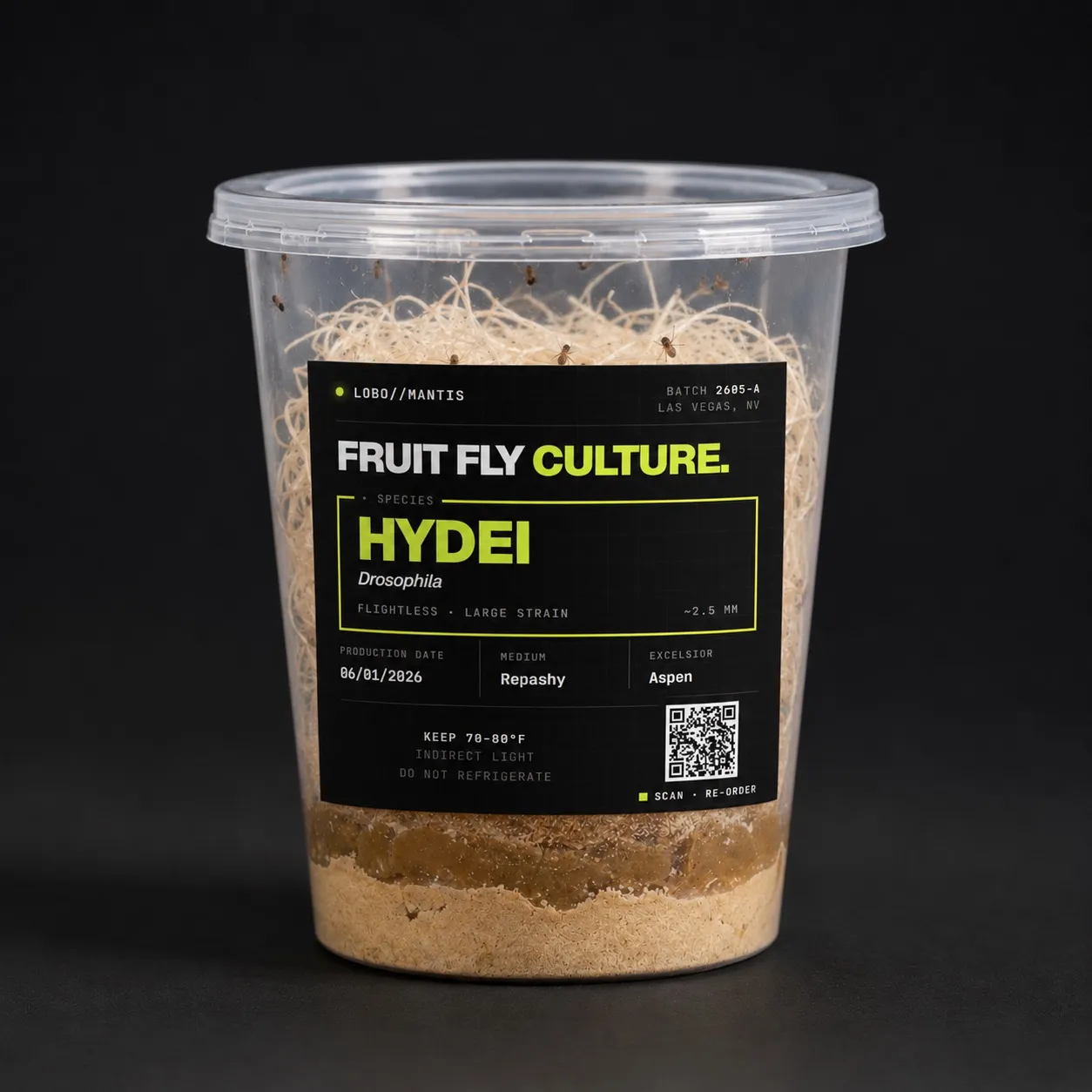
- · L1–L2: melanogaster fruit flies. L3–L4: hydei. L5+: house flies, bottle flies, small dubia.
- · Adults: bottle flies, moths, dubia roaches. No crickets, no mealworms, no waxworms. Ever.
- · Gut-load roaches and flies (oat, carrot, bee pollen). Fruit flies from a healthy culture need nothing extra, and no calcium dusting at any stage.
- · Refusing food and hanging still? Likely premolt. Hold off, wait for a clean molt, then feed once it's hardened.
Less than you want to.
- · Cool that you care, but think of it as "as little as the species needs": every other day to a few times a week for dry-biome species; daily for tropical. Your species guide has the number.
- · Mist the walls of the container, plus a perch or leaf, so it can drink from the droplets.
- · Never spray the animal, and never spray one in premolt. Raise wall-misting slightly and hold it steady.
- · Misting fast and heavy can flood the container and drown your mantis.
- · If a deli cup drips from condensation, wrap the outside in cling film to catch it, or ventilate more so the walls dry between mistings.
Molting comes first.
- · Pre-molt signs: hanging upside down, refusing food, less movement, dull colour.
- · Never disturb during pre-molt. No misting on the animal, no moving the enclosure.
- · Humidity matters most here. Raise wall-misting slightly and keep it steady. No sudden spike.
- · Stuck molt? Don't touch. Mist the walls (not the mantis), wait 2+ hours. Swab-moistening is an experienced-keeper last resort. Read the molting guide first.
- · After a molt: no food until it has hardened (moving normally, gripping firmly, colour back). About 24 h for a nymph, 48 h or more for an adult.
Species matter.
- · Orchid: tropical, warmer, higher humidity. Intermediate.
- · Ghost: forgiving, room temp, beginner.
- · Spiny Flower: active hunter, eyespot display, drier setup. Beginner.
- · Dead Leaf: humid, leaf-mimic display. Intermediate.
- · African Twig: dry, easy, fruit-fly feeder. Beginner.
- · Double Shield: drier setup, big shield-backed display animal. Beginner-intermediate.
- · See species cards below for exact ranges per species.

Orchid Mantis
The world's most photogenic mantis. Pink-and-white petal-mimicking limbs, native to Southeast Asian rainforests. Sought after globally for stunning visual displays.
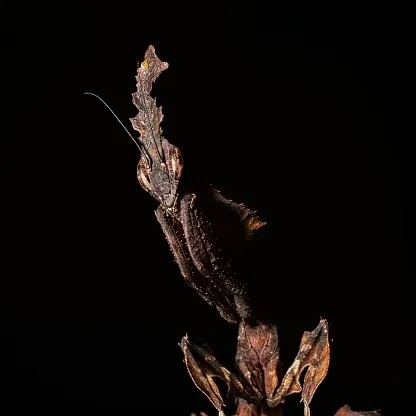
Ghost Mantis
The best "first exotic mantis." Leaf-mimicking camouflage, low cannibalism, and tolerant of typical room conditions. Long-lived for a mantis.
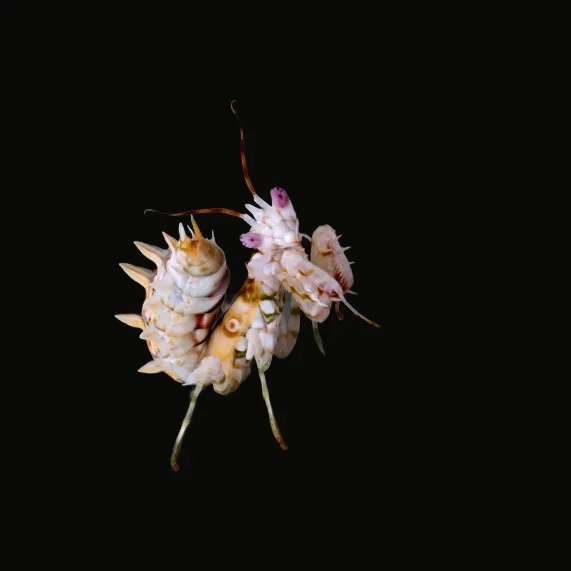
Spiny Flower Mantis
Walking artwork. Two black-outlined spiral eyespots on the wings flash open in a deimatic display that startles predators. Beginner-friendly with a showstopping threat pose.

Dead Leaf Mantis
A walking torn leaf. Wide shield-shaped pronotum, deimatic death-feign defense, and stunning patterning. The species that proves nature is the best costume designer.
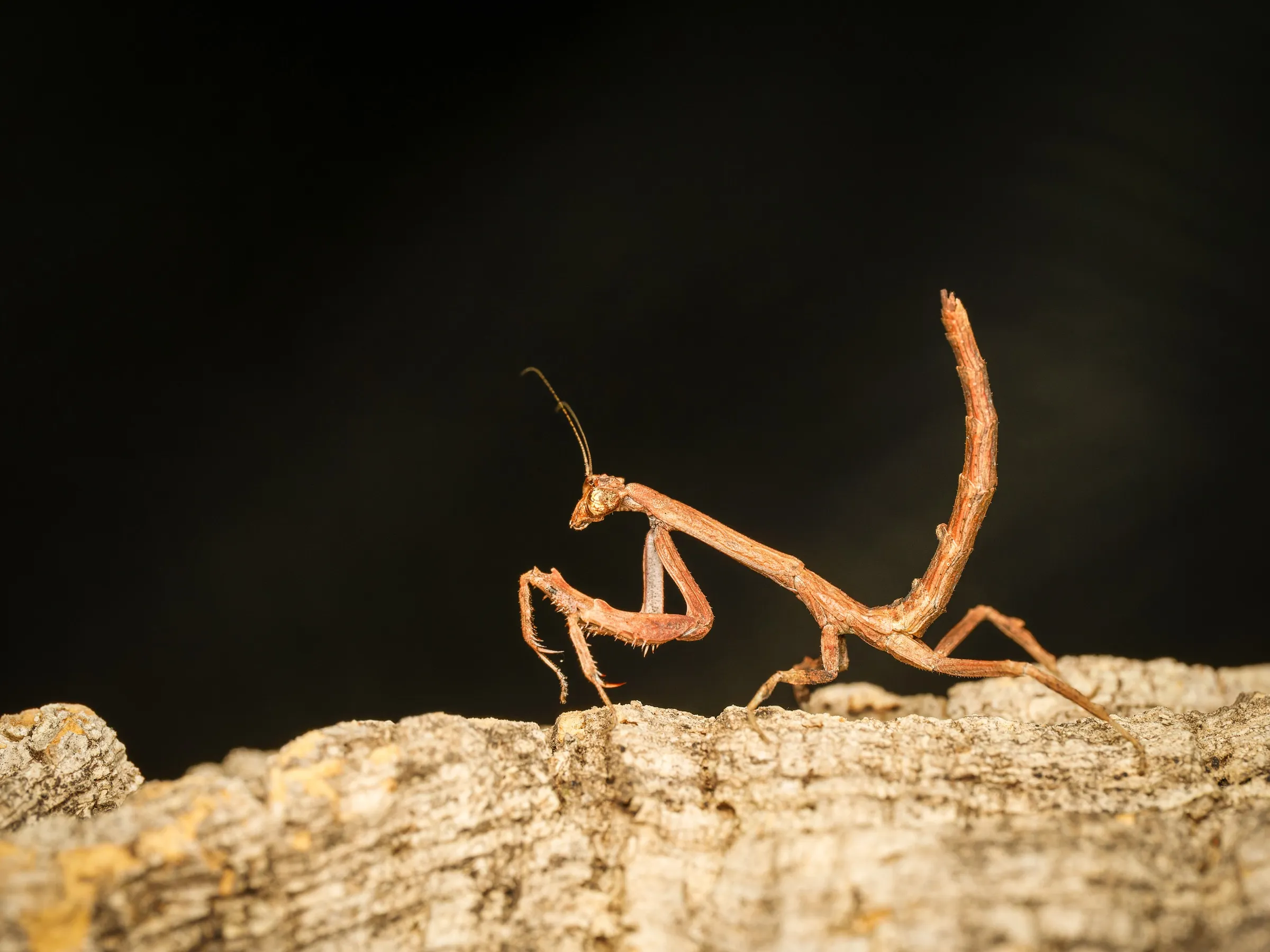
African Twig Mantis
If you've never kept a mantis, start here. Bark-textured camouflage, will chase its food, tolerates dry indoor air, and females live close to a year. The forgiving exotic.
Double Shield Mantis
The aggressive eater. Stocky, mottled, with a uniquely constricted "double shield" pronotum and bright blue inner-arm markings. For keepers who want a mantis with attitude.
Every mantis guide, one list.
Feed by size, not by hunger.
| STAGE | SIZE | FEEDER | FREQ | NOTES |
|---|---|---|---|---|
| L1–L2 | ~5–10mm | Melanogaster fruit flies | Every 1–2 days | Keep a few flies present at all times. Too small for hydei. |
| L3–L4 | ~10–20mm | Hydei fruit flies | Every 2 days | 4–6 flies per feeding. Match prey to ⅓ body length. |
| L5–L6 | ~25–40 mm | House / bottle flies, small dubia | Every 2–3 days | Green bottles are the step up; blue bottles from L6. |
| ADULT | Species-specific | Bottle flies, moths, dubia | Every 3–4 days | 1–2 prey items. Obesity shortens lifespan. |
| GRAVID ♀ | Variable | As above, higher volume | Every 2–3 days | Increased feeding supports ooth production. |
The part beginners panic about.
Every captive mantis molts 5–8 times in its life, depending on species and sex. Most go fine. A small number go wrong. Knowing the signs is the difference between a calm week and a panic.
- —Hanging upside down for hours.
- —Refusing food (2–7 days for nymphs, longer before the final molt).
- —Reduced movement, stillness.
- —Slight discoloration of the exoskeleton.
- —Handle during pre-molt or active molt.
- —Mist directly onto the animal.
- —Move the enclosure or jostle it.
- —Offer food until it has hardened (~24 h nymph, 48 h+ adult).
- —Touch a stuck molt: mist the walls, wait 2+ hours, read the molting guide.
Ten things that worry new keepers.
Likely pre-molt or post-transit stress. 1–3 days of refusal after arrival is normal (L1–L2: check at day 3). Check humidity, prey size, room temp. Day 5+, ask Discord.
READ FULL GUIDE →Don't touch. Mist the walls (not the mantis) to raise ambient humidity. Wait 2+ hours. Swab-moistening the stuck spot is an experienced-keeper last resort. See the molting guide.
READ FULL GUIDE → MOLTING GUIDE →Re-hang it head-down on a twig or paper towel, low. Light wall mist. Leave it alone. Limbs may set bent if it hardens on the floor.
READ FULL GUIDE →Condensation on walls + lethargy = ventilate. Open mesh wider, reduce misting, wipe walls dry.
Substrate stayed wet too long. Replace paper towel, dry the container, increase airflow. Watch for mantis breathing changes.
Mites, mold, or starved out. Start a new culture from stock today. Keep two cultures rolling at all times.
Could be pre-molt, hot, or sick. Check temp first. Then check for a bloated abdomen (overfeeding). Hanging high is normal, low is unusual.
Cold, dehydrated, or post-molt. Warm the room slightly, mist the walls, offer water droplets. Often resolves in 24hrs.
Bloated abdomen + reduced activity = too much food. Skip 2–4 days. Reduce frequency. Obesity shortens lifespan in adult ♀.
Record an unboxing video, then file your claim within 24 hours of unboxing at lobomantis.com/claim. We send a replacement, or refund the animal's price if we can't restock. Overnight orders only.
READ FULL GUIDE →Required first. Optional later.
- ✓ Ventilated enclosure2.5–3× body length tall, mesh top
- ✓ Feeder cultureFruit fly to start, scale up by instar
- ✓ Misting bottleFine mist spray, no aerosol
- ✓ Climbing surfaceTwig, mesh, or fake plant
- ✓ Species care infoBookmark this page
- ·Decor (silk plants, cork bark)
- ·Thermometer / hygrometer
- ·Ceramic heat emitter or side-wall heat mat + thermostat (cool rooms)
- ·Backup feeder culture
- ·Full care kit bundle
Where are you in the journey?
I'm buying my first mantis
My mantis just arrived
My mantis is not eating
I want species-specific care
- Ghost Mantis →
- Orchid Mantis →
- Spiny Flower Mantis →
- Dead Leaf Mantis →
- Double Shield Mantis →
- African Twig Mantis →
I'm setting up a bioactive enclosure
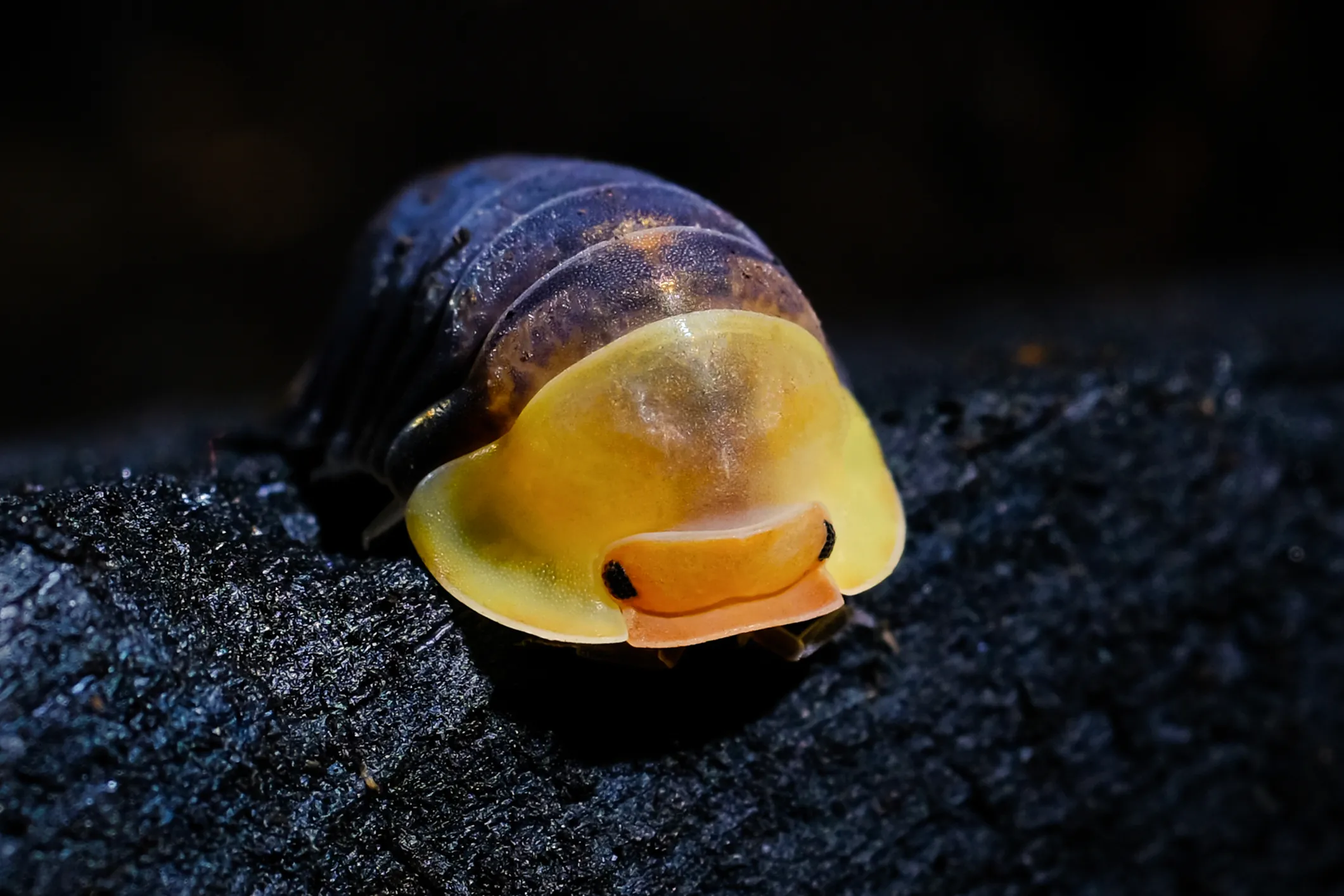
- Isopod care guide →
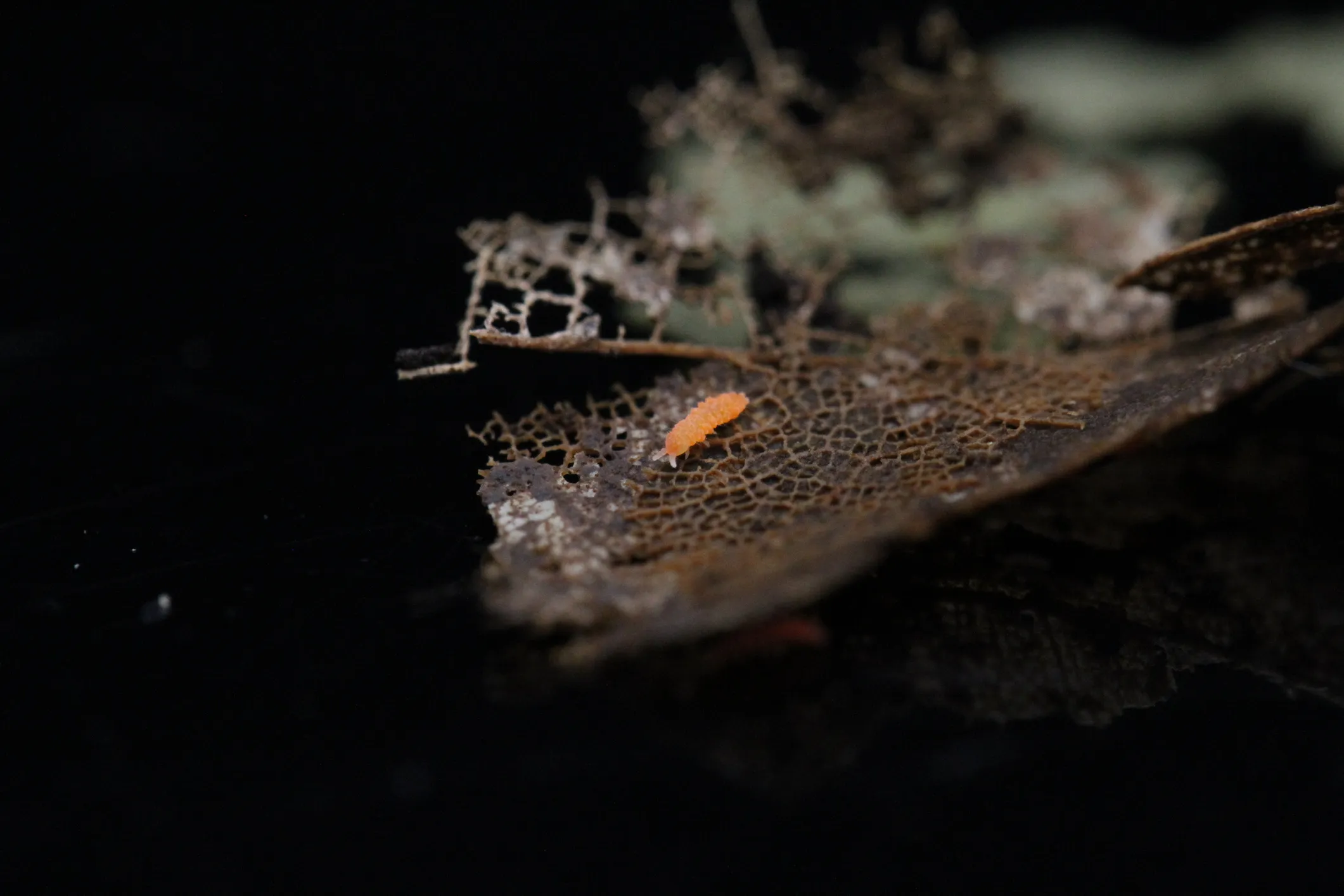
- Springtail culture guide →
- Which one do I need? →
- How many should I start with? →
Post the photo.
Someone's seen
it before.
The Discord exists for exactly this. Whatever the issue is (molting, not eating, looking weird), take a clear photo, tag the channel, and someone with more experience will respond.
- —Species
- —Instar / age if known
- —Temperature (day + night)
- —Humidity / misting routine
- —Last fed
- —Last molt
- —Clear photo of enclosure and mantis