

You’ve decided you want a praying mantis. Good choice. But buying one is nothing like buying a hamster or a fish. There’s no PetSmart aisle for mantises, the shipping logistics are different from anything you’ve dealt with, and picking the wrong seller can mean a dead bug in a box.
This guide covers where to buy a praying mantis, how to vet the seller, the red flags that predict a dead arrival, and what to have ready before the box lands. (New to the hobby? It’s worth a quick check that keeping a mantis is legal where you live.)
Where to buy a praying mantis
The short answer: buy from a dedicated captive-bred breeder that ships overnight and backs it with a live arrival guarantee. In the US that’s a short list of specialist operations, including us: LOBO//MANTIS breeds every mantis we sell in Las Vegas and ships overnight on Mondays and Tuesdays, with a live arrival guarantee on overnight shipping. Whoever you buy from, hold them to the seller checklist below.
You have three main options, and they’re not created equal.
Dedicated breeders are your best bet. A breeder who focuses on mantises knows the animals, raises them properly, and ships them routinely. They can tell you the exact instar, the hatch date, and what the nymph has been eating. They also tend to carry multiple species and can help you pick the right one for your experience level.
Pet stores occasionally carry mantises, but it’s rare and usually limited to Chinese mantises (a naturalized species) or native Carolina mantises, typically wild-caught or pet-store ootheca hatchlings. You won’t find exotic species, you won’t know the age or instar, and the staff usually can’t answer mantis-specific questions.
Online marketplaces and classified sites are hit or miss. Some legitimate breeders sell through these platforms, but you’re also dealing with resellers who bulk-ordered oothecae, hatched them in a shoebox, and have no idea what they’re doing. There’s no accountability if your mantis arrives dead.
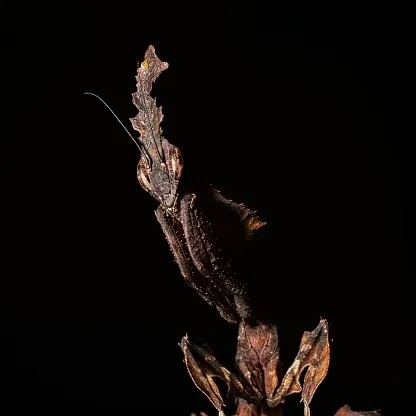
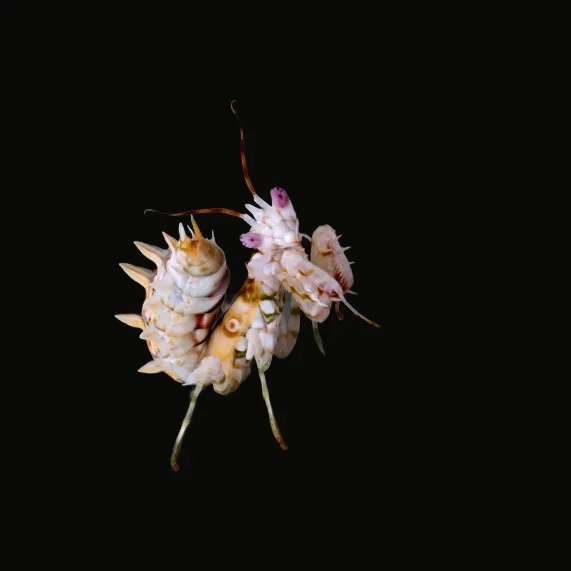
For exotic species like Orchid Mantis, Ghost Mantis, or Spiny Flower Mantis, a specialized breeder is realistically your only option.
What to look for in a seller
Not all sellers are equal. Here’s what separates a good operation from a bad one:
Captive-bred stock. This is non-negotiable. Captive-bred mantises are healthier, parasite-free, and adapted to enclosure life. Wild-caught mantises are stressed, often carrying parasites, and have unknown histories. Any reputable seller will explicitly state their animals are captive-bred.
Live arrival guarantee. Shipping live insects involves risk: extreme temperatures, rough handling, delays. A seller who guarantees live arrival is putting their money behind their shipping practices. If they won’t guarantee it, they’re telling you they don’t trust their own process.
Transparent shipping practices. Good breeders use insulated boxes, add a heat pack in cold weather, and ship via express carriers. They’ll re-route or hold shipments during extreme weather rather than risk your animal. They should be able to tell you exactly how they pack.
Clear communication. A good seller will tell you the species, the instar, and what they’re feeding. They’ll answer your questions before you buy. If someone can’t tell you what instar a nymph is, they shouldn’t be selling it.
Reviews and reputation. Check for reviews, look at their social media, see how they handle problems. A breeder who has been at it for years and has happy customers is a breeder who knows what they’re doing.
At LOBO//MANTIS, we ship captive-bred mantises with a live arrival guarantee on overnight shipping and insulated packaging. Every listing names the species and its care requirements, and a good seller will tell you the current instar on request. That should be the baseline for any seller you consider.
Picking a species (the short version)
Not every mantis is beginner-friendly, and the full ranking is its own article: best pet mantis for beginners. The short version: start forgiving. A Ghost Mantis or African Twig Mantis will teach you the hobby without punishing the mistakes every new keeper makes, and a Spiny Flower Mantis adds color at only a small step up. Save the humidity-sensitive showpieces, the Orchid Mantis and Dead Leaf Mantis, for your second animal.
What instar to buy
Mantises are sold by instar, the stage between molts. L1 is fresh out of the egg, L2 is after the first molt, and so on up through adulthood.
Across the hobby, younger nymphs are cheaper and older ones cost more; we list one price per species and ship established young nymphs past the hatchling stage (the exact stage varies with each hatch). Here’s how the stages differ:
L1-L2 nymphs are the cheapest but also the most fragile. They need fruit flies (Drosophila melanogaster), tiny enclosures, and precise humidity. They’re easy to lose if you don’t know what you’re doing. I generally don’t recommend L1 for first-time buyers.
L3-L4 nymphs are the sweet spot for beginners. They’re past the most fragile stage, big enough to handle small prey confidently, and you still get to watch most of their growth. They’ve been established on feeders and have proven they’re eating well.
L5 and above are more expensive but nearly bulletproof. If you want maximum ease and don’t mind missing the early growth stages, this is a safe bet.
Sub-adults and adults give you the least time with the animal (most species live 6–12 months from hatch; Ghost and Double Shield females reach 18; it varies by species and sex) but are the easiest to care for. Good if you want to experience keeping a mantis before committing to raising one from a nymph.
What you need before your mantis arrives
Do not order a mantis and then figure out the setup when it arrives. Have everything ready and waiting. Here’s your checklist:
Enclosure. For L1–L2 nymphs, a 16-oz deli cup with a mesh lid. From L3 to L6, something about 15 cm (6 in) tall: a 32-oz cup or a small acrylic enclosure. Adults need at least 20 cm (8 in) of height for species up to 8 cm, and 25–30 cm for the big Dead Leaf and Double Shield. Rule of thumb: height at least 2.5× the mantis’s body length (3× if you can), width at least 1.5×. Check our terrarium setup guide for details.
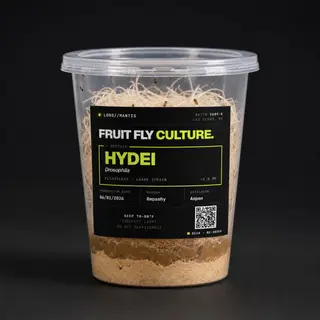
Feeders. Have feeders on hand before your mantis arrives. Fruit flies (D. melanogaster for small nymphs, D. hydei for medium nymphs), houseflies or green bottle flies for medium-large nymphs, and blue bottle flies for sub-adults and adults. See our feeder insects guide for matching prey to instar. Your mantis will be hungry after shipping stress.
Misting bottle. A simple spray bottle for maintaining humidity. Mist the enclosure walls. Never spray directly on the mantis.
Thermometer and hygrometer. Know what’s happening inside the enclosure. A combo unit that sticks inside works fine.
Substrate or paper towel. Paper towel on the bottom for easy cleaning. Some keepers use coco fiber for humidity retention, but paper towel is better for beginners because you can spot mold or mites immediately.
Something to climb on. A stick, a piece of fake plant, or mesh on the lid. Mantises need to hang upside down to molt. Without a suitable perch, they can mismolt and die.
Red flags to avoid
Walk away from any seller who:
- Can’t tell you the exact species or instar
- Ships without insulation
- Has no live arrival guarantee
- Sells wild-caught mantises as “captive bred”
- Won’t answer questions before the sale
- Has no reviews or a pattern of complaints about dead arrivals
- Ships during extreme heat (90°F or higher) or cold (forecast lows of 40°F or lower along the route) without adding a heat pack, re-routing to a staffed carrier counter, or holding the shipment (see how we handle weather and live arrival)
- Lists mantises at suspiciously low prices: healthy captive-bred exotics cost what they cost (here’s what a praying mantis actually costs)
Ready to buy?
If you’ve read this far, you’re already better prepared than most first-time mantis buyers. You know what to look for, what to avoid, and what you need at home.
Browse our available species in the LOBO//MANTIS shop. Every mantis ships captive-bred from Las Vegas, with a live arrival guarantee on overnight shipping, full care instructions, and support if you have questions after your purchase. Orders ship overnight on Mondays and Tuesdays with an 8 AM Pacific cutoff (after that, your order rolls to the next ship day), packed the day of pickup and handed to the carrier in the late afternoon, so your mantis never sits in a facility over a weekend, and delivery is by noon to most addresses. When your box lands, follow our unboxing guide so the first hours go smoothly. Check the individual species pages for current availability and specific care guides.
Frequently Asked Questions
Where is the best place to buy a praying mantis?
A dedicated captive-bred breeder. You get a known species, a known instar, a health guarantee, and someone who can answer questions after the sale. Pet stores rarely stock mantises, and marketplace resellers often can’t tell you what they’re selling. Vet any seller against the checklist above before you pay.
What instar should a beginner buy?
L3-L4 is the sweet spot. Nymphs that young are past the fragile hatchling stage but still give you most of the growth arc. Across the hobby, younger nymphs are cheaper but unforgiving of beginner mistakes, and adults give you the least time with the animal. We list one price per species and ship established young nymphs past the hatchling stage.
How much does a praying mantis cost?
Beginner species start around $30 and showpiece species run up to $80 at our shop. See the full cost breakdown for what drives prices across the hobby (species, instar, sex); we list one price per species.
Is it safe to have a mantis shipped?
Yes, when the seller ships correctly. We ship overnight on Mondays and Tuesdays with insulated packaging and a live arrival guarantee on overnight shipping. When the forecast high is 90°F or higher we re-route the overnight box to a staffed FedEx counter for pickup; when the low is 40°F or lower we add a free heat pack. We hold the order only for severe weather or a carrier alert. Slower shipping speeds are where dead-on-arrival stories come from.