

Feeding is the part of mantis-keeping that trips up the most beginners, not because it’s hard, but because nobody explains the system. There’s a logic to mantis feeding, and once you see it, the whole thing becomes routine. (New to the hobby? Start with our best mantis for beginners guide and a proper terrarium setup.)
I breed mantises and run feeder cultures year-round in Las Vegas. Every animal I ship eats from the same supply line I sell. This is the complete prey guide: what to feed, when, why flightless fruit flies run the hobby, and how to keep a culture alive long enough to get your money’s worth.
What do praying mantises eat?
Praying mantises are obligate predators. They eat live, moving prey (almost always insects), and they eat it exclusively. There’s no pellet, no dried food, no shortcut. A mantis tracks live prey with its head, strikes with its raptorial arms, and eats it then and there.
The single most important rule: prey should be no more than ⅓ of the mantis’s body length, at any stage. Err smaller. Too small is a non-event. Too large risks injury to your mantis. Everything below is built around matching prey size to the animal as it grows.
The feeder ladder: prey by mantis stage
A mantis isn’t one size for its whole life. It hatches tiny and molts its way up through instars (stages, labeled L1, L2, and so on). Your feeders climb the ladder with it.
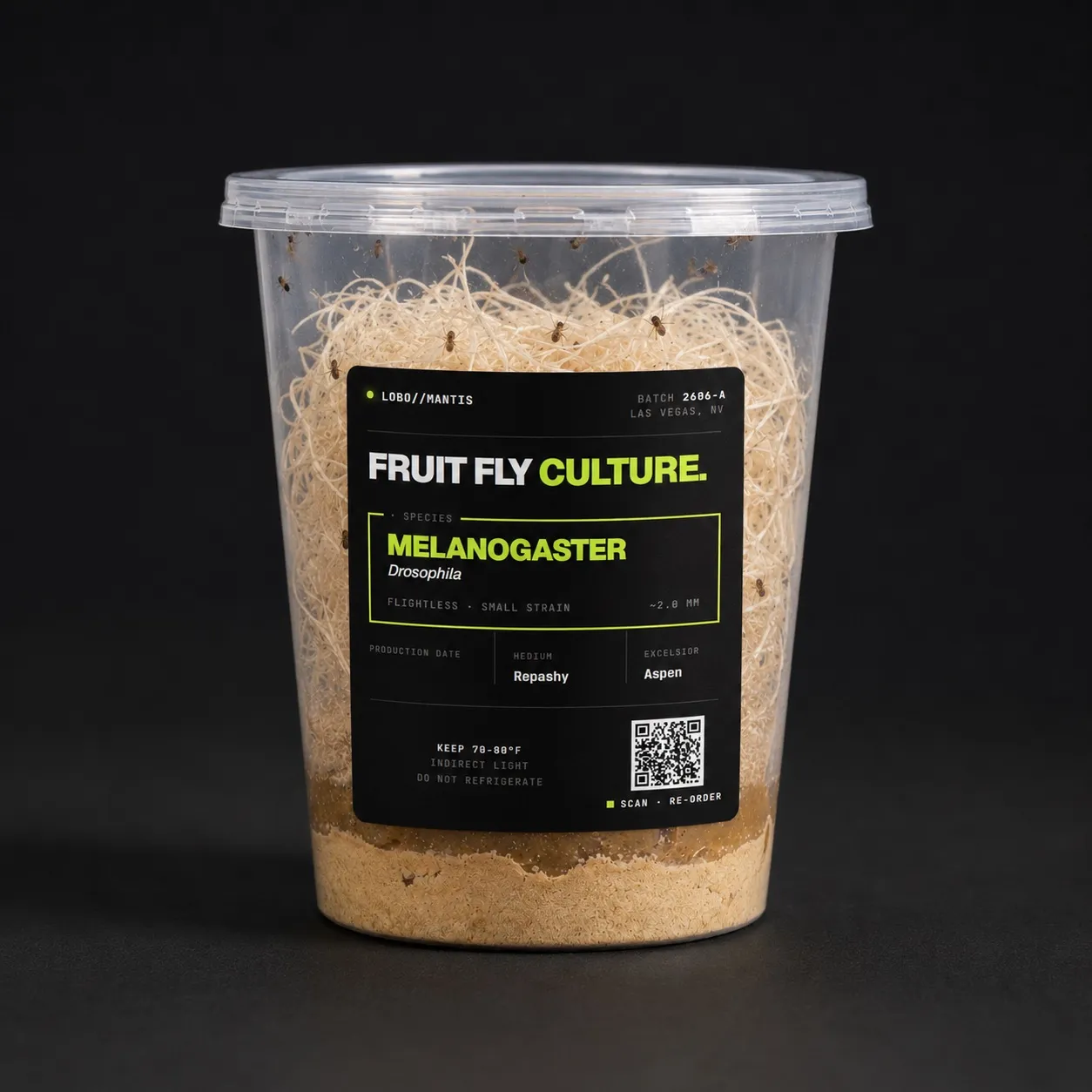
L1–L2 nymphs → Melanogaster fruit flies
Freshly hatched nymphs are minuscule. They can only subdue the smallest prey, which means flightless Drosophila melanogaster fruit flies, almost exclusively. Tap 4–6 flies into the enclosure and replenish every 1–2 days, keeping a few present at all times.
This is where every keeper starts. Grab a melanogaster culture: one cup feeds a single nymph for about a month.
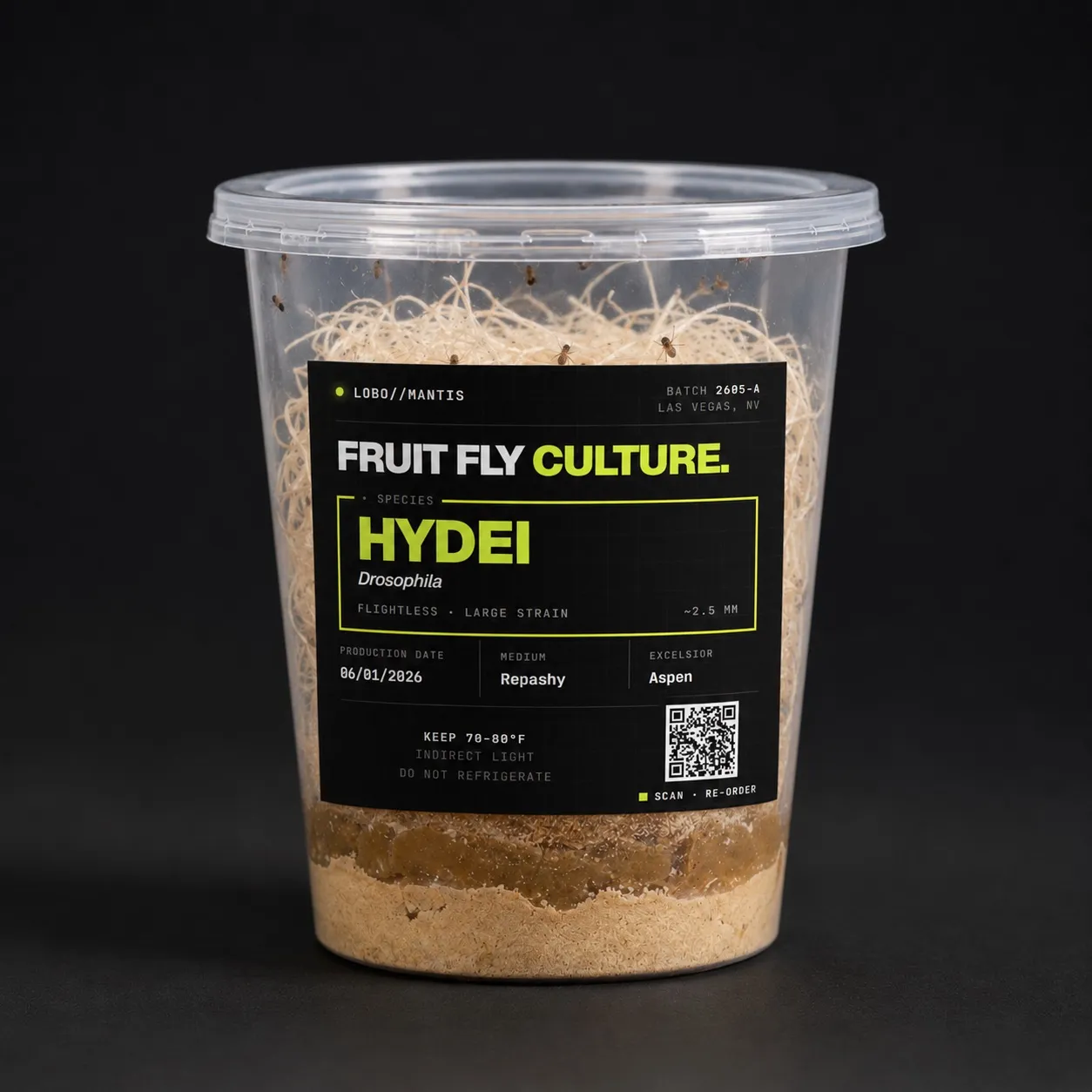
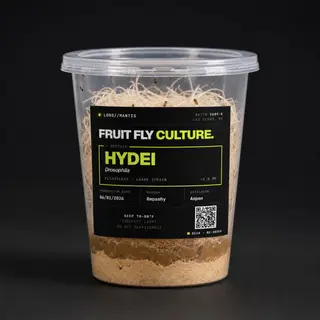
L3–L4 nymphs → Hydei fruit flies
As the nymph molts up, it can handle bigger prey. Step up to flightless Drosophila hydei fruit flies, same idea, larger fly. Offer 4–6 flies every couple of days. Some keepers just keep offering more melanogaster, which works too, but hydei saves you handling more individual flies.
When your nymph hits this range, add a hydei culture to the rotation.
L5+ nymphs → Bottle fly spikes
Now the mantis is big enough for real flies. This is where bottle flies come in. You buy them as spikes, the pupal stage, and let them hatch into adult flies in a deli cup over a few days. That gives you a controlled supply of correctly sized prey on demand.
We carry both blue bottle spikes and green bottle spikes (how to hatch spikes into flies). Green bottles are the smaller fly (8–10 mm), great for that L5–L6 transition window; blue bottles run larger (12–15 mm) and suit L7+ and adults. Offer 2–3 flies every 2–3 days.
Adults → Bottle flies, moths, optionally roaches
A full-grown mantis takes the biggest prey it’ll ever eat: large blue bottle flies, moths, and, for species that accept crawling prey, small dubia roaches. One or two prey items every 3–4 days is plenty.
We don’t feed crickets at any stage. It isn’t that a mantis can’t eat one; crickets are the most disease-prone feeder in the hobby, and dubia carry far less risk for the same job. That’s a house policy, not a law of nature. Plenty of keepers use them.
Important: some species refuse crawling prey at every stage. Orchid and Spiny Flower mantises generally want flying prey only. Generalists like the African Twig and Double Shield eat just about anything. Check the species care guide before you assume.
Here’s the ladder at a glance:
| Mantis stage | Best feeder | Where to buy |
|---|---|---|
| L1–L2 | Melanogaster fruit flies | /shop/melanogaster |
| L3–L4 | Hydei fruit flies | /shop/hydei |
| L5–L6 | Green bottle spikes | /shop/green-bottle-spikes |
| L7+ / adult | Blue bottle spikes, moths, roaches | /shop/blue-bottle-spikes |
For the full prey-to-size table and feeding frequency by stage, see our feeding guide.
Why flightless fruit fly cultures are the hobby standard
If you’re new, you might wonder why everyone obsesses over fruit flies. Three reasons:
- They’re the right size. Nothing else commonly available matches a tiny L1 nymph the way a melanogaster does.
- They can’t fly away. Flightless and wingless strains stay in the enclosure where your mantis can catch them, instead of buzzing around your kitchen. (You’ll still get a few escapees. It’s the hobby tax.)
- A culture is self-replicating. You’re not buying flies. You’re buying a colony in a cup that produces hundreds of flies over weeks.
That last point is the one beginners underestimate. A single culture isn’t a snack. It’s a feeder supply line.
How long does a fruit fly culture last?
A healthy culture produces for about three to four weeks. Here’s the rough timeline:
- Days 1–4: the starter adults mate and lay eggs.
- Days 5–10: larvae hatch and churn through the media; original adults start dying off (normal).
- Days 11–14: pupae appear on the walls; the cup looks dead. It isn’t. This is the quiet phase.
- Days 14–21: the new generation emerges by the hundreds. Peak harvest. (Hydei runs about a week behind at every stage.)
- Day 28+: media is exhausted. Start the next culture around day 14 of this one, every 2–3 weeks, so there’s never a gap.
The takeaway: don’t panic when a new culture goes quiet around week two. It’s loading up for the big wave. Our full fruit fly culture care guide walks through every phase, plus how to split a culture into new ones so you never have to rebuy.
Keeping cultures alive
Cultures are low-maintenance, but a few mistakes kill them fast:
- Vent, don’t seal. The lid is vented for gas exchange. A sealed culture suffocates and molds.
- Room temperature, 70–80°F. Production slows sharply below ~65°F and stops near 60°F; too warm invites mites and contamination. A bookshelf or closet is ideal. Don’t put it on top of the fridge or near a vent.
- Indirect light. Direct sun overheats the cup.
- Not soggy. The media should be moist, not swimming. Excess condensation drowns larvae. In very dry climates the opposite risk applies (media drying out), but for most people, too wet is the bigger danger.
- Watch for mites. Light mites on a spent cup are normal. Retire it. Mites on a young cup: move 15–20 clean adults to fresh media and bin the original.
Wild-caught prey: don’t
It’s tempting to catch flies or moths in the yard for free. Don’t make a habit of it.
- Pesticides. You have no idea what a wild insect has been exposed to. Pesticide-loaded prey can kill a mantis outright, and you won’t see it coming.
- Parasites. Wild insects can carry parasites you don’t want anywhere near your animal.
- Inconsistency. You can’t size or schedule what you catch.
A clean, cultured feeder supply costs a few dollars and removes the entire risk. It’s not worth gambling a $30–$80 mantis to save the price of a culture. See our buying guide for what a quality animal actually costs.
Gut-loading: feeding the feeders
What your feeders eat, your mantis eats. Gut-loading means feeding your prey nutritious food for 24+ hours before offering them, so they pass that nutrition along.
- Fruit flies: the standard culture media already does this: it’s enriched with yeast and nutrients. No extra steps.
- Bottle flies: they don’t gut-load well as adults, but offering emerging flies a little sugar or honey water keeps them lively. Mantises don’t need calcium supplementation the way reptiles do.
- Roaches: feed fresh greens, carrots, and quality dry insect food for a day or two. Skip spinach, citrus, and anything moldy.
How to stock up
Most keepers run two cultures at once on a stagger: start a new one before the old one peaks, so you always have flies coming. One culture feeds a single nymph for about a month, so one melanogaster culture followed by one hydei culture covers a single nymph’s first couple of months. Then keep green and blue bottle spikes on hand for the back half of the ladder.
One more thing worth knowing: feeders ship Ground for $5 on their own, or at no extra shipping cost with any mantis order. If you’re buying a mantis anyway, add the feeders to the same cart and they ship free. New keepers should grab their first culture with their first animal.
Ready to stock the pantry? Grab melanogaster and hydei cultures plus blue and green bottle spikes, and remember, they ship free with any mantis order.
Frequently Asked Questions
What do baby praying mantises eat?
Flightless melanogaster fruit flies, almost exclusively. L1–L2 nymphs are too small for anything bigger. Keep a few flies present and replenish every 1–2 days. One melanogaster culture feeds a single nymph for about a month. Full first-food rundown: what do baby praying mantises eat.
How often should I feed my mantis?
It scales with age. Tiny nymphs eat constantly (every 1–2 days); adults eat once every 3–4 days. Skip a feeding if the abdomen is round and full; never skip if it’s thin and concave. Stop feeding the moment you spot premolt signs: nymphs fast for two to seven days before a molt, longer before the final one. See molting problems for the warning signs. Full schedule in the feeding guide.
Can mantises eat dead insects or non-live food?
Generally no. Mantises are ambush predators that respond to movement. They almost never take dead or motionless prey. Live feeders are the only reliable option.
How long does a fruit fly culture last?
About three to four weeks of production from one culture, with the peak harvest around days 14–21. Start a fresh culture before the old one runs out, or split it. See the culture care guide.
Are flightless and wingless fruit flies the same thing?
Close but not identical. Wingless strains have no wings; flightless strains have wings but can’t fly. Ours are flightless, not wingless: they have visible wings but can’t fly. Keep the cup under about 80°F; above that some of the next generation can regain flight. Both types stay in the enclosure where your mantis can catch them, which is the whole point. Either works for mantis feeding.
Can I feed my mantis insects from my backyard?
I don’t recommend it. Wild insects may carry pesticides or parasites that can kill your mantis, and you can’t control their size. Cultured feeders cost a few dollars and remove the risk entirely.