Skip to content
▸ CARE GUIDES · FIELD-TESTED · UPDATED FOR 2026

Praying mantis care guides.

Everything we tell new keepers in Discord, written down once, accessible forever. A field guide, protocols, species-specific tips, and real keepers' worth of edge cases.

▸ QUICK REFERENCE · BEGINNER SPECIES
BODY TEMP 75–85 °F
NIGHT DIP 65–70 °F
HUMIDITY 60–70 %
MIST 2× DAILY
ENCL. SIZE 3× BODY LENGTH
PREY SIZE ⅓ BODY LENGTH
SHIPPING WINDOW MONDAYS ONLY
HANDLING MINIMAL, GENTLE
Ranges vary by species. See species cards below for exact ranges.
VIEW SPECIES-SPECIFIC CARE →
▸ 01 / PREPARATION

Before your mantis arrives.

Tick these off the day before the box lands. Skip handling, prep the enclosure, line up feeders.

0 / 9 READY
▸ 02 / FIRST 7 DAYS
5 STEPS · AFTER UNBOXING

Don't panic. Don't handle. Don't overfeed.

DAY 0
Unbox carefully.

Don't shake the cup. Let the animal acclimate in low light for 30 minutes before transferring to its enclosure.

DAY 1
Offer water.

Mist the enclosure walls and a leaf or paper towel. Don't mist the animal directly — it'll drink from droplets on its own time.

DAY 2–3
First feeding.

Don't rush it. Offer appropriately sized prey in 12–24 hours. Can refuse food after transit for 1–2 days; totally normal.

DAY 3–5
Watch for pre-molt.

Refusing food, hanging upside down, swollen abdomen, less movement — all normal molt signs. Stop offering food.

DAY 5–7
Settle into rhythm.

Resist handling for 5–7 days. Post-L3–L4 nymphs that feel stable and have been fed may be gently handled briefly.

▸ DO
  • Take clear photos with date + enclosure as the background.
  • Bookmark the species care guide.
  • Mist enclosure walls, not the animal.
  • Offer prey sized to ⅓ body length max.
▸ DON'T
  • Handle immediately or every day.
  • Panic if it skips food for 24–72 hours.
  • Leave large prey loose in the enclosure overnight.
  • Mist directly onto a molting mantis.
▸ 03 / THE SIX PILLARS
ENCLOSURE · TEMP · FOOD · MOISTURE · MOLTING · SPECIES
01

Tall, ventilated, simple.

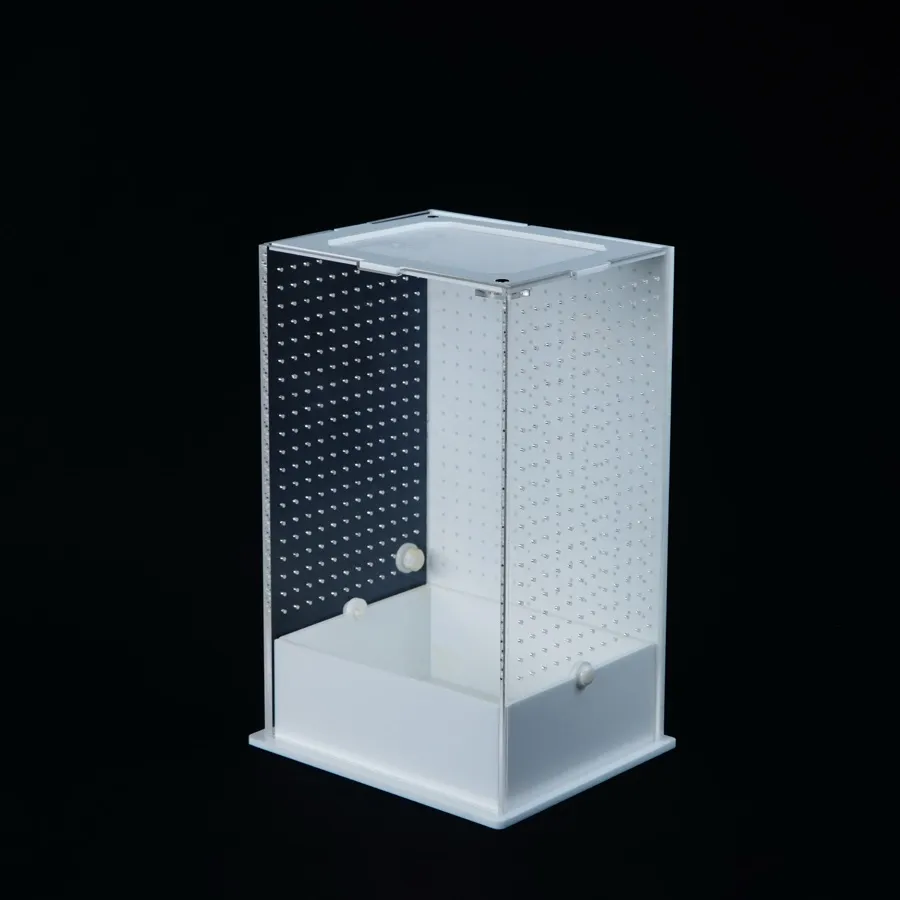
  • · Vertical container at least 3× body length — avoid big enclosures for nymphs.
  • · Mesh top — at least one cross surface for ventilation.
  • · A dowelrod or fake plant — one or two perches.
  • · No soil, no gravel, no bark. Paper towel substrate is the standard.
  • · Clean: I usually wipe it down (no full sanitize) every 3–4 weeks, using a bit of vinegar.
02

Warm days, cool nights.

  • · Day 75–85°F. Most species thrive around mid-high 70s with sun.
  • · Night 65–70°F. A 6+ degree drop mimics natural rhythms.
  • · Red/UV light pads along morning/evening hours when needed.
  • · Direct sun is risky — magnification through plastic builds heat. Indirect light to the max.
  • · Under heat lamps, catch thermometer reads every 2–3 days to verify.
03

Live prey, sized right.

  • · Prey should be about ⅓ of the mantis's body length — anywhere from ⅛ to ½ works. Simple as that.
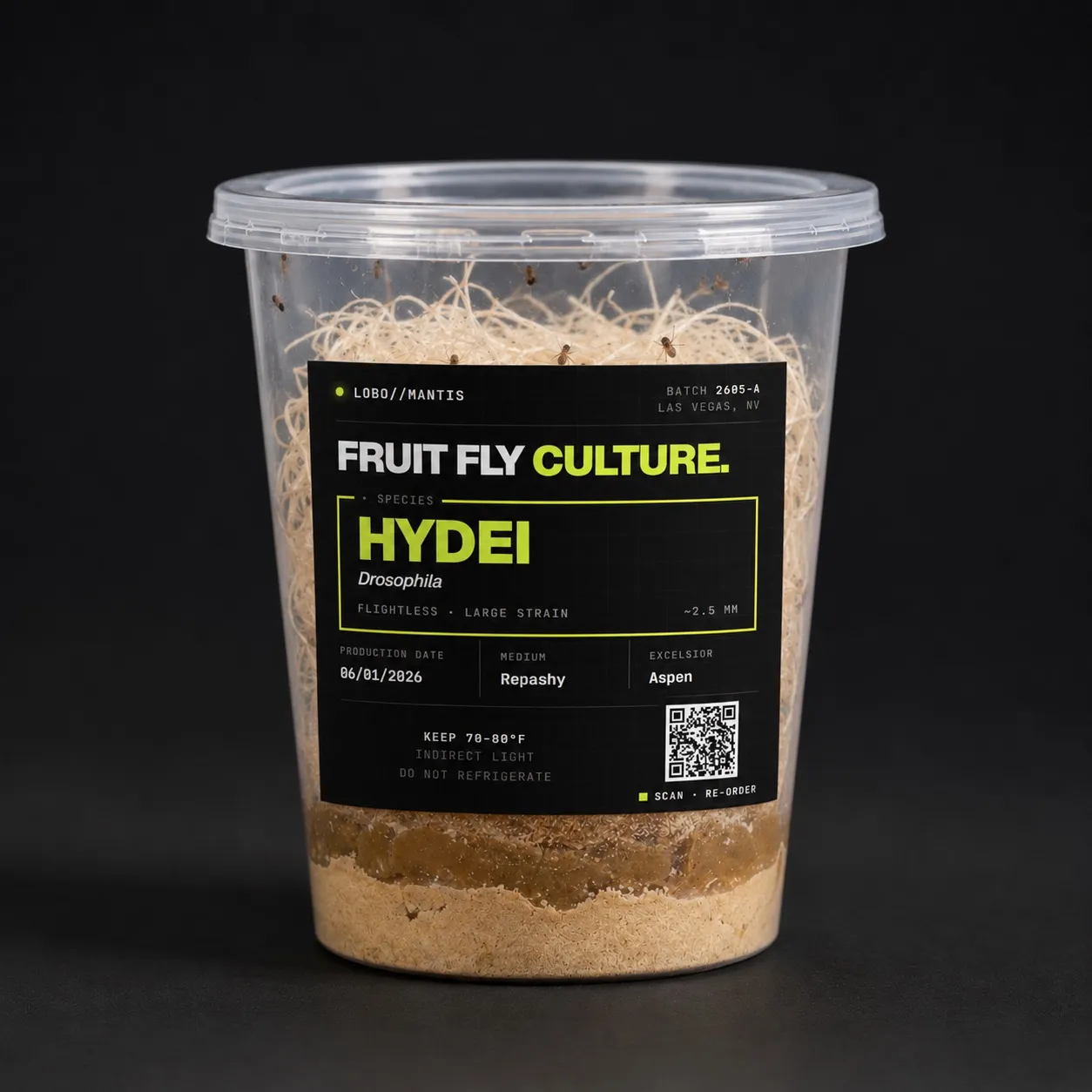
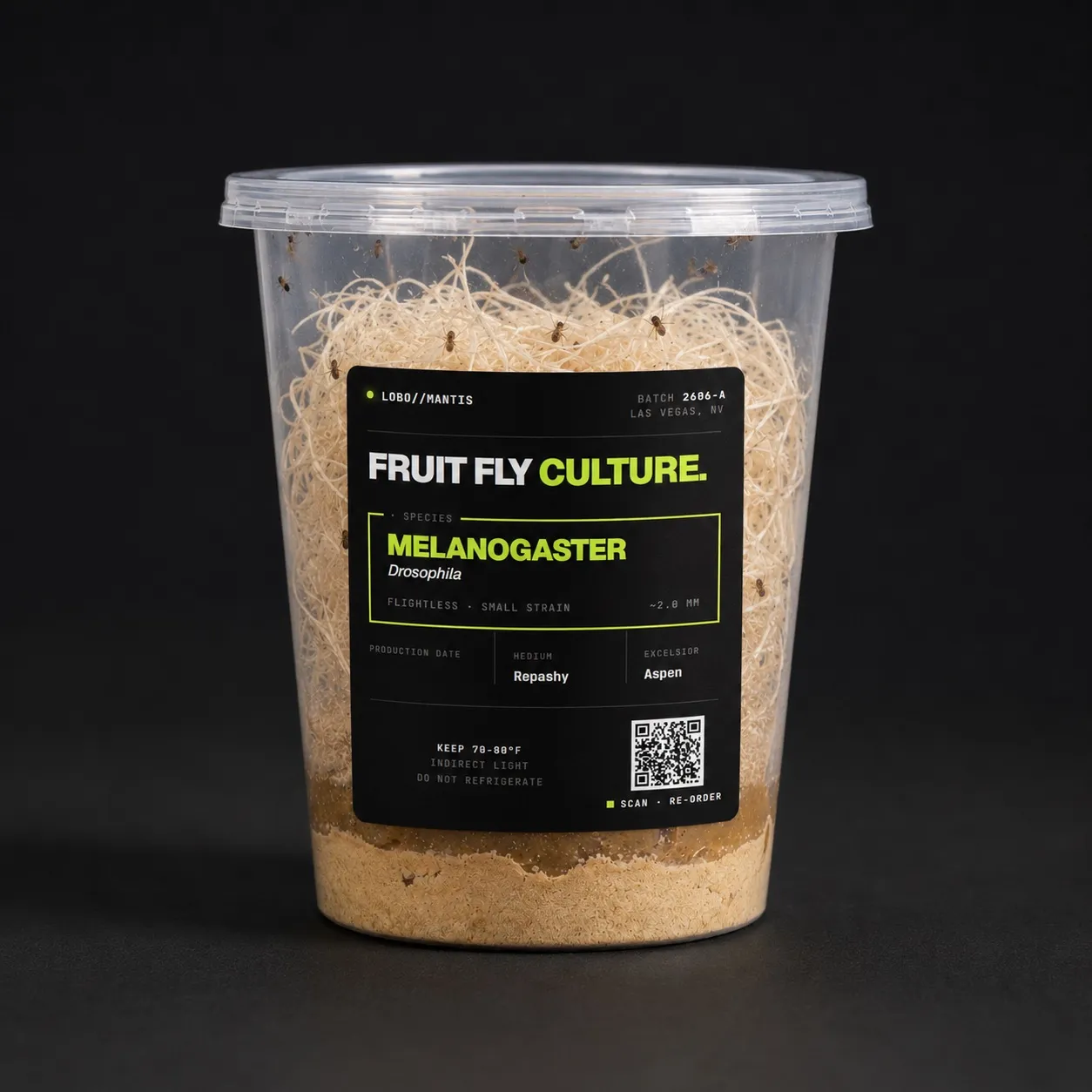
  • · L1–L3 — fruitflies/melanogaster. L3 & larger species — hydei/house.
  • · L5+ as adult mantids, use roaches, blue bottle, moths, and mealworms.
  • · Gut-loaded prey is a bonus. Oat, carrot, or bee pollen.
  • · If it hasn't molted — likely premolt. Hold off on food. Wait for a clean molt, then try 24–48hrs later.
04

Less than you want to.

  • · Cool that you care but think of it in terms of: "as low as I can".
  • · Make sure mist the walls of the container, and surface perches or leaves.
  • · Never mist an animal that is in premolt. The extra wet can disrupt molt.
  • · Rapidly misting fast and heavy can flood the container and drown your mantis.
  • · If a foam deli cup leaks use sticky wrap from the out of the container to prevent dripping via condensation.
05

Molting comes first.

  • · Pre-molt signs: hanging upside down, refusing food, swollen abdomen.
  • · Never disturb during pre-molt. No misting on the animal, no moving the enclosure.
  • · Humidity matters most here — soft exoskeleton needs moisture to pull free.
  • · Stuck molt? Wait. Add humidity to walls. Don't touch.
  • · After molt: don't offer food for 24–48hrs. Body is hardening.
06

Species matter.

  • · Orchid: tropical, warmer, higher humidity. Advanced.
  • · Ghost: forgiving, room temp, beginner.
  • · Spiny Flower: active hunter, eyespot display. Beginner.
  • · Dead Leaf: humid, leaf-mimic display. Intermediate.
  • · African Twig: dry, easy, fruit-fly feeder. Beginner.
  • · See species cards below for exact ranges per species.
▸ 04 / SPECIES CARDS
6 SPECIES · TAP FOR FULL GUIDE
▸ 05 / FEEDING CHART
INSTAR-BY-INSTAR

Feed by size, not by hunger.

STAGE SIZE FEEDER FREQ NOTES
L1 < 3mm (pinhead) Melanogaster fruit flies Daily Too small to eat hydei. Dust with calcium.
L2 3–6mm Hydei fruit flies Every 2 days Slightly larger. Can start to handle variety.
L3 6–10mm D. hydei + small crickets Every 2–3 days Match prey to 1/3 body length.
L4-L5 10–20mm House flies, small roaches Every 2–3 days Blue bottle flies are great at this size.
L6+ 20mm+ Blue bottles, roaches, moths Every 3–4 days Gut-loaded prey preferred. Watch for overfeeding.
ADULT 30mm+ Large roaches, moths, waxworms Every 4–5 days Reduce frequency. Obesity shortens lifespan.
GRAVID ♀ Variable As above, higher volume Every 2–3 days Increased feeding supports ooth production.
▸ 06 / MOLTING

The part beginners panic about.

Every captive mantis molts 6–9 times in its life. Most go fine. A small number go wrong. Knowing the signs is the difference between a calm week and a panic.

▸ PRE-MOLT SIGNS
  • Hanging upside down for hours.
  • Refusing food (often 1–4 days).
  • Swollen abdomen.
  • Reduced movement, stillness.
  • Slight discoloration of the exoskeleton.
▸ DO NOT
  • Handle during pre-molt or active molt.
  • Mist directly onto the animal.
  • Move the enclosure or jostle it.
  • Offer food for 24–48hrs post-molt.
  • Touch a stuck molt — wait, add wall humidity.
▸ 07 / COMMON PROBLEMS

Ten things that worry new keepers.

▸ NOT EATING

Likely pre-molt or post-transit stress. Wait 48hrs. Check humidity, prey size, room temp. If 5+ days, ask Discord.

READ FULL GUIDE →
▸ STUCK MOLT

Don't touch. Mist the walls heavily. Add 10–20% humidity. Wait 1–2 hours before any gentle intervention with a damp cotton swab.

READ FULL GUIDE →
▸ FALLEN AFTER MOLT

Provide a vertical surface (paper towel, mesh) to grip. Heavy mist. Limbs may bend permanently if hardened mid-fall.

READ FULL GUIDE →
▸ TOO MUCH HUMIDITY

Condensation on walls + lethargy = ventilate. Open mesh wider, reduce misting, wipe walls dry.

▸ MOLD IN ENCLOSURE

Substrate stayed wet too long. Replace paper towel, dry the container, increase airflow. Watch for mantis breathing changes.

▸ FEEDER CULTURE CRASH

Mites, mold, or starved out. Start a new culture from stock today. Keep two cultures rolling at all times.

▸ MANTIS HANGING LOW

Could be pre-molt, hot, or sick. Check temp first. Then check for swollen abdomen. Hanging high is normal, low is unusual.

▸ WEAK GRIP

Cold, dehydrated, or post-molt. Warm the room slightly, mist the walls, offer water droplets. Often resolves in 24hrs.

▸ OVERFEEDING

Bloated abdomen + reduced activity = too much food. Skip 2–4 days. Reduce frequency. Obesity shortens lifespan in adult ♀.

▸ DEAD ON ARRIVAL

Record an unboxing video within 1 hour of delivery, then file your claim at lobomantis.com/claim. Replacement or refund — no haggling. Overnight orders only.

READ FULL GUIDE →
▸ 08 / WHAT YOU ACTUALLY NEED

Required first. Optional later.

▸ REQUIRED · DAY ONE
  • Ventilated enclosure
    3× body length tall, mesh top
  • Feeder culture
    Fruit fly to start, scale up by instar
  • Misting bottle
    Fine mist spray, no aerosol
  • Climbing surface
    Twig, mesh, or fake plant
  • Species care info
    Bookmark this page
▸ OPTIONAL
  • ·Decor (silk plants, cork bark)
  • ·Thermometer / hygrometer
  • ·Heat mat + thermostat (cool rooms)
  • ·Backup feeder culture
  • ·Full care kit bundle
HELP ME CHOOSE →
▸ 09 / CARE PATHS

Where are you in the journey?

▸ 10 / STILL STUCK?

Post the photo.
Someone's seen
it before.

The Discord exists for exactly this. Whatever the issue is — molting, not eating, looking weird — take a clear photo, tag the channel, and someone with more experience will respond.

▸ INCLUDE IN YOUR POST
  • Species
  • Instar / age if known
  • Temperature (day + night)
  • Humidity / misting routine
  • Last fed
  • Last molt
  • Clear photo of enclosure and mantis