


Your mantis won’t eat. You’re dropping flies into the enclosure and it’s ignoring them, or swatting them away, or just sitting there staring at nothing. A mantis refusing to eat, or one that’s suddenly stopped eating after weeks of healthy meals, is one of the most common concerns I hear from new keepers, and the answer is almost always one of three things.
Reason 1: It’s about to molt (pre-molt)
This is the most common reason by far. A mantis in pre-molt will stop eating anywhere from 2 days to over a week before it sheds. It’s not sick. It’s preparing.
Signs of pre-molt:
- Refusing food it normally takes eagerly
- Hanging upside down more than usual
- Abdomen looks fuller/swollen (a darkening abdomen alone is not reliable on its own; read it alongside the other signs)
- Moving less, staying in one spot
- Eyes may look slightly cloudy
What to do: Nothing. Remove any uneaten prey from the enclosure (a live roach or fly left in can injure a molting mantis) and leave the animal alone. Make sure humidity is adequate: mist the walls, not the mantis. Most will resume eating within a couple of days of a successful molt, once the new exoskeleton has hardened. Give it up to several days before worrying.
Read our molting guide for the full protocol, and if a molt goes wrong see praying mantis molting problems.
Reason 2: It’s too cold
Mantises are ectotherms. Their metabolism is directly tied to temperature. If your enclosure is below the species’ minimum, your mantis will slow down, eating less, moving less, and eventually refusing food entirely.
How to check: Put a thermometer inside the enclosure, not outside it. Room temperature at your thermostat might read 72°F, but the enclosure on a shelf near a window could be 65°F.
What to do: Bring the temperature into the species’ ideal range. Most tropical species we sell do best around 75-85°F during the day; a few degrees of natural night cooling is fine, but keep nights at 72°F or above for tropical species like Orchid and Dead Leaf, and 68°F or above for the rest. Temperate species (Carolina, European, Chinese) tolerate cooler nights. Always check the care guide for your species. If the room runs cold, use low-wattage heat on a thermostat: a ceramic heat emitter above the mesh or a small mat on a side wall, never underneath, never unregulated. No heat lamps on plastic enclosures. They melt it or create hot spots.
Check your species’ specific temperature needs in our care guides.
Reason 3: The prey is wrong
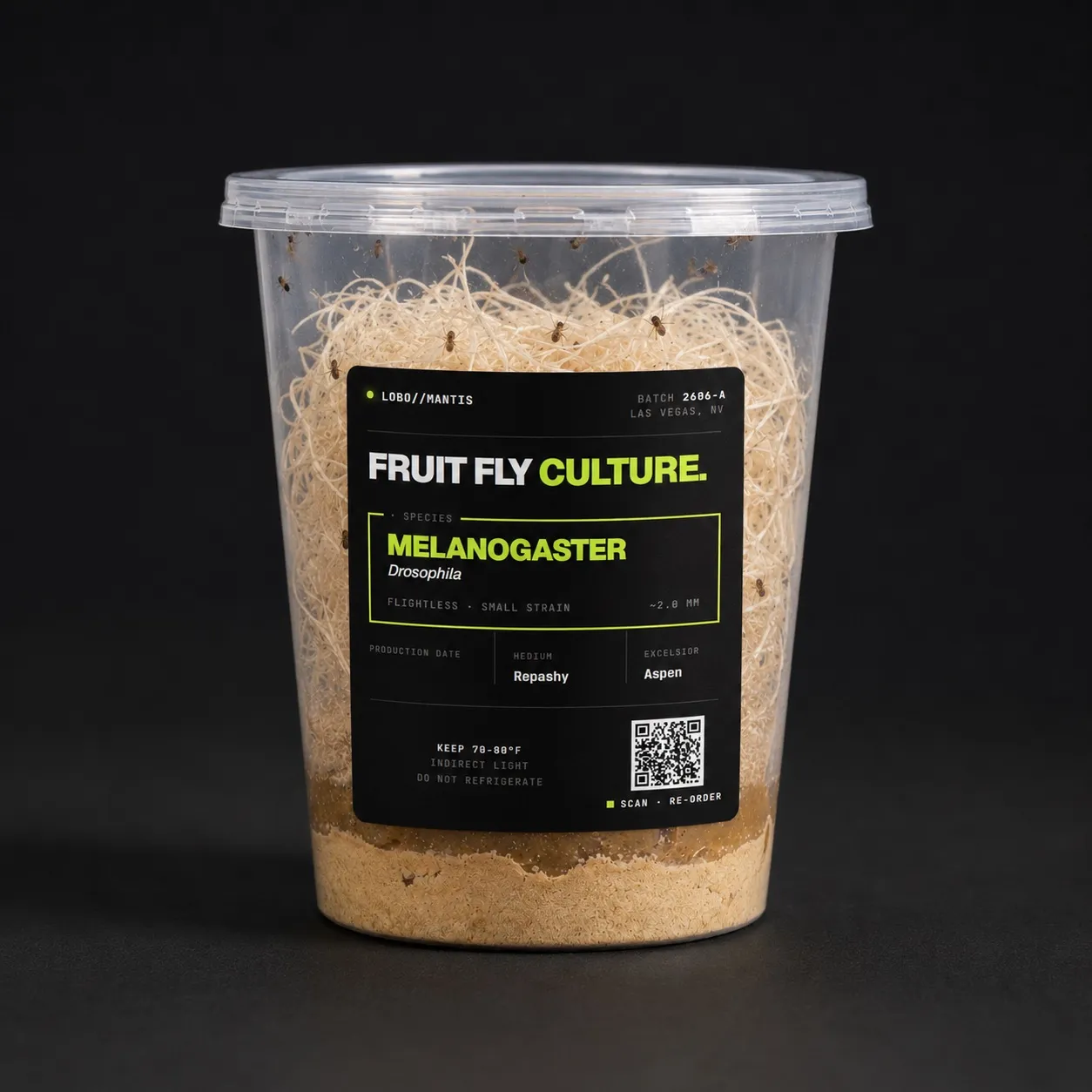
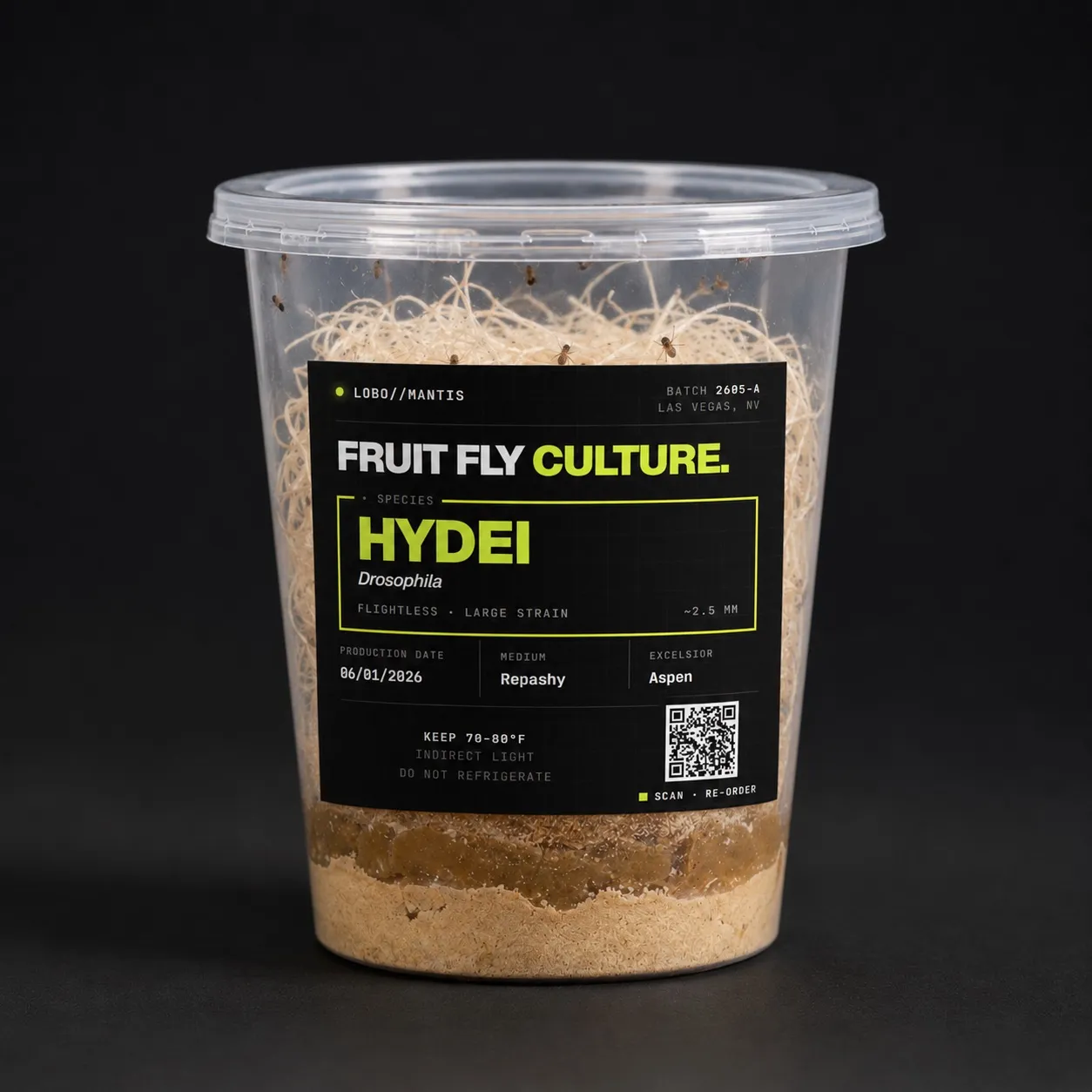
Prey that’s too large is threatening. Prey that’s too small might not trigger a feeding response. Prey that’s too fast might stress the mantis out. Getting the size right matters.
The rule: Prey should be no more than 1/3 of the mantis’s body length. A tiny L2 nymph doesn’t know what to do with a full-size bottle fly. An adult female doesn’t care about a single fruit fly. If you’re looking for a species that rarely refuses food and eats eagerly at all instars, our Spiny Flower Mantis is one of the most reliable feeders we’ve worked with.
What to do: Size down. If your mantis is ignoring house flies, try fruit flies. If it’s wary of a roach, try something less aggressive like a blue bottle fly. Some mantises also have prey preferences: orchid mantises tend to prefer flying insects over crawling ones.
For the full rundown on what to feed at every stage, see feeder insects for praying mantises, and our feeder cheat sheet for a size-by-instar breakdown.
Less common reasons
Just shipped. A mantis that arrived in the last day or two may refuse food from transit stress. This is normal. Offer a correctly sized prey item whenever you’re ready. If it’s not interested, remove the food and give it a day before trying again. See our unboxing guide and the shipping and arrival care guide.
Dehydration. A dehydrated mantis may be too weak to hunt. Mist the enclosure walls and watch for drinking behavior. If you see the mantis drinking, that was the problem.
Old age. An adult mantis near the end of its life will gradually eat less. If your mantis is an adult female who’s been laying egg cases, or an adult male well into his adult life (often 2-3 months past his final molt), declining appetite is part of the natural cycle. For typical lifespans by species, see praying mantis lifespan by species. If you’d like to start fresh with a younger nymph, browse our current stock. Ask and we’ll tell you the current instar, so you know how much growing (and eating) is ahead.
Illness or injury. Rare in captive-bred mantises, but it happens. If your mantis has a visible injury, discoloration that isn’t pre-molt, or hasn’t eaten in 10+ days with none of the above explanations, reach out in our Discord with photos and we’ll help diagnose.
The golden rule
A mantis refusing food is almost always telling you something is about to happen (molt) or something is wrong with the environment (temperature, humidity, prey size). Don’t force it. Don’t panic. Investigate the why.
If you’re stuck, post in #new-keeper-help on Discord. Someone has seen your exact situation before.
Frequently Asked Questions
How long can a praying mantis go without eating?
Longer than most keepers expect. A healthy adult can refuse food for one to two weeks without harm, and a pre-molt fast of several days to a week is completely normal. Small nymphs have less margin: an L1-L2 refusing food for more than 2-3 days needs attention.
Is it normal for a mantis to stop eating before a molt?
Yes, it’s the single most common reason a healthy mantis refuses food. Expect the fast to start days before the molt and appetite to return a day or two after, once the new exoskeleton hardens. Never feed a mantis mid-molt.
When should I actually worry?
When the fast comes with other signs: a shrunken abdomen, lethargy outside of pre-molt, hanging near the floor of the enclosure, or refusing correctly-sized prey for two weeks-plus as an adult. That combination points at husbandry or health, not a molt. Work through the three causes above in order.