

Molting is the single most dangerous event in a captive mantis’s life. Every keeper will eventually watch a molt go sideways. The difference between a dead mantis and a recovered one often comes down to what you do, or don’t do, in the first hour.
How a normal molt works
A mantis molts by hanging upside down, splitting its old exoskeleton along the back, and slowly pulling itself out. The new exoskeleton underneath is soft, pale, and fragile. It hardens and darkens over roughly 24 hours in a nymph, and 48 hours to a few days in an adult (the final adult molt takes the longest, while the wings set).
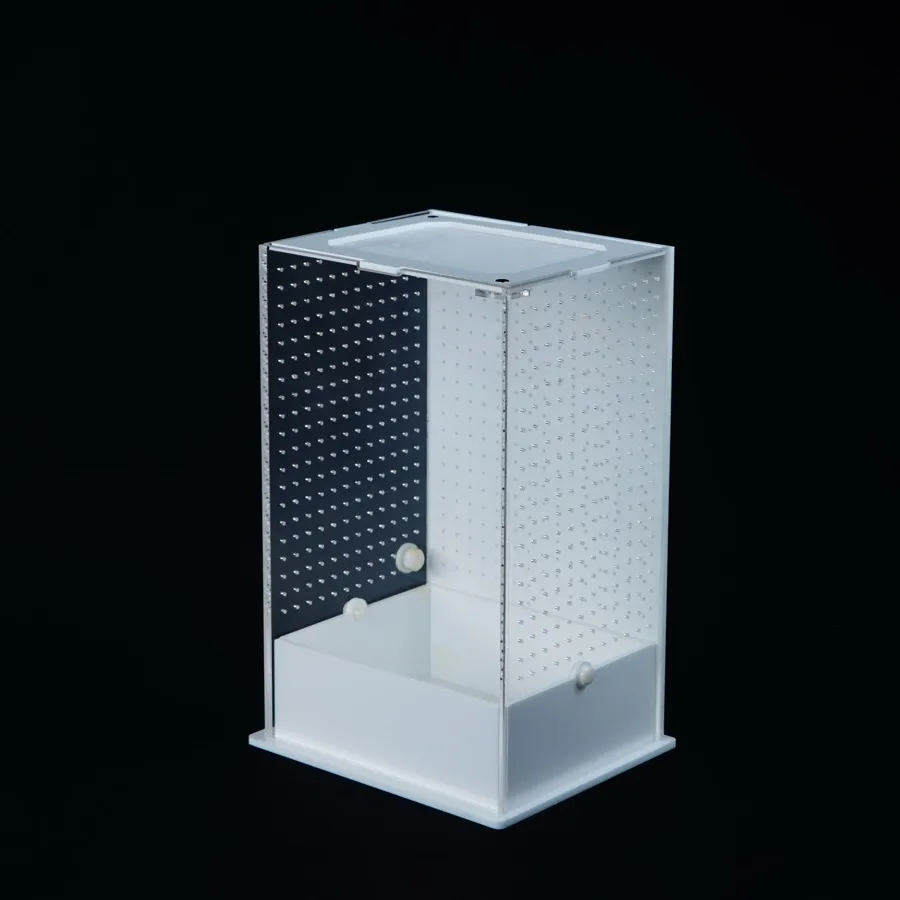
A healthy molt, the act of pulling free, usually takes 15 minutes to an hour, with larger species and later instars often on the longer end; the mantis then hangs to expand and harden. The mantis will hang from its old skin, slowly extending each limb. It’s exhausting, gravity-dependent work. This is why enclosure height matters: the mantis needs room to hang and pull free. (For height and grip details, see our terrarium setup guide.)
Mantis stuck in molt: what to do
This is the most common molt failure. The mantis has partially emerged but can’t fully pull free. A leg, an antenna, or part of the abdomen is still stuck in the old exoskeleton.
What to do:
- Don’t touch it. Your first instinct will be to help. Resist it. The mantis is soft and any pressure can cause permanent damage.
- Mist around it gently. Increase humidity in the enclosure by misting the walls (not the mantis directly). Higher ambient humidity keeps the old skin pliable and slows the soft new cuticle from drying out, buying the mantis time to work itself free.
- Wait. Give it 1-2 hours. Many stuck molts resolve on their own with time and humidity.
- If it’s still stuck after 2+ hours, and only if you’re comfortable with a delicate last resort, moisten just the stuck spot with a water-damp cotton swab (plain water only, never saliva; never dip or submerge the mantis). Moisten to loosen; do not pull, rub, or pry. This is an experienced-keeper last resort with poor odds, not a routine step.
Why it happened: Usually low humidity, an enclosure that’s too short (mantis couldn’t fully extend), or the mantis was disturbed during the molt.
Prevention: Maintain proper humidity for your species, ensure the enclosure is at least 2.5× the mantis’s body length in height (3× if you can), and never move or jostle the enclosure when a mantis is in pre-molt. Humidity-sensitive species need more attention here. Check the target range on a care card like our orchid mantis care guide before a molt. If you’re considering a species that’s forgiving on humidity, our African Twig Mantis tolerates a wider range than most and rarely has molting complications.
Problem: Mantis fell during molt
The mantis lost its grip and dropped to the floor of the enclosure mid-molt. This is serious: gravity is doing the work of pulling the mantis free, and without that hang, the new body can dry in a bent or compressed position.
What to do:
- Don’t pick it up. If it’s still partially in the old skin, moving it can tear soft tissue.
- Raise humidity by misting the enclosure walls (not the mantis) to keep the new cuticle pliable. Your priority is to get the mantis hanging vertically again so gravity can finish the molt.
- If the mantis has fully emerged but is lying on the floor, gently offer a vertical surface (paper towel, mesh) low in the enclosure so it can grip and hang head-down, letting its own weight pull the limbs straight, then leave it alone to harden.
What are the odds? Honestly, a fall mid-molt is one of the worse molting emergencies. The odds drop sharply once the shed has actually started, and they’re better if it fell before the old skin split. What decides it is grip: a mantis that can still hold the surface you offer has a real chance; one that’s limp, can’t grip, or has already dried in a folded position usually doesn’t recover.
Why it happened: Poor grip surface (smooth walls with no mesh), vibration, or the mantis was weakened going into the molt.
Prevention: Provide mesh or textured surfaces on the ceiling and walls of the enclosure. Many keepers use hot-glued mesh on the underside of the lid. Our enclosure setup guide covers this.
Problem: Missing or deformed limb after molt
The mantis molted successfully but a leg, antenna, or raptorial arm came out bent, shortened, or missing entirely.
What to do:
If the mantis is still in juvenile instars (not yet adult), there’s good news: mantises can regenerate limbs across subsequent molts. A limb lost early in development can recover substantially, though a regrown limb is usually smaller than the original and full raptorial arms rarely return to 100%. The more molts remaining, the better the recovery.
If the mantis is an adult (final molt already happened), the limb is permanent. Most mantises adapt: a missing front leg doesn’t prevent hunting, and a bent antenna doesn’t affect feeding. Monitor to make sure the mantis can still catch prey.
Why it happened: The old skin didn’t separate cleanly, often due to low humidity or the mantis being disturbed at the wrong moment.
Problem: Mantis hasn’t molted but seems stuck in pre-molt
Your mantis has been hanging upside down for 24+ hours, refusing food, not moving, but hasn’t started molting. (Refusing meals is a classic pre-molt signal. See our guide on why a praying mantis stops eating.) Not sure it’s even alive? Here’s how to tell a dead mantis from a molting one.
What to do: Wait. Some mantises hang in pre-molt for over 24 hours. This is normal. Do not:
- Mist directly on the mantis
- Offer food
- Move the enclosure
- Poke or prod it
If it’s been 48+ hours with no molt starting, gently increase humidity and make sure the temperature is in the right range. Cold temperatures can stall a molt.
The one rule
When in doubt, don’t touch it. Almost every molt intervention story that ends badly starts with “I tried to help.” Humidity and patience solve most problems. Your hands solve almost none.
Prevention checklist
- Total enclosure height at least 2.5× body length, 3× if you can (leaving ~2× clear drop below the perch), noticeably more for wide-shield species like Dead Leaf and Double Shield
- Mesh or textured surface on ceiling for grip
- Humidity in the correct range for the species (check our species care cards)
- Cross-ventilation so the enclosure dries out within a few hours of misting: stagnant, saturated air breeds mold and drives “too-wet” mismolts
- Keep the mantis hydrated going into the molt (drinking droplets available, watery prey): the shed is powered by the animal’s own fluid pressure, so a dry mantis can mismolt even in a humid tank
- Stop offering food once your mantis refuses meals or enters pre-molt (often a couple of days before the molt): a premolt mantis will refuse anyway, and any uneaten feeder left in the enclosure can injure it while it’s defenceless
- Remove uneaten prey: a live roach or fly left in can injure a molting mantis (see feeder insects for praying mantises)
- Don’t move the enclosure during pre-molt or active molt
- Temperature in range: cold slows molts (and can aggravate a failing one), warmth speeds development; humidity and hanging height stay the primary levers
All mantises in our current stock include species-specific molting parameters on the product page so you know exactly what humidity and temperature to target.
Frequently Asked Questions
How long does it take for a praying mantis to harden after molting?
About 24 hours for a nymph and 48 hours or more for an adult. It is ready when it moves normally, grips firmly and its colour has come back. No food and no handling until then.
How long can a mantis go without food after molting?
Don’t offer anything until it has hardened. After that, a short fast is nothing to worry about: a healthy nymph can go several days without eating and an adult a week or more. Offer a slightly smaller prey item than usual for the first feed.
How can I tell if my mantis is molting or dying?
A molting mantis hangs upside down, still and gripping. A dying one lies on the floor or hangs limp with no grip. Our dead or molting post has the 60-second tell.
How long do mantises live after the last molt?
It depends on the species and the sex: across the species we breed, adult females live roughly 4 to 12 months after the final molt and males 2 to 6. See lifespan by species.
Need help right now?
If your mantis is actively having a bad molt, post a clear photo in our Discord. Say what you’re seeing and how long it’s been stuck. I and other keepers can usually tell you whether to keep waiting or whether it’s already past saving.
For a complete overview, read our molting care guide and the molting troubleshooter on the main care page.