


Before your mantis ships
Live mantises ship Priority Overnight on Mondays and Tuesdays, with an 8 AM PT cutoff on the ship day. Order after the cutoff and it goes out on the next ship day.
We pre-check the forecast at your destination ZIP for the day your box arrives. Extreme temperatures don’t put the order on hold. They change the route. If highs are 90°F or higher, the overnight is re-routed to a staffed FedEx counter near you (held for pickup) instead of a hot porch. If lows are 40°F or lower, we recommend that same counter pickup (the first option at checkout), and door delivery gets a heat pack at no charge. If highs are above 85°F, we add an ice pack at no charge. The only time we hold an order is severe weather or a carrier service alert, and we email you if that happens.
If your box is held for pickup, collect it the same day the counter marks it ready, by that location’s closing time (FedEx holds a package for about 7 days, but the animal shouldn’t wait).
You can verify shipping availability to your ZIP at any time using the ZIP check on any variant page or on the shipping policy page.
Day-of dispatch
Your mantis ships in a vented deli cup with a foam-padded liner inside an insulated box. We pack the day of pickup, never the night before. The carrier collects in the late afternoon.
Most customers choose Priority Overnight (usually 1 business day). This is the only speed covered by our Live Arrival Guarantee, including a held-for-pickup overnight collected the same day it’s marked ready. A cheaper 2-Day option exists but ships entirely at the buyer’s risk with no live-arrival guarantee. If you pick 2-Day, you accept the extra day of transit risk and waive LAG.
You’ll get:
- A shipping confirmation email with tracking
- An estimated delivery window
- Optionally: SMS notifications from the carrier if you opted in
Unboxing protocol
When the package arrives, follow these steps in order (for a photo walkthrough, see how to unbox your shipped mantis):
1. Bring it indoors immediately
Don’t leave the package on the porch, even for ten minutes in summer heat or winter cold. Live invertebrates can’t tolerate the temperature swing.
2. Start recording before you open anything
Before you touch the box, start a video and keep it rolling through the whole unboxing: the sealed box first, then the mantis, in one continuous take. This is the single most important step for a Live Arrival claim: without a sealed-box-first video, a genuine dead-on-arrival can’t be told apart from an animal that was mishandled after it got there. Film it even if you’re sure everything is fine.
3. Open it promptly, on camera
With the camera rolling, open the outer box right away and take out the heat or ice pack if one was included. Don’t leave the animal sealed up “to acclimate” first. You want eyes on it fast, both to catch a problem inside the claim window and because a vented cup warms or cools toward room temperature on its own once the box is open.
4. Open the cup in a contained space
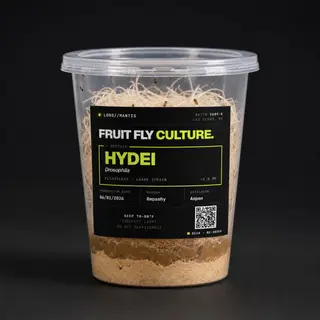
Open the inner deli cup in a small room with the door closed, so a jumpy nymph can’t get loose. If a fruit fly culture came with your order, open it in a closed room too.
5. Inspect the mantis
The mantis should be:
- Alert and moving when the cup is opened (may be still at first; tap the cup gently, it should respond)
- All limbs present and properly oriented
- Eyes clear and intact
If your mantis arrives dead, stop and document. Keep the video from step 2 running: that continuous take from the sealed box through to the deceased mantis is exactly the proof a claim needs. You’re free to open the cup and look. It’s the video, not where the animal is sitting, that backs the claim. File your claim within 24 hours of unboxing at lobomantis.com/claim. You upload the video and enter your order number right there. The guarantee covers dead-on-arrival on Priority Overnight orders only (post-arrival death isn’t covered). The remedy is a replacement animal, or a refund of the animal’s price if we can’t restock it. See LAG terms in the shipping policy.
6. Move it in whenever you’re ready
There’s no settling or waiting period. Once you’ve confirmed it’s alive, you can move it into its enclosure whenever you’re ready. The one exception is a cold mantis: if it arrived chilled, it can look sluggish or even lifeless, so let it warm gradually at room temperature first, never with direct heat, sun, or a lamp. Handling is fine from day one; the only time to leave a mantis alone is around a molt.
7. Transfer to enclosure
Two methods:
- Cup-and-card: slide a stiff card under the cup mouth, invert into the enclosure, slowly slide the card out as the mantis walks free. (Have the enclosure ready beforehand. See our terrarium setup guide.)
- Walk-out: let it walk out onto a dowel, a twig or your open hand, and into the enclosure. Don’t grab it.
8. Mist lightly
A light mist on the enclosure walls (not the mantis) gives the animal access to drinking water. It’s likely gone 18–24 hours without water in transit and may want to drink.
9. Offer food whenever you’re ready
There’s no waiting period before the first meal. Offer one correctly sized prey item, matched to its instar, whenever you’re ready. If it refuses that first offering, that’s normal after transit: remove the uneaten prey and try again in a day or two.
The first 24 hours
A freshly arrived mantis often:
- Sits motionless on a perch for hours
- Refuses to eat (this is fine for now)
- Drinks misted water
- Explores the enclosure slowly
What’s normal:
- Stillness
- Slow, deliberate movements
- Refusing the first prey offering
What’s a concern:
- Twitching or convulsions (potential temperature injury, cold or heat: happens if the package was outside in extreme weather)
- Inability to grip a perch
- Any limb that hangs limp or appears detached
If you see concerning signs, photograph and email us immediately.
Days 1–7
Pick up normal husbandry whenever you’re ready:
- Feed appropriate prey for the instar
- Mist on the species’ normal schedule
- Maintain target temperature and humidity
The mantis should be eating reliably by day 3. If it’s still refusing food on day 5, suspect:
- Temperature too low (most common): bump to upper end of species range
- Premolt: check for signs (stillness, hanging upside-down); our guide to praying mantis molting problems covers what’s normal
- Acclimation stress in nervous species (the Spiny Flower Mantis especially): give it more time
Returns and replacements
We don’t accept “I changed my mind” returns on live animals. The Live Arrival Guarantee covers exactly one thing:
- A mantis or isopods dead on arrival (documented with a continuous unboxing video and claimed within 24 hours of unboxing) on Priority Overnight orders only, including a held-for-pickup overnight collected the same day the counter marks it ready, by closing
The remedy is a replacement; if we can’t restock the animal, a refund of the animal’s price.
It does not cover:
- Anything shipped via 2-Day: choosing that speed waives LAG (mantises aren’t offered Ground; that service is for cultures and supplies)
- Fruit fly and springtail cultures, on any service
- Mantises that arrive alive but die later (post-arrival mortality)
- Late, lost or misdelivered boxes: outside the guarantee, but message us and we’ll look at it case by case
- Injuries from after-arrival handling
- Refusal of delivery / unattended porches resulting in temperature damage
- Death during a normal molt
Read the full shipping policy before ordering.
Quick reference
| Event | Action |
|---|---|
| Package arrives | Bring inside immediately |
| Before you open | Start a continuous video: sealed box first |
| On camera | Open promptly; remove the heat or ice pack if included |
| Right away | Inspect the mantis |
| DOA (dead on arrival) | You already have the video. File within 24h at lobomantis.com/claim |
| Alive | Move it into its enclosure whenever you’re ready |
| Arrival day | Mist the walls; food whenever you’re ready |
| First feeding | One correctly sized prey item whenever ready, then normal feeding/husbandry |