



Overview
The Double Shield Mantis (Pnigomantis medioconstricta) is the bruiser of the species we work with. Native to Flores Island, Indonesia, it gets its name from the unusual constricted pronotum that creates two shield-like sections, a profile not seen on any other mantis in the trade.
Adults are stocky and mottled in browns and grays, with bright blue inner-arm markings that flash during threat displays. Females reach about 9 cm; males about 8 cm. Both sexes are stocky: unlike most mantises, the male isn’t a slender version of the female, which makes sexing by build unreliable. Count abdominal segments instead.
- Among the longest-lived mantises in the trade. 12 months is typical, 18 is achievable. Far above the 6-month average for most species.
- Notoriously cannibalistic. Males are routinely consumed during pairing, so plan for it. Even nymph-on-nymph cannibalism is severe.
Care lands at beginner-intermediate: the broad temperature tolerance and aggressive feeding response make the routine easy once it’s set, but the species is less forgiving of missed days than a Ghost or Twig. This is “beginner with a side of attitude.”
What a nymph actually looks like
The double shield the species is named for doesn’t appear until roughly the fifth instar. Young nymphs are plain brown and look like any other mantis. The constricted pronotum and the blue inner-arm markings develop with maturity, so a nymph that looks unremarkable is on schedule, not mislabelled.
Enclosure
Solo housing throughout life. No exceptions.
The rule behind the sizes: total height at least 2.5× the mantis’s body length, 3× if you have the choice, with at least 2× clear drop below the perch; width at least 1.5×. The broad pronotum has to clear the old shell without snagging, so for a Double Shield add about one body length on top (aim for 3.5–4×). Move up when the mantis is about a third of the enclosure’s height.
| Instar | Height | What we use |
|---|---|---|
| L1–L2 | 16 OZ | A 16-oz deli cup with a mesh lid. Small on purpose, so a hatchling finds its fruit flies. |
| L3–L6 | ~15 CM | Something about 15 cm (6 in) tall, like a 32-oz deli cup with a mesh lid or our medium enclosure (10×8.5×15 cm). |
| L7–adult | 25–30 CM | 25–30 cm tall minimum (an 8×8×12 in or bigger); a 12×12×18 in for an adult female (L9), who is bulky and needs room. |
Substrate: 1–2 inches of slightly moistened coco fiber.
Decor: cork bark, sturdy twigs, occasional silk leaves. Adults are heavy and will break flimsy decor. Use thicker branches than you would for an Orchid or Spiny Flower. For a full walkthrough of substrate, ventilation, and decor, see our praying mantis terrarium setup guide.
Ventilation: mesh top + screen panel.
Temperature & humidity
The wide temperature tolerance is what makes them forgiving.
Heating: optional unless nights fall below 68°F, they thrive at room temperature. If the room runs cold, use a low-wattage heat source on a thermostat: a ceramic heat emitter above the mesh, or a small mat on a side wall (never underneath, never unregulated). No heat lamps on plastic, no UV.
Humidity: light daily mist or every-other-day mist. They're tolerant of moderate dryness.
Diet & feeding
Aggressive eaters at every life stage. Will accept almost any prey that fits in the strike zone.
| Instar | Feeder | Amount | Frequency |
|---|---|---|---|
| L1–L2 | Melanogaster fruit flies | 4–6 | every 1–2 days (keep a few present) |
| L3–L4 | Hydei fruit flies, small houseflies, dubia pinheads | 4–6 | every 2 days |
| L5–L6 | Houseflies, green bottle flies, small dubia; blue bottles from L6 | 2–3 | every 2–3 days |
| L7+ / Adult | Bottle flies, medium-large dubia | 1–2 | every 3–4 days (gravid ♀ every 2–3) |
Keep prey to no more than a third of the mantis's body length. The species above are what we feed, but you'll meet feeders we haven't named: an oversized dubia, a house fly, whatever the shop had. Size is what decides whether it's safe, not what it is. Err smaller: a too-small prey item is a non-event, a too-large one risks injury. Wild-caught insects are the exception: skip them entirely, whatever the size. A moth off the porch light can carry pesticide, and there is no way to tell by looking. Our feeding guide has the sizes worked out centimetre by centimetre.
Adult females can physically take a pinky mouse, and you'll see it done online. We don't recommend it: a live rodent bites back, and the injury risk isn't worth it for an animal that does perfectly well on insects.
Adult females in particular have the strike force to take down prey larger than a typical mantis would attempt. Don't take this as an invitation to overfeed.
Lifecycle & molting
Females typically molt 8 times (adult at L9), males 7 (adult at L8). Total nymph development: about 6–9 months (it grows slowly). Adult (post-final-molt) lifespan: 6–9 months; total lifespan from hatch: 12–18 months, about 14–18 for a female and 12–14 for a male (longest of any species we keep).
- Refusing prey 24 h+ alongside stillness
- Hanging upside-down
- Slight body darkening
The premolt fast runs 2–7 days for nymphs (longer at later instars) and 1–2+ weeks before the final adult molt.
Molts are reliable in this species. The thicker exoskeleton means slightly higher humidity helps during the molt itself. When you spot a premolt animal, raise wall-misting slightly and hold humidity steady at the top of the 50–60% range; never spray the mantis, no sudden spike. If a molt goes wrong, our guide to praying mantis molting problems covers the common causes and fixes.
After any molt, hands off until it has hardened (moving normally, gripping firmly, colour back up). That’s about 24 hours for a nymph and 48 hours or more for an adult, and no food until then: even flies can damage a soft mantis, so remove everything. Make the first post-molt meal slightly smaller than usual.
Sexing
Reliable by L4:
6 abdominal segments from below. Stocky, broader pronotum.
8 abdominal segments. Slimmer body, longer antennae.
Females run about 10% longer than males, not the dramatic gap seen in most species.
Breeding
Plan carefully. Cannibalism during pairing is severe with this species: losing the male is the expected outcome, not a worst case.
- Use a 12×12×16+ enclosure for pairing.
- Feed the female heavily for 3–4 days before introduction.
- Introduce the male from far behind the female; do not let him climb onto her body until she has acclimated for at least an hour.
- Pairing lasts 8–24 hours.
- Separate the male the moment dismount occurs. Do not delay.
It is normal to lose 1–3 males per successful pairing.
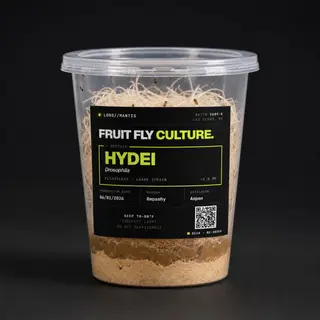
Females lay 2–6 substantial oothecae across their long adult life. Each yields 60–100 nymphs at 78–82°F and 60% humidity, hatching in 6–10 weeks (longer than most species). Culture your fruit flies accordingly: a hatch of a hundred cannibalistic nymphs with nothing to eat goes badly fast.
Want a Double Shield Mantis? The next Pnigomantis medioconstricta nymphs aren’t ready yet. Join the waitlist → and we’ll email you when they are.
Common issues
Frequently Asked Questions
Anything special about molting a Double Shield?
Two things. Like other broad-shouldered species, that wide pronotum needs extra clearance to pull free (add about one body length to the usual 2.5–3× and aim for 3.5–4×) and the thicker exoskeleton molts more cleanly with a bit more humidity, so raise wall-misting slightly and hold it steady (never spray the mantis, no sudden spike) when you spot a premolt animal. Otherwise they’re reliable molters. If one goes wrong, our molting guide has the steps.
Why is the Double Shield “double” shielded?
The pronotum (the segment behind the head) has a distinctive constriction in the middle, creating what looks like two separate shield-like sections. It’s the species’ defining visual feature.
What are the blue arm markings for?
Inner-arm coloration is a deimatic display element. When threatened, the mantis raises and spreads its front legs to show the bright blue, often combined with raised wings. Predators (and curious humans) interpret this as a larger, more dangerous animal.
Can I handle a Double Shield Mantis?
Yes, gently: hand under rather than grabbing. Mantises don’t bite in any meaningful sense; they grab with the front legs. A big adult female can give a sharp pinch that occasionally nicks skin; no venom, no danger. A startled adult female is the one most likely to do it, so keep fingers away from her face. Leave it alone around a molt: in premolt and until it has hardened afterward.
How many males should I keep on hand for breeding?
Plan for at least 3 backup males per breeding female. Cannibalism during pairing is the norm with this species.
Are they good for beginners despite the cannibalism?
For solo-keeping a single nymph through adulthood, yes, they’re forgiving, food-aggressive, and long-lived. The cannibalism warning applies only to breeding situations and to anyone considering communal housing (which is impossible with this species).
Why is the lifespan longer than other mantises?
Larger-bodied species generally live longer. P. medioconstricta is also slow-growing: long nymph development plus a large adult size adds up to a 12–18 month total life. Females especially.