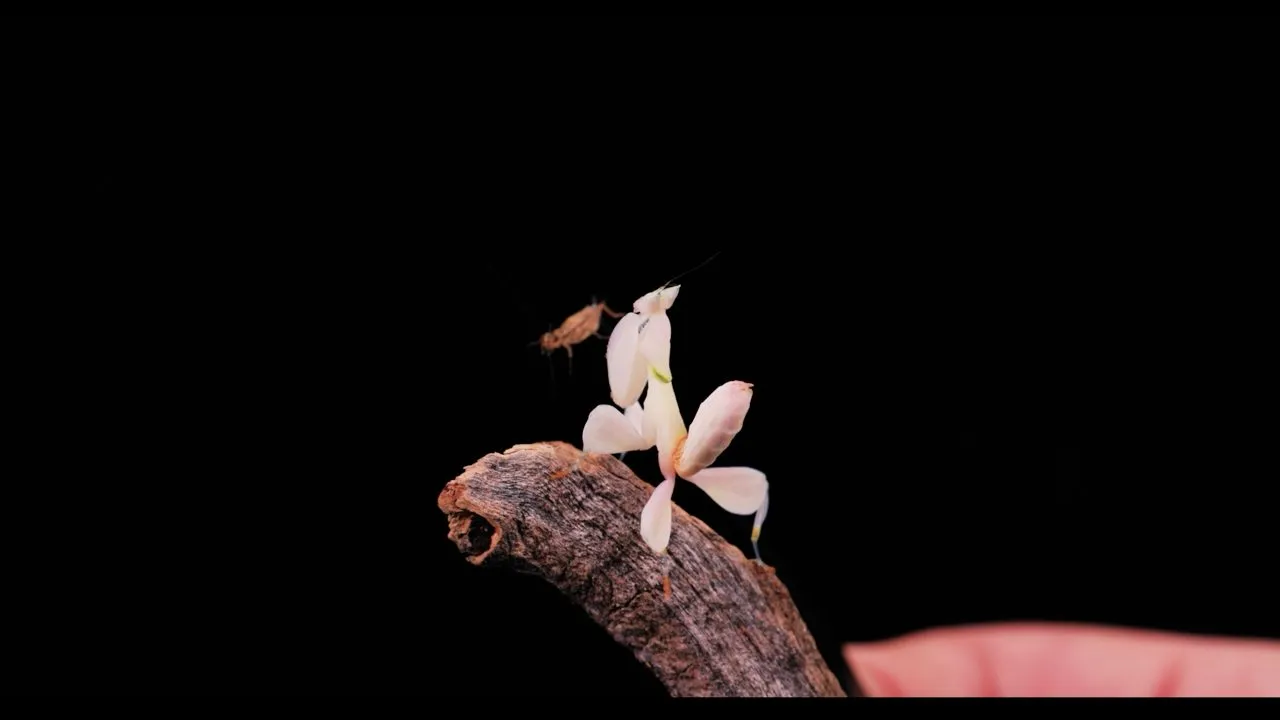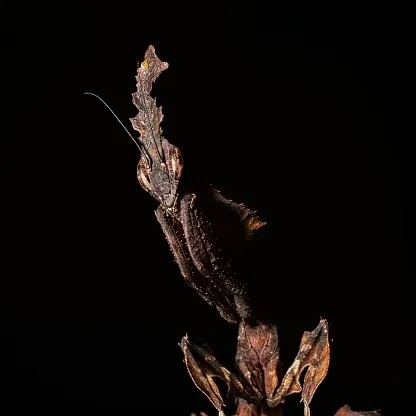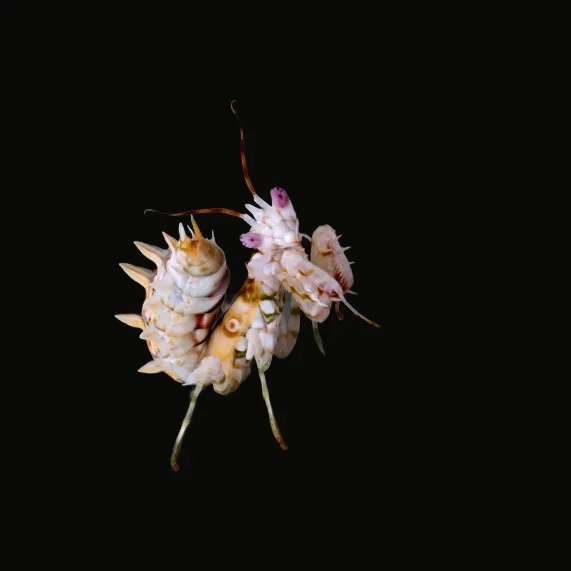
The middle option in the fly-larvae feeder lineup. Lucilia sericata spikes are smaller than blue bottle spikes (8–10 mm vs 12–15 mm) — the right step up from fruit flies for L5–L6 mantises and small reptiles that need more substance than a fruit fly but can’t yet handle a full-size blue bottle.
If you’ve ever watched a growing mantis ignore fruit flies it has clearly outgrown, this is the feeder that fixes it. Green bottle spikes give a meaningful meal in a single soft-bodied package, trigger a strong feeding response, and won’t escape the enclosure.
The Feeder Size Ladder
Soft-bodied feeders work best when you match prey size to your animal’s stage. Green bottles sit right in the middle of that ladder:
- D. melanogaster (≈2 mm) — L1–L2 mantis nymphs, spider slings, froglets.
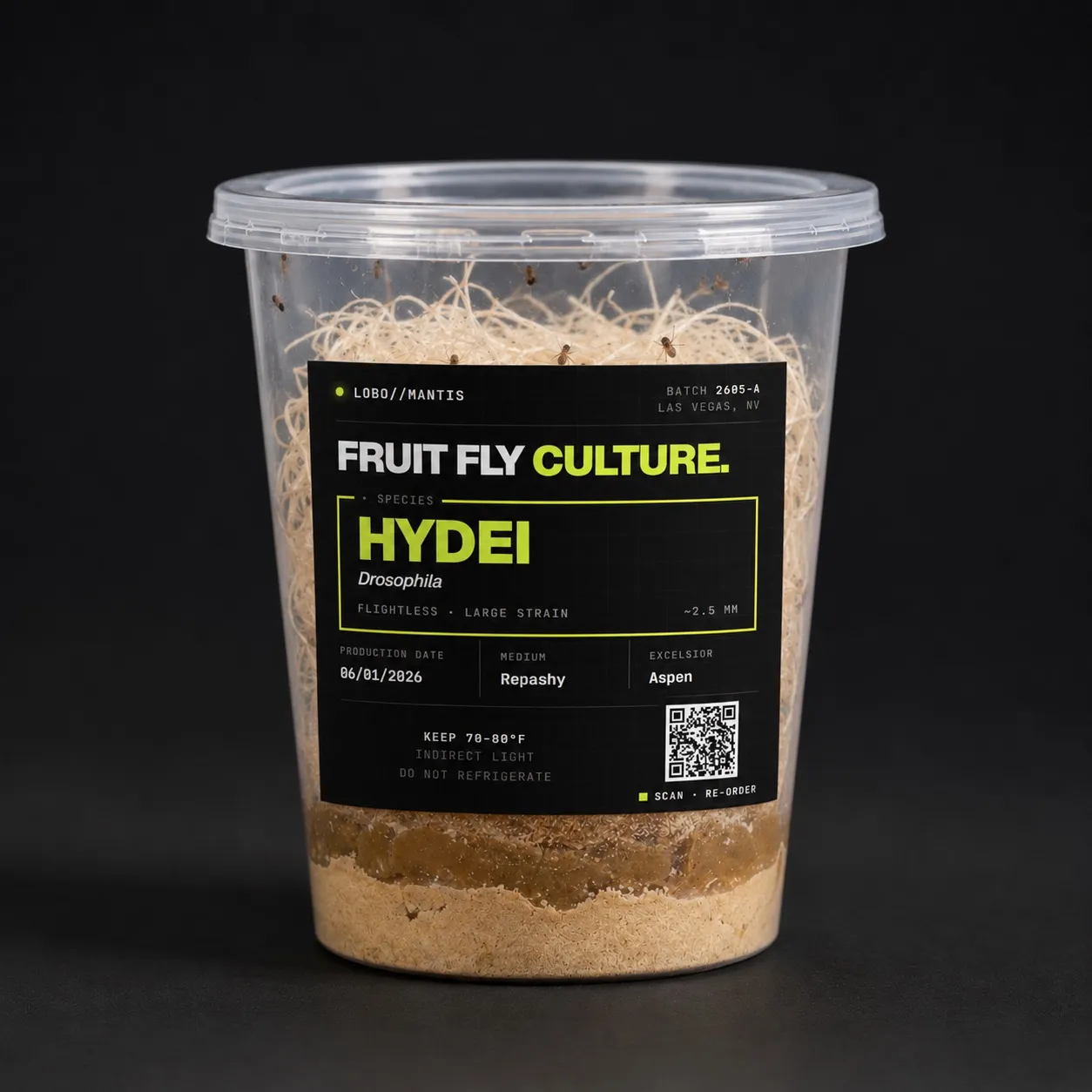
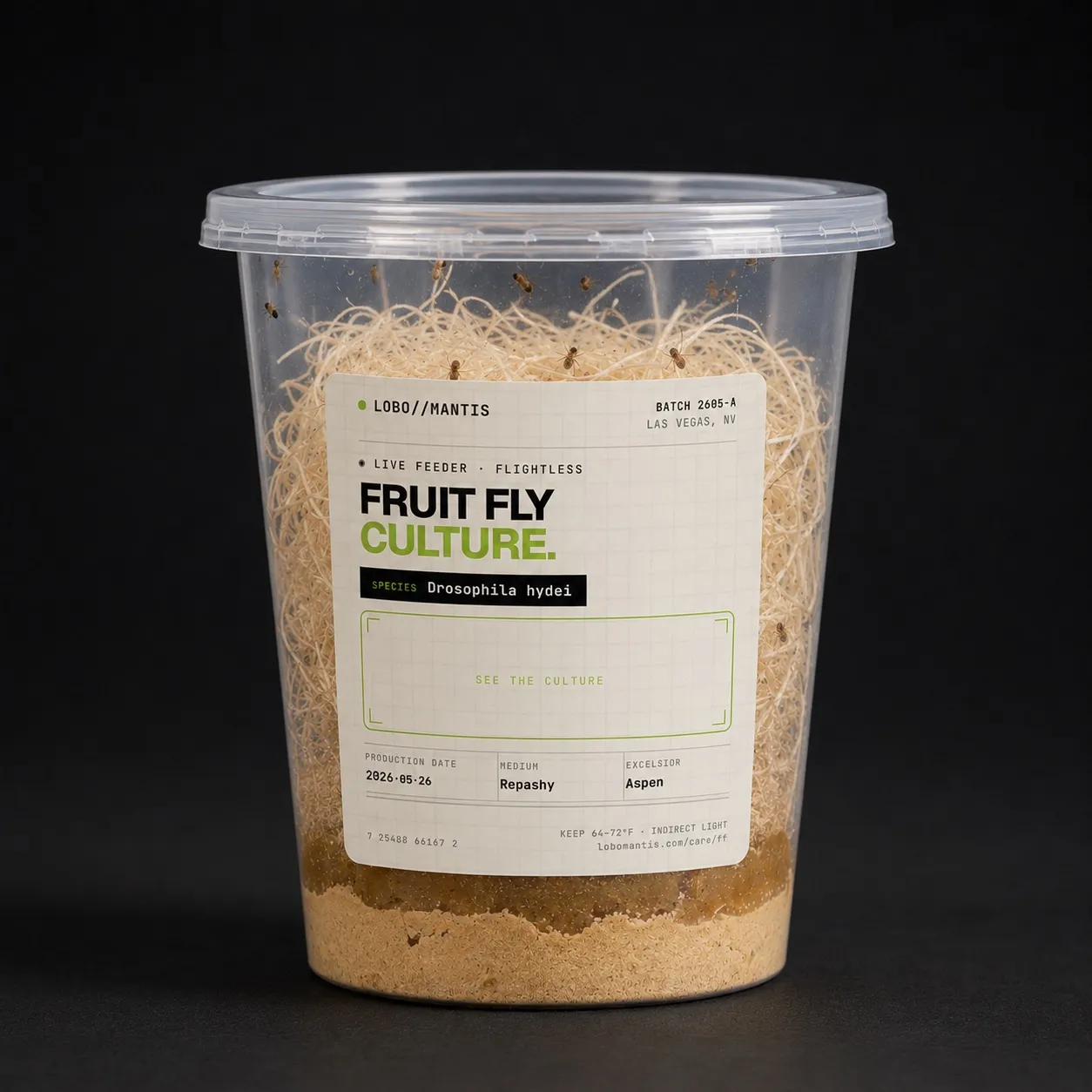
- D. hydei (≈3 mm) — L3–L4 nymphs and small predators.
- Green bottle spikes (8–10 mm) — L5–L6 mantises and small-to-medium reptiles.
- Blue bottle spikes (12–15 mm) — L6+ and adult mantises, larger lizards or amphibians.
A good rule of thumb: prey no more than a third of the mantis’s body length. When in doubt, size down — a mantis will happily take two smaller feeders, but an oversized one can be refused or cause a bad feeding response.
How to Feed Them
Drop a spike or two near your mantis or into a shallow feeding dish for reptiles. The larvae stay where you put them — they can’t climb smooth enclosure walls — so there’s no chasing escapees. For reptiles, a light calcium dusting a couple of times a week balances the calcium-to-phosphorus ratio; mantises don’t need it.
Prefer adult flies? Let part of the cup pupate at room temperature and you’ll have flying green bottle flies in a few days — excellent enrichment for flying-insect specialists.
Storage & Shelf Life
Green bottle spikes ship in a vented cup with sawdust bedding. Refrigerate on arrival at around 4–8 °C to keep them at the larval stage; cold holds them for up to two weeks. At room temperature they pupate within a few days. Take out what you need and return the rest to the fridge.
Frequently Asked Questions
What are green bottle spikes?
Green bottle spikes are the live larvae of the green bottle fly, Lucilia sericata. At 8–10 mm they’re a medium soft-bodied feeder — bigger than fruit flies, smaller than blue bottles — ideal for L5–L6 mantises and small-to-medium reptiles.
Are green bottle spikes the right size for my mantis?
They suit L5–L6 mantises. Nymphs through L4 should be on fruit flies; from L6 and as adults, move up to blue bottle spikes. Prey should be no more than a third of the mantis’s body length — size down if unsure.
How long do fly spikes last?
Refrigerated at 4–8 °C, green bottle spikes stay usable at the larval stage for up to two weeks. Left warm, they pupate in a few days and then hatch into adult flies, which you can feed out for variety.
Do I need to dust feeder flies with calcium?
Not for a mantis — dusting is for frogs and reptiles. Soft-bodied feeders run low in calcium relative to phosphorus, so a light dusting once or twice a week keeps reptiles and amphibians in good shape. See the feeding guide for how we feed mantises.