


It’s a fair question. Exotic pets often come with legal baggage: permits, restricted species lists, state-by-state headaches. Mantises are simpler than most, but not quite as simple as the internet says. Here is what the law actually says, with the sources, and what it means for you as a buyer.
Are praying mantis legal to keep as pets?
Yes. Keeping a praying mantis as a pet is legal in 48 states. No federal law bans owning one, whether it’s a native species or a captive-bred exotic. The two exceptions are Hawaii and Florida, which treat non-native insects as regulated animals and don’t issue pet permits for mantises. Alaska is legal to keep in, but the state requires a permit before a live insect can be shipped there.
The rules that do exist are about moving mantises, not owning them: importing from overseas, shipping across state lines, bringing a non-native insect into a few specific states, and releasing one outdoors. Those obligations fall on importers and sellers. As a buyer, you don’t need a permit or license of your own. We ship to 47 states: the lower 48, except Florida.
The short version
If you live in one of the 47 states we ship to and buy a captive-bred mantis from a US breeder like LOBO//MANTIS, keeping it is legal and there is no paperwork on your end. The permits that exist in this hobby (a USDA PPQ 526 for importing a species, and for moving regulated insects between states) are the importer’s or the shipper’s to deal with, not the buyer’s.
Ready to buy one? Every mantis we sell is captive-bred here in Las Vegas. Browse the available mantises.
The longer version covers the federal rules, the three states with their own import laws, and the native-versus-exotic distinction. It’s worth ten minutes even if none of it applies to you.
“The hard part of mantis legality isn’t the law. It’s figuring out who imported the animal, and whether they did it legally.”
Are praying mantises protected or endangered?
No mantis kept in the US hobby is federally listed as endangered or protected. Mantises are not CITES-listed either. The old “you can’t kill one because they’re endangered” line is a myth on both counts.
Is it illegal to kill a praying mantis?
No, this is a long-running myth. No federal or state law protects praying mantises or makes killing one a crime. The one real exception: inside a national or state park all wildlife is protected, so you shouldn’t collect or harm any insect there.
Federal regulations: USDA and importation
The federal rules come from the Plant Protection Act and the USDA’s plant pest regulations (7 CFR part 330), administered by the Animal and Plant Health Inspection Service (APHIS). They regulate importing, moving across state lines, and releasing “plant pests” and “biological control organisms.” Mantises don’t eat plants, but APHIS counts predatory insects as biological control organisms, and when it rewrote the rules in 2019 it declined to exempt tropical pet arthropods that don’t eat living plants. No mantis species appears on APHIS’s list of organisms that can move between states without a permit.
What this means practically
- Importing a mantis from overseas requires a USDA
PPQ 526permit, held by the importer. That is how the hobby’s exotic species first came into the country; they have been captive-bred here for years. - APHIS’s position is that moving regulated insects between states also requires a
PPQ 526. When a business ships to customers in several states, APHIS says the business, not the buyer, is the party that should hold it. - Buying a captive-bred mantis from a US seller doesn’t require a permit of your own, and keeping one isn’t what the federal rules regulate. Moving and releasing are.
- A
PPQ 526is a permit, not a license. It does not make any seller “USDA approved” or “USDA inspected,” and a seller using those words is stretching.
If you’re buying from a domestic breeder, the import question was settled long before your order. Your purchase is a domestic transaction of a captive-bred animal.
State-specific rules
Most states have no rule that reaches a pet mantis. Three do, and they are the reason our shipping map isn’t the whole country:
Hawaii
Hawaii works from lists. Any animal not on its conditionally approved, restricted, or prohibited lists is treated as prohibited, and no mantis is on any of them. State rules say unlisted animals "require a permit for both import and possession," and the only permits available for unlisted animals cover research, emergencies, and short-term exhibition, never pets. Bringing one in without a permit is a misdemeanor with a fine that starts at $5,000. We don't ship live animals to Hawaii.
▸ HI · PROHIBITEDFlorida
Florida treats every non-native arthropod as regulated. Under Rule 5B-57.004 it is unlawful to "possess, move, or release" one without a permit from the Department of Agriculture's Division of Plant Industry, and the department's July 2026 import guidelines put non-native mantises of both sexes in the "Restricted" category: permitted to museums, zoos, and exhibits only, with "commercialization or distribution" not approved. Only adult males can qualify for an individual permit. Every mantis we sell is non-native and ships as an unsexed nymph, so we don't ship mantises to Florida. Our fruit fly cultures are on Florida's deregulated feeder list and ship there normally.
▸ FL · RESTRICTEDAlaska
Keeping a mantis in Alaska is legal; the state's exotic-pet rules cover birds, reptiles, and mammals only. Shipping one in is another matter. State rule 11 AAC 34.145 says no live insect may be "imported into or shipped or transported within the state" without a written permit from the Division of Agriculture, and an unpermitted shipment can be returned or destroyed at the owner's expense. The Alaska buyer applies for that permit before anything ships. Between the permit and the transit time and cold, we don't ship live animals to Alaska.
▸ AK · PERMIT REQUIREDCalifornia
California has a reputation for strict exotic pet laws (no ferrets, no hedgehogs). Mantises are not on any restricted list. California is one of our most common destinations, and we ship there without issues.
▸ CA · CLEARThe other 46 states
We haven't found another state that restricts keeping or receiving a captive-bred mantis, and we ship to all of them. State rules do change. If your state has one we've missed, tell us and we'll update this page.
▸ 46 STATES · CLEARNative vs. exotic species: the legal difference
In the mantis hobby, species fall into two categories:
Native species
e.g. Carolina Mantis (Stagmomantis carolina) and Chinese Mantis (Tenodera sinensis, technically introduced but now naturalized)
Found wild in the US. Some states protect insects inside state parks and other protected land, but keeping a captive-bred specimen is legal in every state we ship to.
Exotic species
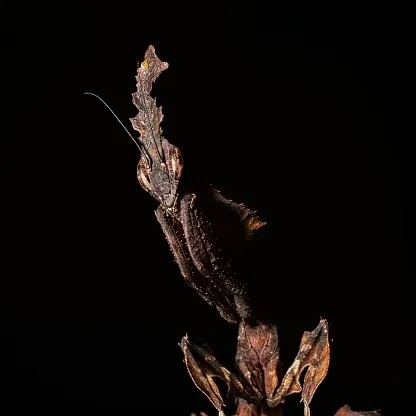
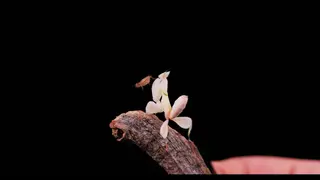
e.g. Orchid Mantises, Ghost Mantises, Dead Leaf Mantises
Not native to the US: tropical and subtropical species from Africa, Southeast Asia, and other regions. They are legal to keep in 48 states and have been captive-bred domestically for years. Because they are non-native, they are the species the import and interstate rules are written about, which is why you should buy them from a US breeder and never release one outdoors.
All six species we sell, the Orchid Mantis, Ghost Mantis, Spiny Flower Mantis, Dead Leaf Mantis, African Twig Mantis, and Double Shield Mantis, are exotic species that are legal to buy and keep in the 47 states we ship to. If you’re new to the hobby, our guide to the best pet mantis for beginners is a good place to start.
Why buying captive-bred matters for legality
When you buy captive-bred mantises from a US breeder, you sidestep the legal gray areas:
- No import permit on your end. The animals were born in the US.
- No CITES concerns. Mantises aren’t CITES-listed anyway, but captive-bred status removes even the theoretical questions.
- No wild-collection issues. You’re not removing animals from their native habitat.
- A paper trail. A legitimate breeder provides an order confirmation, shipping tracking, and stands behind the animal.
Buying from random international sellers on social media or unverified sources is where legal murkiness creeps in. If someone is smuggling wild-caught insects into the country without permits, the buyer can end up answering questions too. It’s rare, but it’s one more reason to buy from an established domestic breeder. Our praying mantis buying guide walks through how to vet a seller before you order.
Can you release a pet mantis?
No. Releasing a non-native mantis outdoors counts as an environmental release under the same federal rules that govern importing one, and it's prohibited without a permit. Most exotic mantises wouldn't survive a US winter anyway, but that isn't the point. Don't release them.
If you can no longer keep your mantis, the responsible options are:
- Rehome it to another keeper. Post in the Lobo Discord #rehomes channel.
- Contact the breeder. We’re always happy to discuss options.
- Humanely euthanize as a last resort. Refrigerate to induce dormancy, then freeze. It’s widely used as the most humane accessible method.
Shipping legality
Shipping live insects is legal and done routinely by breeders nationwide. USPS permits qualifying live insects (mantises included) via Priority and Priority Express under packaging rules; FedEx and UPS allow non-venomous invertebrates, with FedEx requiring prior approval and overnight service. There are packaging requirements (ventilation, secure containers, proper labeling), but this is a well-established practice. You can read exactly how we pack and what to expect on arrival in our shipping and arrival guide and our step-by-step unboxing walkthrough.
At LOBO//MANTIS, every shipment goes out with proper insulation and Priority Overnight delivery to minimize transit time, or 2-Day at the buyer’s risk. When the forecast calls for it we add a free heat pack, and in extreme heat, overnight orders are re-routed to a climate-controlled FedEx counter near you. We don’t ship live animals to Hawaii or Alaska, and we don’t ship mantises to Florida, for the reasons above.
The bottom line
Keeping a pet mantis is legal in 48 states. Hawaii and Florida are the exceptions, and Alaska regulates the shipment rather than the pet. Buy captive-bred from a US breeder and the import question never touches you, and the permit side of interstate shipping belongs to whoever ships, not to you. The legal framework around exotic insects is more relaxed than most people assume, and this page has the sources if you want to check.
Browse our captive-bred species in the shop and have them shipped to your door in any of the 47 states we serve.
Frequently Asked Questions
Is it illegal to own a praying mantis?
No, not in 48 states. No federal law bans owning a pet mantis, and no state bans it except Hawaii and Florida, which treat non-native mantises as regulated animals and don’t issue pet permits for them. The permit rules that do exist cover importing and shipping between states, and they fall on the seller, not the buyer.
Do you need a license or permit to keep a praying mantis?
Outside Hawaii and Florida, no. No state licenses mantis keepers. The USDA PPQ 526 permit applies to importing a species and to moving regulated insects across state lines, which is the shipper’s side of the transaction, so you don’t need a permit of your own to buy or keep a captive-bred mantis. Alaska is the one state where the buyer applies for a state import permit before a live insect can be shipped in.
Are praying mantises legal in Florida?
Not the exotic ones, for a hobbyist. Florida regulates every non-native arthropod, so possessing or bringing in an exotic mantis requires a state permit, and the Department of Agriculture’s current guidelines only approve non-native mantises for institutions like zoos and museums. A mantis native to Florida that you found in your yard is a different story and generally fine. We don’t ship mantises to Florida.
Are praying mantises legal in Hawaii?
Not to import or buy. Hawaii treats any animal not on its approved lists as prohibited, and no mantis is on them. Importing or possessing one without a permit is a violation, and the state doesn’t issue pet permits for unlisted animals. We don’t ship live animals to Hawaii.
Can you ship a praying mantis to Alaska?
Not without a state permit. Alaska rule 11 AAC 34.145 requires a written Division of Agriculture permit before any live insect can be shipped into the state, and the buyer applies for it. Keeping one in Alaska is legal. We don’t ship live animals there.
Can I catch a wild praying mantis and keep it?
Usually yes, for a common native species on your own or permitted land. Rules vary by state, and you should never collect from a national or state park or take a protected species.
Are praying mantises legal in California?
Yes. Mantises aren’t on any California restricted-pet list. California does regulate moving live insects into and within the state, but that is a shipping rule the sender handles, not a restriction on owning one.