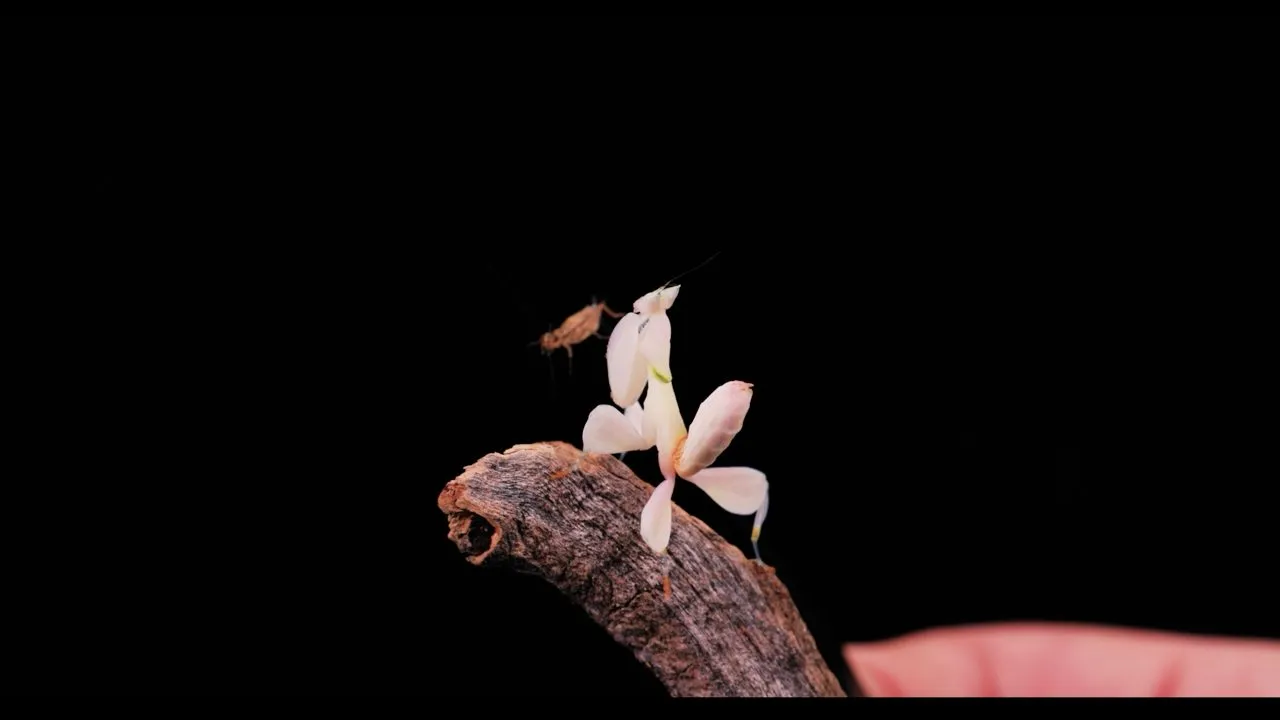
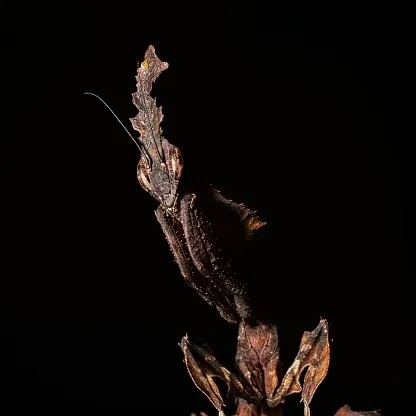
These are probably the two most popular pet mantis species in the hobby, and they come up in almost every “which should I get?” conversation. They’re both visually interesting, both widely available, and both make great pets — but they’re very different animals with different care demands.
Here’s the honest breakdown from someone who breeds both.
Quick comparison table
| Category | Orchid Mantis | Ghost Mantis |
|---|---|---|
| Scientific name | Hymenopus coronatus | Phyllocrania paradoxa |
| Adult size | 2.6” (females), 1” (males) | ~2” |
| Lifespan | 5-9 months total (males shorter) | 7-12 months total |
| Difficulty | 7/10 | 2/10 |
| Humidity | 60-80% (consistent) | 60-70% (forgiving) |
| Temperature | 75-85°F | 70-80°F |
| Price range | $80 (nymph) | $30 (nymph) |
| Diet | Flying insects preferred | Anything that moves |
| Communal? | No — cannibalistic | Yes — with adequate food |
| Handling | Skittish, can bolt | Calm, rarely runs |
Lifespan figures above are total lifespan from hatch, not adult lifespan after the final molt — see our praying mantis lifespan by species breakdown for the full numbers.
Appearance
Orchid Mantis
There’s no getting around it — the Orchid Mantis is one of the most visually stunning insects on the planet. Females display white and pink coloration with lobed legs that mimic flower petals. They look like an orchid bloom came to life. Males are significantly smaller and less colorful, which is worth knowing if appearance is your primary motivation.
The coloration can vary based on humidity and background. Higher humidity tends to produce more vibrant pinks, while drier conditions can lead to more white or even slightly yellow tones.
Ghost Mantis
The Ghost Mantis takes the opposite approach to beauty — it’s an expert in camouflage rather than mimicry of something pretty. They look like a dried, twisted leaf complete with irregular edges and a mottled brown-green coloration. Some individuals lean greener, others more brown, depending on the environment they’re raised in.
They’re subtle, strange, and fascinating in a way that grows on you. Not Instagram-flashy, but genuinely cool when you take the time to observe them.
Winner for appearance: Orchid Mantis, if you want something conventionally stunning. Ghost Mantis, if you appreciate weird, cryptic beauty.
Care difficulty
Orchid Mantis care
Orchid Mantises need higher humidity (60-80%) maintained consistently. This is the part that trips up beginners — it’s not just about hitting 70% once a day, it’s about not letting it crash to 40% between mistings. They also prefer warmer temperatures (75-85°F), which may require supplemental heating depending on your home.
Feeding can be fussy. They strongly prefer flying prey — blue bottle flies, house flies, and moths trigger their hunting response much more reliably. Young nymphs can be especially reluctant to eat crawling prey.
Molting is where the real risk lies. Orchid Mantises are prone to mismolts when humidity drops, and a bad molt often means losing the animal or ending up with permanent deformities. You need to spike humidity to 80%+ during pre-molt periods.
Ghost Mantis care
Ghost Mantises are the opposite of demanding. They sit happily at 60-70%, and a short dip to 50% won’t hurt them. Room temperature (70-80°F) works fine for most homes without any supplemental heating. They eat virtually anything — fruit flies as nymphs, graduating to house flies, blue bottles, and small dubia roaches as they grow.
Molting issues are rare as long as you provide adequate ventilation and a light misting schedule. They’re one of the few species where I’d say “if you forget to mist for a day, it’s probably fine.”
Winner for ease of care: Ghost Mantis by a wide margin. It’s not even close.
Temperament and handling
Orchid Mantis personality
Orchid Mantises are confident predators but nervous around large things (like your hand). They’re more likely to bolt, fly (adult males especially), or threat-display when startled. Handling is possible but requires patience and a gentle touch. They’re better as display animals you observe rather than handle.
Females can be aggressive — they’ll strike at things near their face, including your fingers if you’re not careful.
Ghost Mantis personality
Ghost Mantises rely on camouflage for survival, so their instinct when disturbed is to freeze and sway like a dead leaf rather than run. This makes them exceptionally calm on the hand. They rarely bolt, almost never fly in a panic, and generally tolerate handling well.
Their communal nature also means they’re less aggressive in general — they’re wired to coexist rather than attack everything in sight.
Winner for handling: Ghost Mantis. One of the calmest pet mantis species you can keep.
Communal keeping
Orchid Mantis
Absolutely not communal. Orchid Mantises are aggressive hunters and will cannibalize cage mates without hesitation, regardless of available food. They should be separated as early as possible (by L1-L2) and kept individually.
Ghost Mantis
One of the most reliably communal mantis species. You can keep groups together in a larger enclosure as long as:
- Everyone is well-fed (no competition for food)
- The enclosure has enough perching spots
- Size differences between individuals aren’t extreme
This makes Ghost Mantises great for someone who wants a display colony rather than a single pet.
Winner for communal keeping: Ghost Mantis. Orchid Mantises are not an option here.
Cost comparison
A Ghost Mantis nymph is $30 at Lobo Mantis. An Orchid Mantis nymph is $80 — nearly three times the price, driven by smaller clutches, slower growth, and higher nymph mortality on the breeding side. (For the full picture, see how much a praying mantis costs.)
Factor in the higher mortality risk with Orchid Mantises (especially for beginners), and the true cost gap is even larger. If your first Orchid Mantis mismolts because your humidity dipped, that’s $80 gone and you’re starting over.
Winner for value: Ghost Mantis. Cheaper to buy, cheaper to lose if something goes wrong while you’re learning.
Who should get an Orchid Mantis?
The Orchid Mantis is the right choice if:
- You’ve successfully raised at least one mantis to adulthood already
- You have a reliable humidity setup (not just a spray bottle and hope)
- You want a visually spectacular display animal
- You’re willing to source flying prey regularly
- You understand the investment and accept the risk
Who should get a Ghost Mantis?
The Ghost Mantis is the right choice if:
- This is your first mantis
- You want something low-maintenance but still interesting
- You’re interested in keeping a communal group
- You want a species that’s calm enough to handle
- You’d rather learn the basics on a forgiving animal before spending more
My recommendation
If you’re asking the question “Orchid Mantis or Ghost Mantis?” and you’ve never kept a mantis before, get the Ghost Mantis first. Raise it to adulthood. Get comfortable with feeding schedules, molting signs, and humidity management. Then get an Orchid Mantis for your second species.
You’ll enjoy the Orchid Mantis ten times more if you already know what you’re doing when it arrives. And you won’t have that sinking feeling when your $80 animal drops from the lid during a molt because you didn’t recognize the pre-molt signs.
Start with a Ghost Mantis. Come back for the Orchid Mantis when you’re ready. Browse all species in the shop.
Frequently Asked Questions
Which is better for a beginner, orchid or ghost mantis?
The Ghost Mantis, clearly. It forgives humidity swings and feeding mistakes that would stress an orchid. The orchid rewards a keeper who already has the husbandry habits down.
What is the price difference?
Ghost Mantis is $30 and Orchid Mantis is $80 at our shop. The orchid costs more because females take longer to raise and the demand for that pink-and-white coloration never lets up.
Which lives longer?
The ghost, typically — 7-12 months total against the orchid’s 5-9, and orchid males are the shortest-lived animals we breed. The lifespan table has the female/male split.