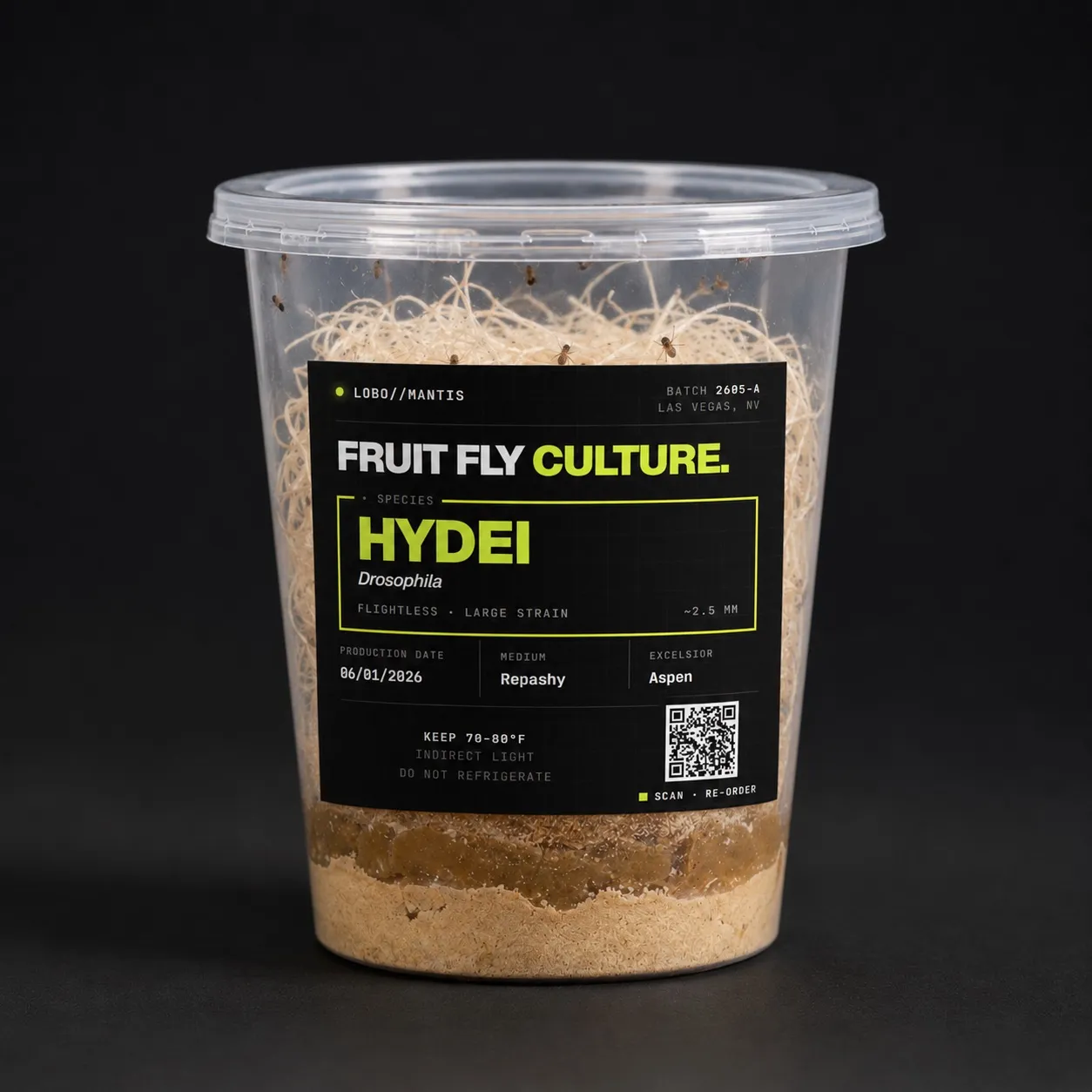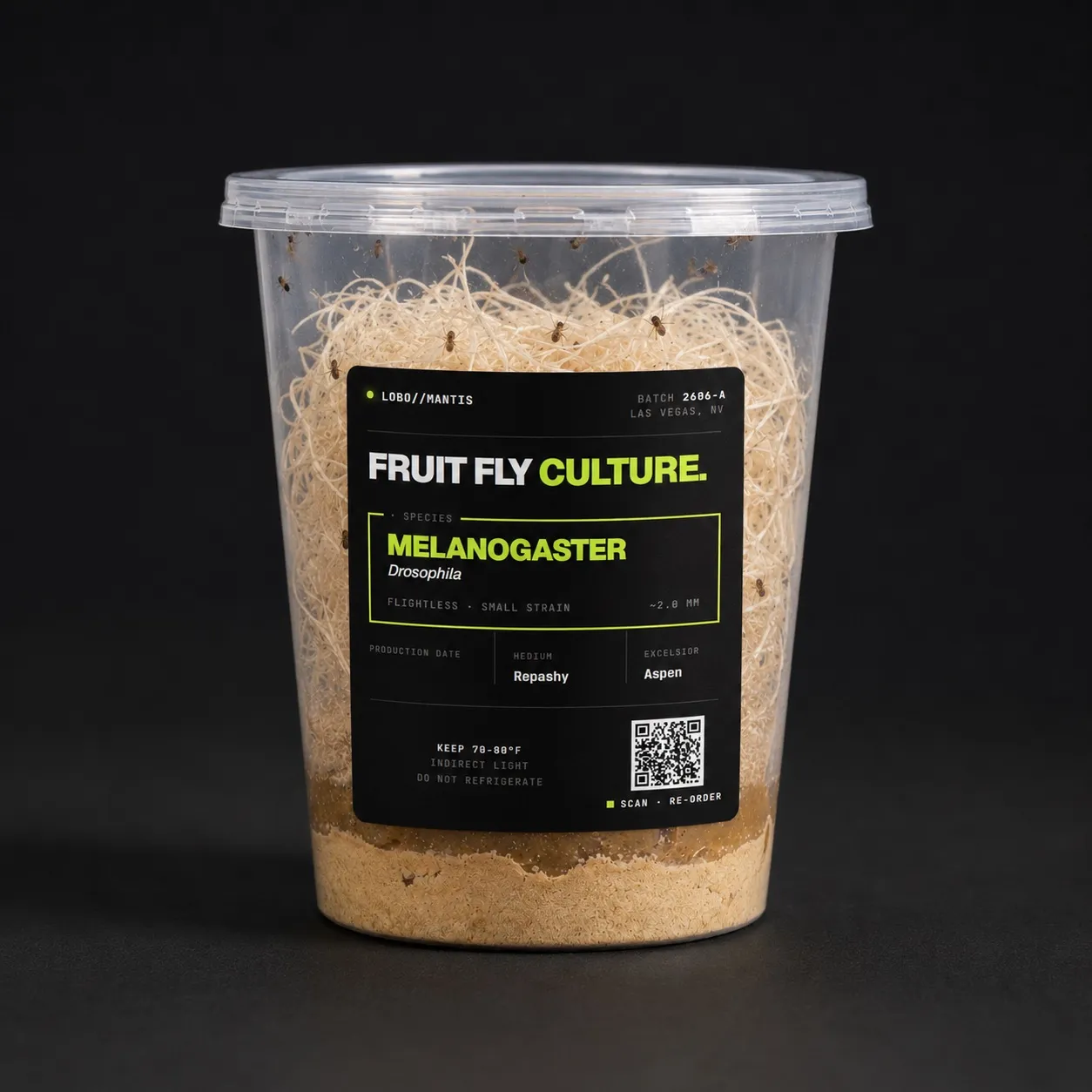
You bought a fruit fly culture, the first batch of flies died off, and now… nothing. No new flies, no maggots crawling up the sides, just a quiet cup of media. If you’re feeding dart frogs, a mantis, a jumping spider, or a small reptile that depends on those flies, a dead culture is a small emergency.
I produce Drosophila cultures for a living, and I’ve killed my share learning how. Here’s every reason a culture stops producing, how to tell which one you’re looking at, and — the part most guides skip — how to know when it’s actually done versus just slow.
First, know what “not producing” should look like
A healthy culture has a rhythm. Understanding it tells you whether yours is broken or just between waves:
- Days 1–4: the adult flies you got lay eggs. You may see fewer adults as the originals die. This is normal. People panic here and toss a perfectly good culture.
- Days 5–10 (hydei: 8–12): maggots (small cream-colored larvae) climb the sides and excelsior, then pupate. If you see maggots or pupae on the walls, your culture is working — new flies are coming.
- Days 14–21 (hydei: about a week later): the big wave. Hundreds of new flies hatch. This is peak production.
- Day 28+: decline. Media exhausted, output drops. Melanogaster is usually finished around day 30–35; hydei often runs to day 40.
So the first question is: how old is your culture, and do you see maggots or pupae on the sides? If it’s day 4 with fewer adults and no maggots yet, wait — nothing’s wrong. No larvae by day 14 (melanogaster) or day 18 (hydei) in a warm spot means egg-laying failed. Read on.
The real reasons a culture stops producing
| What you see | Most likely cause | The fix |
|---|---|---|
| No maggots by day 10–14, media looks fine | Too cold. Drosophila development slows sharply below ~65°F and stops near 60°F. The most common silent culture-killer. | Move it somewhere 70–80°F. A cold garage, a spot near an AC vent, or a winter windowsill will freeze production without killing the flies outright. |
| All the adult flies died fast, before laying | Heat or shipping shock, or the culture was near-crashed when you got it | Nothing to do if they died before laying — no eggs, no next generation. Start fresh and keep the new one at room temp, out of direct sun. |
| Tiny brown specks moving on the media/lid | Grain mites — they outcompete the maggots for food and crash the culture | Light mites on a spent cup are normal — retire it. Mites on a young cup: move 15–20 clean adults to fresh media immediately, bin the original, and keep it away from your other cultures. |
| White fuzzy mold on the media surface | Contamination — often too wet, or media made without a mold inhibitor | A light fuzz on fresh media in the first few days usually burns off, and light mold on a spent late-cycle cup is harmless. Spreading, persistent mold at any age means too wet — start over with a properly made culture. |
| Media is dry, cracked, pulled from the sides | Media exhausted / dried out — the culture is old, or was kept too warm/dry | On a culture under ~3 weeks old, trickle a teaspoon of water down the inside wall. Past 4 weeks it’s spent — time for a fresh one. |
| Sour/rotten smell, liquefying media | Bacterial contamination | Toss it — bad bacteria won’t recover and can spread. Wash the cup in hot water before reuse or bin it. |
The single most common mistake: it’s too cold
If you take one thing from this: temperature is almost always the answer when a culture “just stops.” Fruit flies are ectotherms. At 78°F a culture booms; at 62°F it crawls; below 60°F it effectively pauses. People keep cultures in basements, garages, near windows, or on the floor — all of which run colder than you think. A cheap thermometer next to the culture settles it instantly. Get it to the low-to-mid 70s and a stalled-but-alive culture often recovers within a few days.
Should I try to salvage it, or start over?
Be honest about the timeline. A culture that’s crashed isn’t worth heroics — your animals need to eat now, and a struggling culture produces weak, sparse flies even if it limps back.
Salvage-worthy (fixable, give it a few days):
- Young culture that’s just cold → warm it up.
- Fewer adults but you see maggots/pupae on the walls → it’s working, wait.
Toss it (cut your losses):
- Heavy mites or spreading mold.
- Sour smell or liquefying media.
- Dry, cracked, day-28+ media.
- No larvae at all by day 14 (melanogaster) or day 18 (hydei) in a warm spot → the generation failed; it won’t restart.
For the full day-by-day maintenance routine — harvesting, humidity, splitting new cultures from an old one — see our fruit fly culture care guide.
The reliable fix: don’t run a culture to zero
The keepers who never deal with this have one habit: they keep a fresh culture arriving before the old one crashes. A culture peaks around days 14–21 and fades after week four, so a new one every 2–3 weeks — started or ordered around day 14 of the current one — means you’re never caught with hungry animals and a dead cup. It’s the difference between “my feeders are a chore” and “my feeders are handled.”
If your culture’s done and you need flies your animals will actually eat, start clean with a strong producing culture:
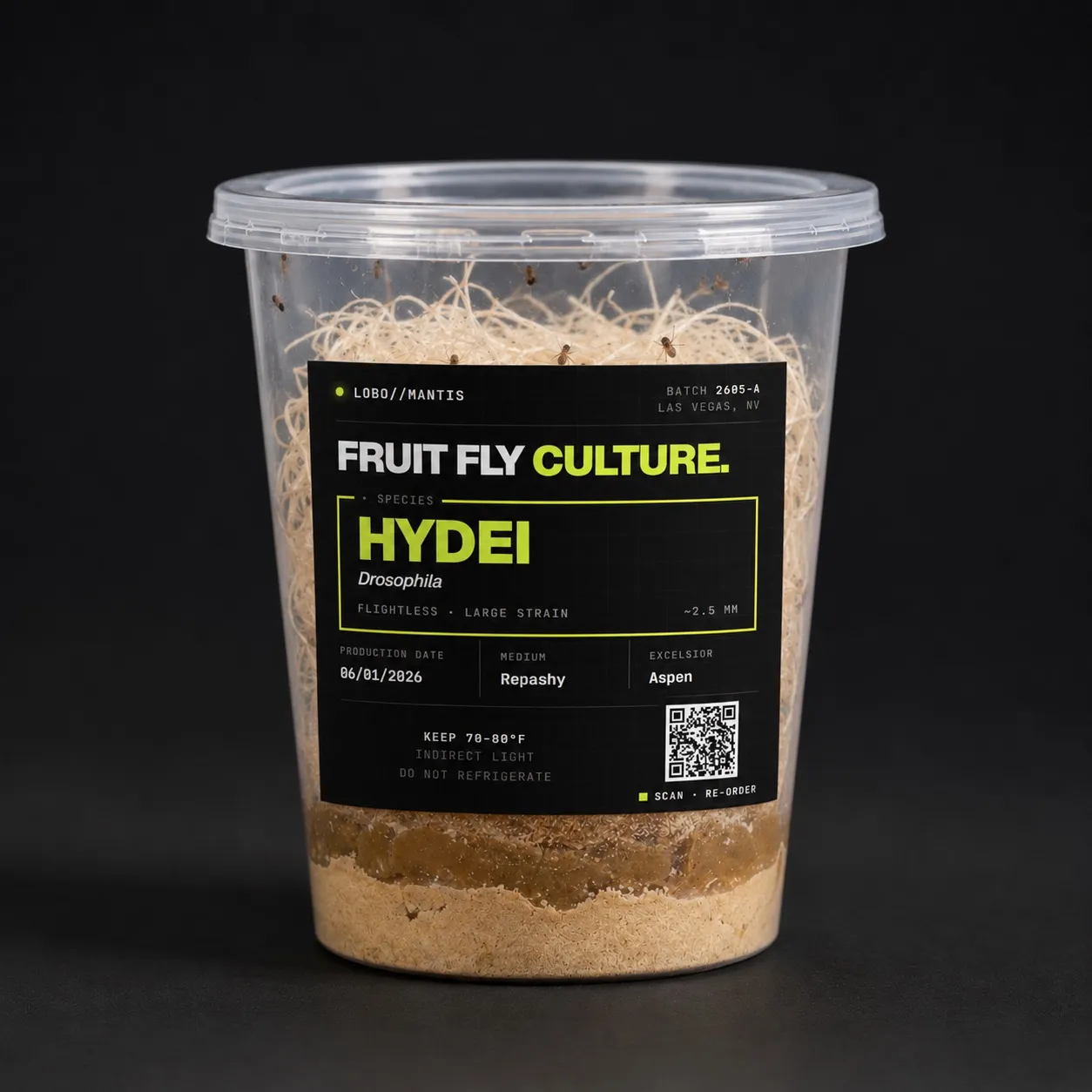
- D. melanogaster — the smaller fly, for L1–L2 mantis nymphs, jumping spider slings, dart frog froglets, and bettas.
- D. hydei — the larger fly, for L3+ mantis nymphs, adult dart frogs, and small reptiles.
Both ship as active, producing cultures — Ground on their own (no live arrival guarantee on Ground), or free with a mantis order (the guarantee covers the mantis, not the culture) — so the next one doesn’t leave you troubleshooting. Not sure which fly your animal needs? Our feeder insects guide breaks down prey size by stage, and if you’re raising nymphs specifically, what baby mantises eat covers the first-food ladder.
Bottom line
A fruit fly culture that stops producing is usually one of three things: too cold (warm it up — most common by far), too old (media exhausted — replace it), or contaminated (mites/mold/bacteria — toss it). Check the temperature first, look for maggots on the walls to confirm whether it’s actually working, and when in doubt about a crashed culture, don’t nurse it — your animals are hungry, and a fresh strong culture is $15 away.