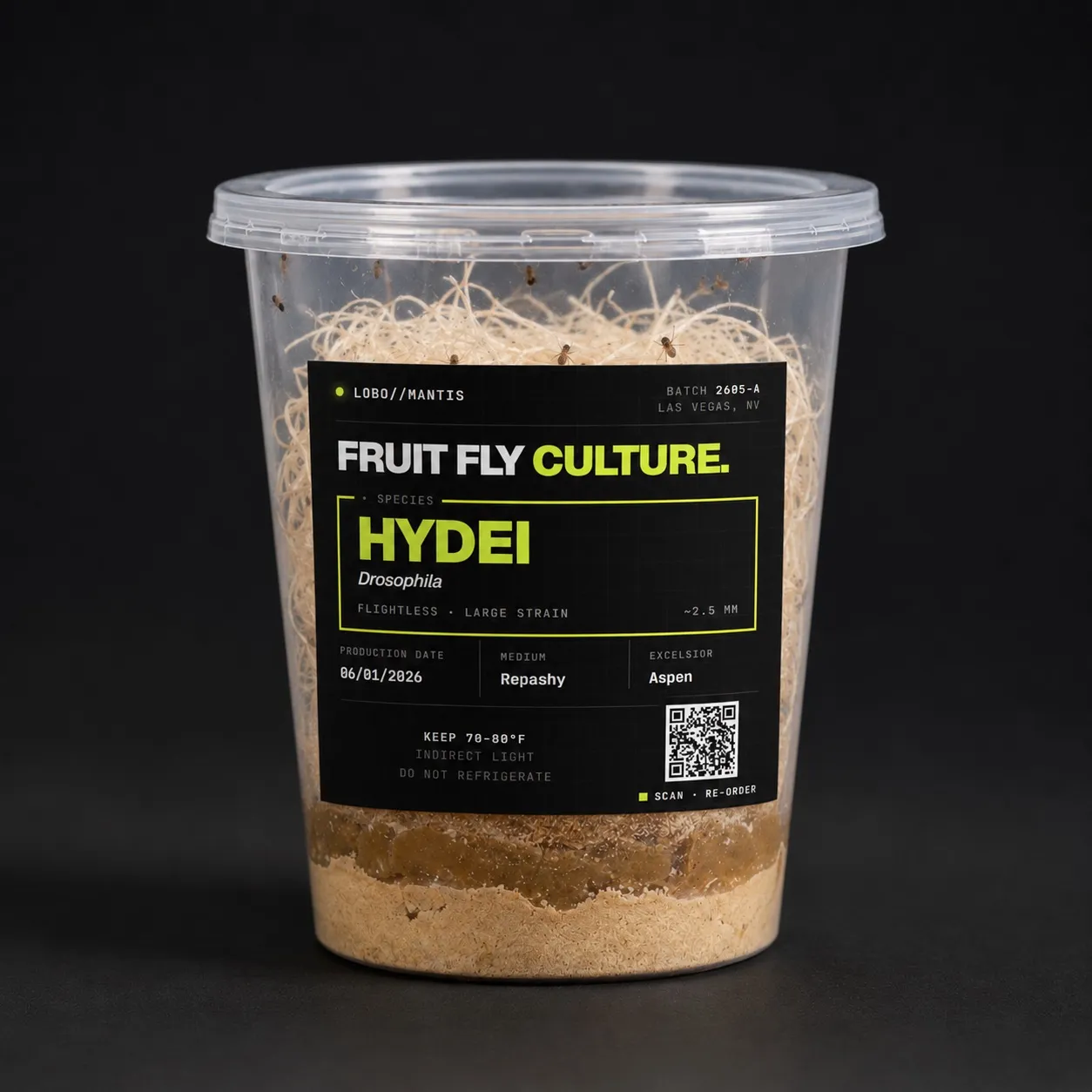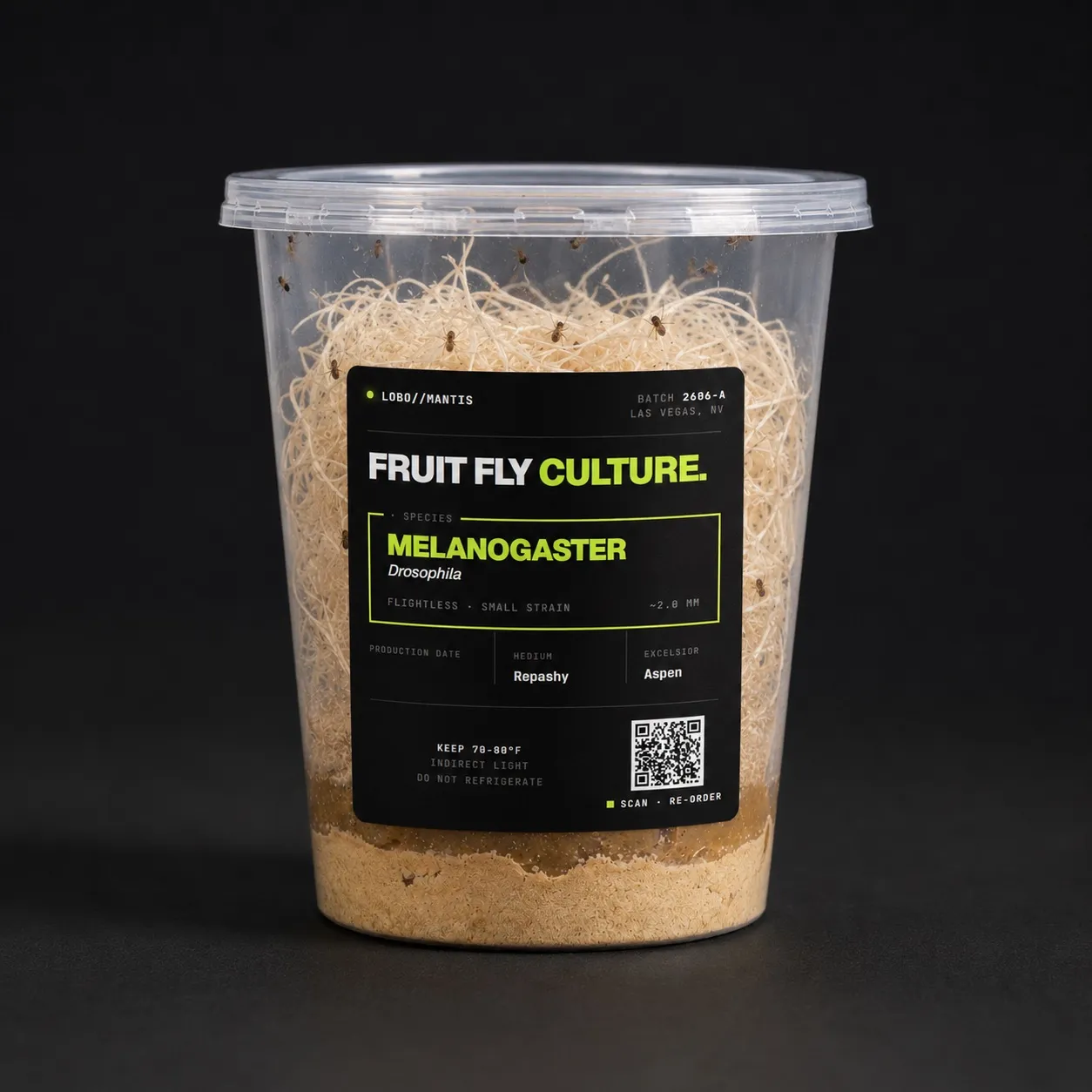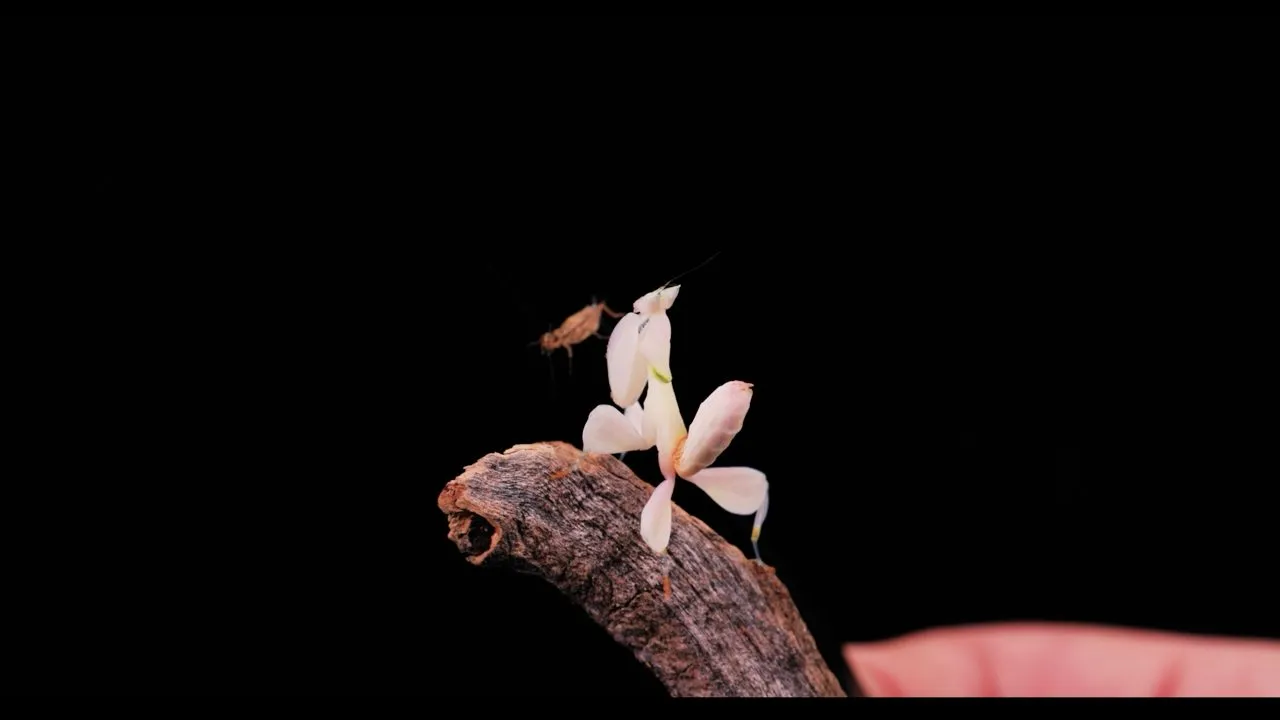
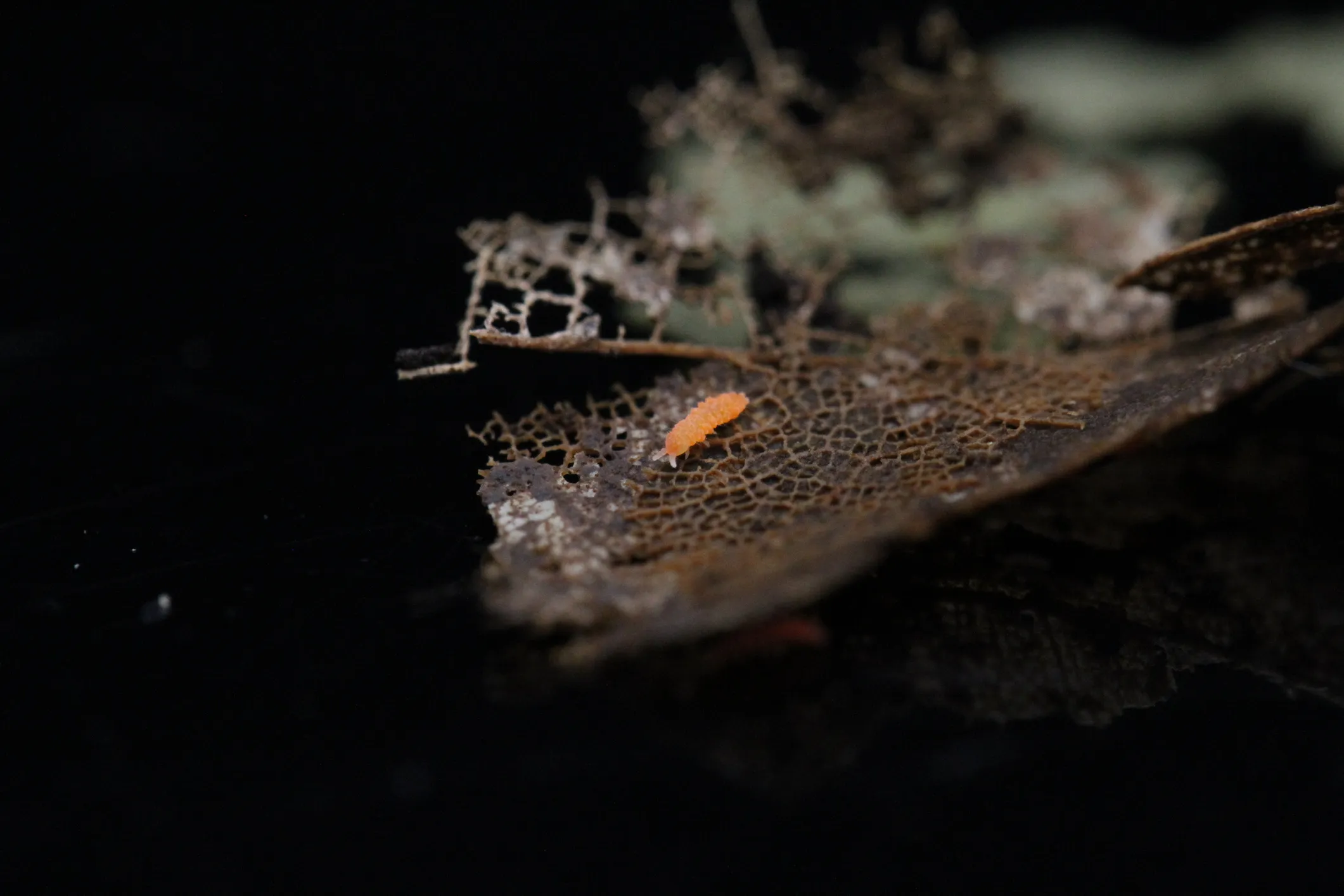

Your ootheca just hatched, or a box of nymphs just arrived, and now there are tiny mantises everywhere looking at you like it’s your move. It is. The single most common panic message I get from new keepers is some version of “what do I feed these?” — so here’s the whole answer, worked out over every brood we raise.
Short version: baby praying mantises eat flightless fruit flies — specifically Drosophila melanogaster for the smallest nymphs. That’s it. Not crickets, not the ants in your kitchen, not “small bugs from the garden.” Flightless fruit flies are the right size, the right softness, and the right safety for an animal that, at hatching, is barely bigger than a mosquito.
Short on time? See the nymph feeder lineup with live stock →
First: don’t feed them for the first 2 days
This trips up almost everyone. A freshly hatched L1 nymph does not need food immediately. They emerge with enough yolk reserve to last a couple of days, and they need that time to harden off and spread out. Drop food in on day one and you’ll mostly stress them.
Wait 48 hours after hatching. (Nymphs that arrive from shipping are a different case: you can offer food once they are settled into their enclosure, there is no set number of hours to wait, and don’t worry if they skip the first meal.) Make sure they have water in that window — a light mist on the enclosure walls once a day is plenty. Then start feeding.
What “baby mantis food” actually is, by stage
Mantises grow in stages called instars (L1, L2, L3…), molting between each. Prey size scales with the mantis. The rule breeders use: prey no bigger than a third of the mantis’s body length — for a hatchling, that’s a melanogaster. Too big and the nymph won’t attempt it — or worse, the prey fights back.
| Nymph stage | What to feed | Why |
|---|---|---|
| L1–L2 (hatchling to first molt) | D. melanogaster flightless fruit flies (~2 mm) | The only prey small and soft enough for a hatchling |
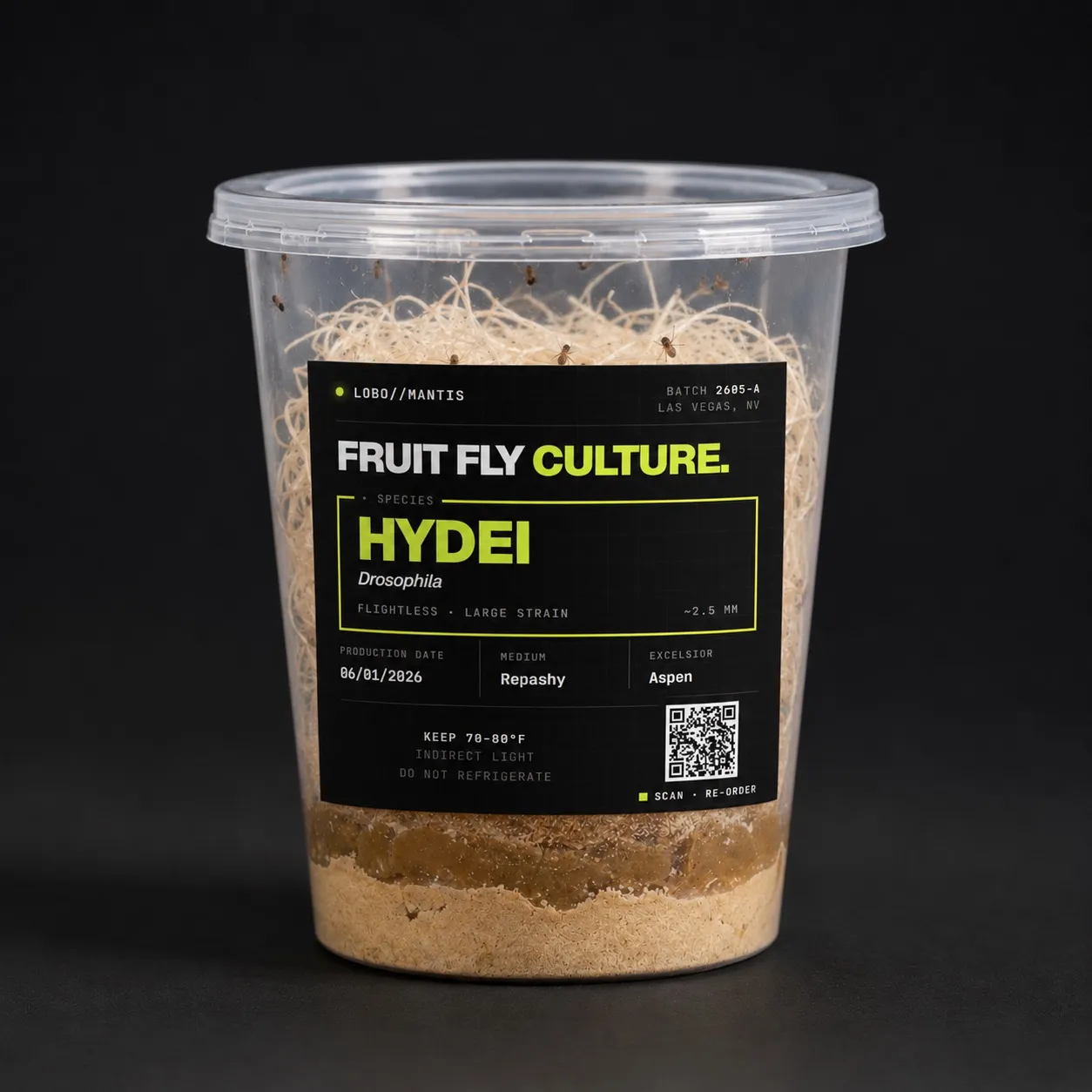
| L3–L4 | D. hydei flightless fruit flies (~3 mm) | Bigger fly, more calories, fewer feedings |
| L5+ / sub-adult | green or blue bottle spikes (houseflies/bluebottles) | Fruit flies are now too small to sustain them |
That’s the feeder ladder — you climb it as the mantis grows. Nearly every mantis species, from Ghost to Orchid to the big Chinese mantis, follows this same progression through its first several instars. (For the full ladder including adult prey, see our feeder insects guide.)
Why flightless fruit flies, and not something else
New keepers always ask about the alternatives, so let me save you the experiments:
- Crickets? No — and not later either. Even pinhead crickets are too big and too aggressive for L1–L3 nymphs, and a cricket will chew on a molting mantis. We don’t feed them at any age: they’re the most disease-prone feeder in the hobby, and dubia roaches do the same job with far less risk.
- Wild bugs from outside? No. Field-caught insects can carry pesticides and parasites, and you can’t control the size. One bad aphid isn’t worth losing a nymph.
- Aphids? Some keepers use them as a supplement, but they’re inconsistent to source and low-value. Fruit flies are the reliable staple.
- “Flightless” matters. A normal winged fruit fly escapes the enclosure and fills your kitchen. The flightless strains (melanogaster and hydei) are flightless, not wingless — they have visible wings but can’t fly, so they walk and climb and stay where the mantis can hunt them. Keep the cup under about 80°F; above that some of the next generation can regain flight.
How much, and how often
Nymphs eat more often than adults because they’re growing fast. A rough schedule:
- L1–L2: drop in 4–6 melanogaster per nymph every 1–2 days, keeping a few present at all times. L3–L4: 4–6 hydei every 2 days. Watch — if they’re all gone in a few hours, add a couple more next time; if a crowd of flies is still wandering the next day, you’re overfeeding.
- Remove uneaten flies every day or two so they don’t foul the enclosure or bother a mantis about to molt.
- A mantis about to molt stops eating — that’s normal, not a problem. Leave it alone until it’s molted and hardened. (More on that in praying mantis not eating.)
You don’t need to gut-load fruit flies the way you would crickets, but if you’re keeping a culture going, a healthy culture on good media produces healthier flies. Which brings up the thing nobody tells first-time keepers…
You feed from a culture, not a bag of flies
Flightless fruit flies are sold as a living culture — a cup with media at the bottom that continuously produces new flies for 3–4 weeks. You don’t buy “50 flies”; you buy a colony that makes flies on demand. Tap a few out at feeding time, close it back up, and it keeps producing.
This is why a single $15 culture feeds a single nymph for about a month (a whole clutch needs several on rotation) — and why timing your next one matters. A culture peaks around days 14–21 and tapers after that, so most keepers start or order a fresh one every 2–3 weeks, before the old one crashes. If you’ve ever had a culture stop making flies, that’s usually age or a care slip, not bad luck — we cover the fixes in our fruit fly culture care sheet.
The honest bottom line
For the first few weeks of a praying mantis’s life, the answer to “what do I feed it” is flightless fruit flies — melanogaster while they’re tiny, hydei once they’ve grown a bit. Wait two days after hatching, keep prey under a third of body length, feed every day or two, and pull the leftovers. Do that and your nymphs will molt cleanly right up the feeder ladder.
If you’re starting fresh, a melanogaster culture is the one to have on hand the day your nymphs are ready to eat — and if you’re not sure which mantis to raise first, our best beginner mantis guide walks through the easiest species to start with.