

A bioactive terrarium is an enclosure that cleans itself. Instead of you scrubbing out waste every week, a small crew of insects and microbes living in the substrate breaks it down where it falls, so waste becomes plant food, and the whole thing runs like a slice of forest floor in a box.
I breed the cleanup crew that makes this work (the isopods and springtails), so this guide comes at it from a different angle than most. Nearly every “how to build a bioactive terrarium” article you’ll find is written by a company selling substrate kits, where the cleanup crew is a two-line afterthought. It’s the part beginners get wrong most, so it’s the part I’m going to spend the most time on. And I’ll tell you the things the kit guides leave out: what week two actually looks like (spoiler: mold), why your crew “disappears,” and the one mistake that quietly kills more colonies than anything else.
What “bioactive” actually means
Three things, working together:
- The substrate: a living soil, not just bedding. It hosts the microbes and bugs and feeds your plants.
- The plants: live roots that take up the nitrogen from broken-down waste and keep the soil aerated.
- The cleanup crew: springtails and isopods that eat waste, mold, and dead plant matter and turn it into fertilizer.
Get those three in balance and the enclosure processes its own waste. You still spot-clean the big stuff and top things up, but you’re not tearing it down to bleach it every month. Done right, a bioactive substrate lasts years before it needs replacing.
What you’ll need
- An enclosure: bigger is more forgiving, and front-opening is easiest to work in
- Substrate: a bioactive mix (buy it bagged or mix your own; more below)
- Leaf litter: dried, pesticide-free (oak and magnolia are the standards)
- Hardscape: cork bark, driftwood, cholla; hides and climbing surfaces
- Live plants: matched to your humidity, pesticide-free
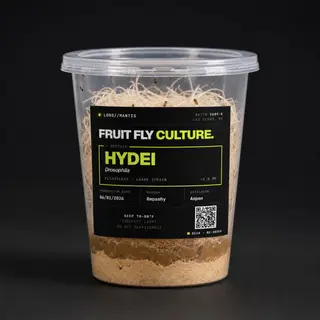
- A springtail culture
- One isopod species (see the crew section: one, not a mix)
- For humid setups only: drainage media (LECA/clay balls) and a mesh barrier
The build, layer by layer
Know your animal first. Everything below bends around one question: is your animal from a humid environment or an arid one? That single fact decides whether you need a drainage layer, how deep your substrate goes, and which cleanup crew survives. Look up your species’ humidity range before you buy a thing.
1. Drainage layer, only for humid setups. This is the most contradicted step on the internet, and here’s why: it depends on your biome. If you’re building a humid, tropical enclosure that you’ll mist regularly, add a 2–3” drainage layer of LECA or clay balls at the bottom, with a mesh barrier on top to keep soil from washing down into it. It gives excess water somewhere to pool so your soil never turns into a swamp. If you’re building an arid setup, skip it entirely. You’ll never add enough water to need it, and deeper substrate does the job instead. Don’t let a tropical guide talk you into a drainage layer for a desert animal.
2. Substrate. For humid setups, the reference recipe is “ABG mix” (orchid bark, tree fern fiber, peat or coco, sphagnum, and charcoal), roughly 2–3” deep. You do not have to mix your own; bagged bioactive substrate from any reputable brand is genuinely fine for a first build, and I’d rather you start with a bag than get scared off by a recipe. For arid setups, it’s a different world: a topsoil-and-sand blend, 4–8” deep so burrowers can dig. Whatever you use, treat coco coir as a moisture base only (it’s fine under a real layer of leaf litter and rotting wood, but bare coir has no food value and starves the crew), and never use fertilized potting soil, which can poison it.
3. Leaf litter. Put down a 2–3” layer of dried leaf litter on top of the substrate. This is not decoration. Leaf litter is the primary food for your cleanup crew (the isopods eat the leaves, the springtails graze the fungi growing on them), and it holds humidity and gives everyone cover. A tank with bare substrate and no litter is a tank where your crew slowly starves. Top it up as it breaks down.
4. Hardscape and plants. Add your cork bark and wood, then plant. Pothos, ferns, and bromeliads are close to unkillable for humid builds; succulents like haworthia for arid. One warning that trips up almost everyone: wash your plants. Nursery plants are grown with pesticides that will wipe out your cleanup crew overnight. Rinse the roots free of the original soil and rinse the leaves before planting.
5. Seed the cleanup crew. Now add your springtails and your isopods. More on exactly how many, and which, next.
The cleanup crew: what actually does the work
This is where the money and the confusion both live, so read this part twice.
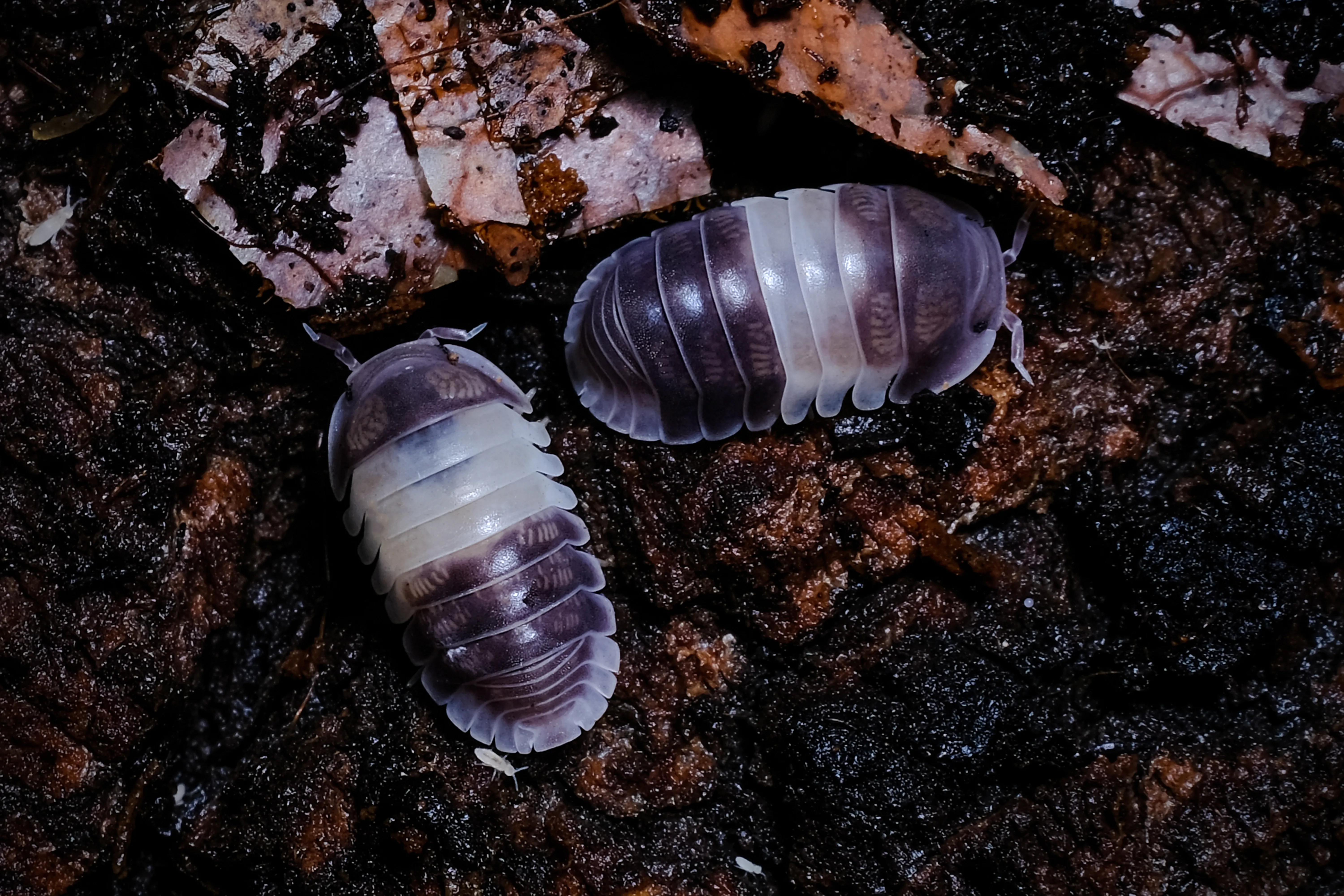
Springtails and isopods are not the same job. Springtails are the micro-crew: they eat mold, fungus, and biofilm, and they’re the reason a healthy bioactive tank doesn’t stay moldy. Isopods are the macro-crew: they break down the bigger stuff (leaf litter, wood, animal waste). You want both. They cover different niches. Adding springtails and isopods together is the whole idea of a cleanup crew.
But do not mix two isopod species. This is the one thing I’ll push back on hard, because it costs beginners money. Springtails plus isopods, yes. Two different isopod species in the same enclosure, no. They compete, the faster breeder buries the slower one, and the colony gets impossible to track or harvest cleanly. Pick one isopod species for the enclosure, based on what you want it to do:
If you want a workhorse, a crew that actually powers through waste, you want a fast, hardy species. Powder Orange and Powder Blue (Porcellionides pruinosus) are the go-to beginner workhorses: fast-breeding, active, and they tolerate everything from humid to semi-arid. Dwarf whites are the other standard, especially for small or delicate enclosures.
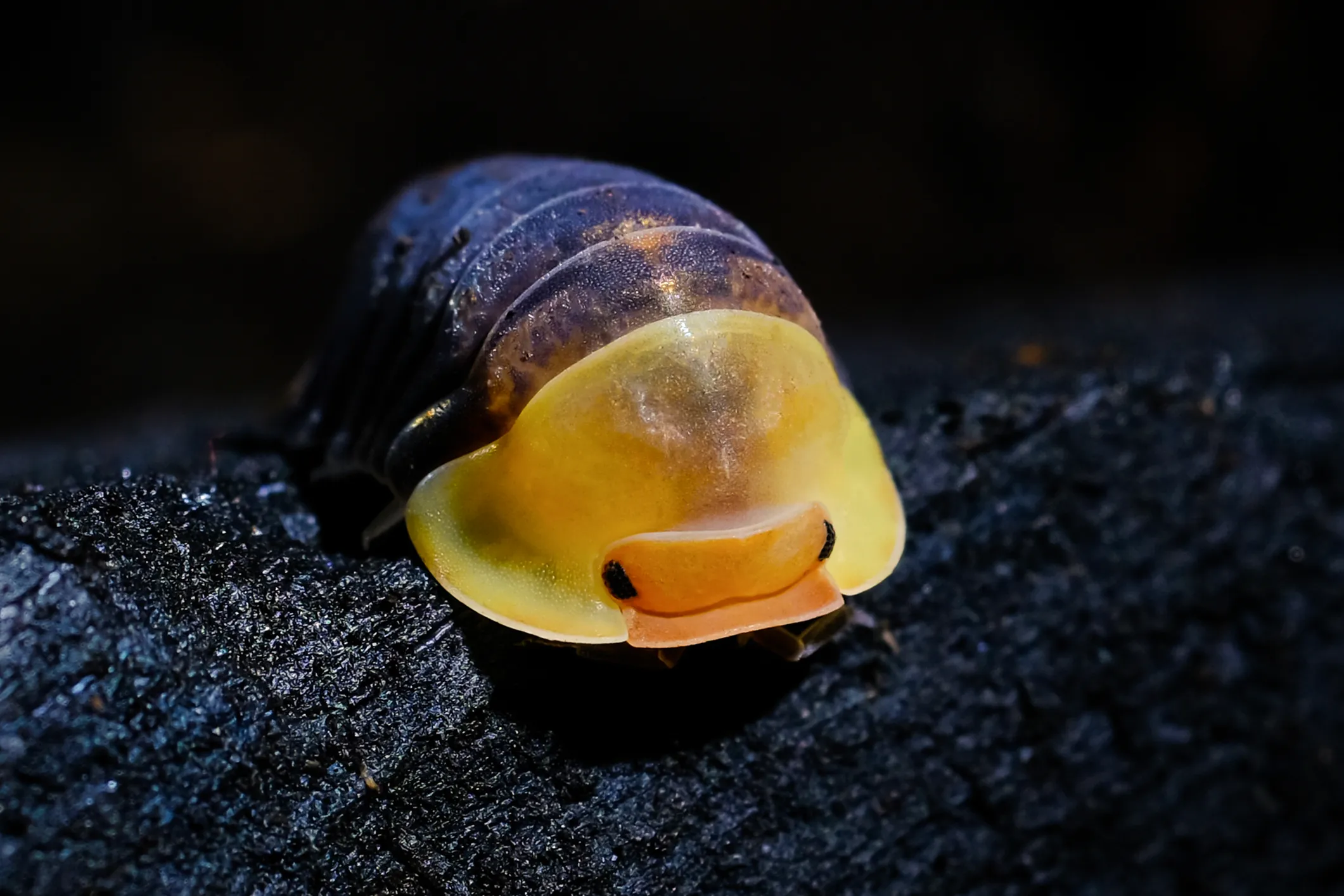
If you want a display animal, an isopod worth looking at that still contributes, that’s the Cubaris world: Rubber Ducky, Panda King, Cherry Blossom, Frosty Gator. These are slow breeders kept for their looks. Here’s the honest part the kit guides won’t tell you: Cubaris produce their first mancae at 3–6 months and give you a colony you can split at 12–18 months (roughly one doubling a year), which is exactly why they’re expensive. Using pricey Cubaris as disposable janitors is throwing money in the substrate. Buy them because you want to see them, and let a springtail crew carry the cleanup.
One species to be careful with: Porcellio laevis, sold as “Dairy Cow,” is a fantastic worker but food-motivated enough that it’s been documented nibbling small or molting animals. Skip it with anything delicate. (Confusingly, there’s a different animal, a Porcellio scaber “Dairy Cow” morph, that’s calmer; the names collide, so buy by the scientific name, not the nickname.)
Full husbandry for both is in the isopod care guide and the springtail culture care guide.
How many to start
Springtails self-regulate, so you don’t have to be precise: one culture seeds an enclosure up to about 5 gallons, one or two for 10–20 gallons, two or three for 30–40, and three or four for 55 gallons and up. Expect visible mold control 3–6 weeks after seeding.
Isopods need enough starting bodies to build colony momentum:
| Enclosure | Isopods to start |
|---|---|
| Up to 10 gallons | 10–15 |
| 20 gallons | 15–25 |
| 40 gallons | 25–50 |
| 55+ gallons | 50+ |
More at the start buys you a few weeks of head start, not a different outcome. A cleanup crew works once it establishes, and establishment is about time and conditions, not how many you dumped in on day one.
The waiting period (and what week two really looks like)
Seed the crew, run your lights, heat, and misting at their final settings, and then wait four to six weeks before the animal goes in; a month is the minimum. There’s no exact “cycle” like a fish tank. What you’re really waiting for is your plants to root so they don’t get trampled, and your crew to breed up to a working population. Delicate animals like dart frogs are worth the full six weeks.
Two things nobody warns beginners about, and both cause panic:
The mold bloom is normal. Somewhere in the first few weeks you’ll see white, fuzzy mold on the wood and soil. This is not a dirty tank; it’s fresh organic matter colonizing before your crew catches up, and it’s exactly what your springtails eat. It clears on its own in a few weeks as the springtails ramp up. If it lingers, add more springtails and bump the ventilation. Do not bleach the tank.
Feed the crew during the empty month. Here’s the mistake that quietly kills more starter colonies than anything else: during that animal-free month there’s no waste yet, so your cleanup crew has nothing to eat but the leaf litter. A pinch of the isopods’ food (and enough leaf litter) keeps them alive until the animal moves in and starts producing waste. A crew you seeded and then starved for a month is a crew that “mysteriously disappeared.”
Which brings up the other panic: your crew hasn’t died, it’s hiding. Isopods burrow and springtails are tiny; for the first week or two after you add them you’ll barely see them. Check with a flashlight an hour after dark before you assume the worst.
Bioactive for a praying mantis
This is my world, and it comes up constantly, so here’s the straight answer: yes, it works (keepers run bioactive mantis enclosures for years), but with two real caveats most reptile-focused guides never address.
Springtails are always safe. They live in the substrate, a mantis lives up in the foliage, and the two rarely meet. If your mantis eats the occasional springtail, no harm done.
Isopods: dwarf whites only, and watch the molt. The risk with a mantis is molting. A molting mantis hangs helpless for hours, and a climbing, protein-hungry isopod (the big Porcellio types) can nibble it. Dwarf whites stay down in the substrate and don’t climb, which makes them the safe choice. This is the single question the mantis forums keep re-litigating, and that’s the answer: springtails yes, dwarf whites fine, skip the big climbers.
And only in a real enclosure. Bioactive makes sense for a subadult or adult mantis in a proper planted enclosure (think 8×8×12 inches or bigger). It does not make sense in a nymph deli cup: what keeps a small mantis cup clean is ventilation, not a cleanup crew, and a cup is too small for a crew to establish anyway. Set your nymph up the normal way (see the terrarium setup guide), and go bioactive when it graduates to a real enclosure. Around molting time, the molting guide is worth a re-read.
Ongoing maintenance (there isn’t much)
That’s the payoff. Once it’s established:
- Spot-clean any large waste the crew hasn’t gotten to
- Top up leaf litter every couple of months as it breaks down
- Feed the crew a little if the enclosure’s waste isn’t keeping them fed
- Keep an eye on the drainage water line (humid builds) and siphon before it reaches the soil
- Prune and mist as your plants and animal need
Ready to build your crew?
Our isopods are display colonies; for a working cleanup crew, run a springtail culture. Browse the springtails and, if you want something worth watching in the leaf litter, the isopods. Every culture is bred here in Las Vegas and ships with a live arrival guarantee on overnight shipping. New here? The care guides cover keeping each one alive for the long haul.
Frequently Asked Questions
Do I need both isopods and springtails?
For a true self-cleaning setup, yes. They do different jobs. Springtails handle mold and fungus; isopods handle leaf litter, wood, and waste. Springtails alone will control mold in a small or planted tank, but they won’t process larger waste. Run both, but only one species of isopod. Never mix isopod species in the same enclosure.
How many isopods and springtails do I need to start?
One springtail culture seeds an enclosure up to about 5 gallons, one or two for 10–20 gallons, two or three for 30–40, and three or four for 55+; they self-regulate from there. For isopods, start with roughly 10–15 for up to 10 gallons, 15–25 for 20 gallons, and 25–50 for 40 gallons, then let them breed to the enclosure’s carrying capacity.
How long before I can add my animal?
Seed the crew four to six weeks before the animal goes in; a month is the minimum. There’s no exact cycle to measure. You’re waiting for plants to root and the crew to build up a working population, and delicate animals are worth the full six weeks.
Do I need a drainage layer?
Only for humid, regularly-misted setups. There, a 2–3” drainage layer keeps the substrate from waterlogging. For arid setups, skip it entirely and use deeper substrate instead. Matching this to your animal’s environment matters more than any single rule you’ll read.
Why is my new terrarium growing mold, and will it go away?
It’s normal. Fresh substrate and new wood grow mold in the first few weeks, before the cleanup crew catches up. It’s not a dirty tank, it’s the biology starting. Your springtails eat it, and it clears on its own in a few weeks. If it persists, add more springtails and increase ventilation. Don’t bleach it.
Are isopods safe with a praying mantis?
Springtails are always safe. For isopods, use dwarf whites only: they stay in the substrate and don’t climb, so they can’t reach a molting mantis. Avoid the large, protein-hungry climbing species around any animal that molts, and only run bioactive in a full planted enclosure, not a nymph cup.