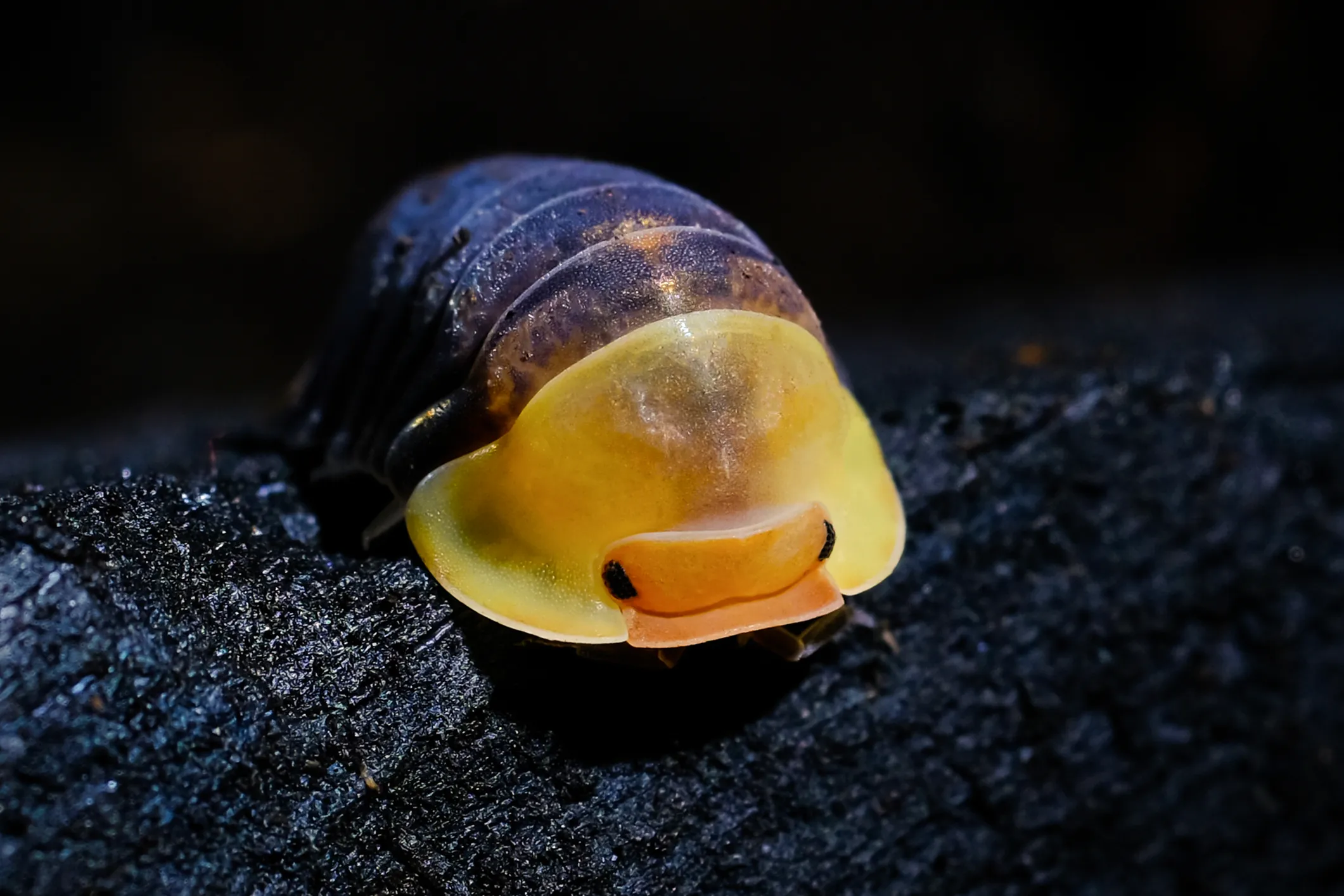
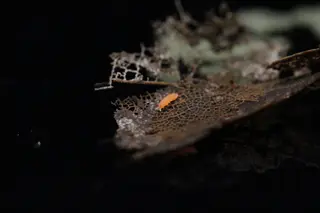



One of the softer-looking isopods in the hobby. Cubaris sp. “Cherry Blossom” carries a pale pink-and-cream colouring, muted rather than loud, that reads exactly like the name suggests. In a planted display it looks less like a bug and more like something scattered under a tree.
Like every Cubaris we keep, it’s a display colony rather than a cleanup crew, and it’s slow.
What You’re Buying
A starter colony, not a single animal. Isopods are sold as a group because the colony is the unit that survives: individuals die, colonies establish and produce.
Cubaris are slow to build numbers. Expect to wait months before your first mancae (baby isopods), and longer before the colony is large enough to split. Read the isopod care guide before you order, not after. Patience is the main thing a first-time buyer underestimates.
Keeping Them
Room temperature suits them, roughly 70–80 °F, with stability mattering more than the exact number. Build a moisture gradient rather than one uniform humidity: damp on one side, barely moist on the other, and let them choose.
The non-negotiables:
- Deep substrate: two to three inches on the damp side. Mancae live in the substrate.
- A calcium source: cuttlebone or crushed eggshell. They have a calcium-carbonate exoskeleton and must moult to grow.
- Leaf litter and decaying hardwood, which is most of what they actually eat.
- Cross-ventilation near the top, so the substrate stays damp without going stagnant.
Full detail is in the isopod care guide.
Cherry Blossom vs the Others
Among our isopods: Rubber Ducky is the recognisable one, Panda King is the high-contrast one, Frosty Gator is the textured one, and Cherry Blossom is the soft, pastel one. All are display isopods, not working cleanup crews. For that, springtails establish in a fraction of the time.
Frequently Asked Questions
Are Cherry Blossom isopods good for beginners?
They’re not hard to keep alive, but they’re a frustrating first isopod because they breed so slowly. If this is your first colony, keeping a faster species alongside them teaches you what a thriving culture looks like.
Why are they expensive?
Slow reproduction. A colony takes months to produce and longer to split, so supply never catches up with demand the way it does for fast-breeding species.
Can I keep them with other isopods?
You can, but faster species will out-compete them and you’ll gradually end up with a single-species culture. Keep them on their own.
Will they clean my vivarium?
Not effectively: they’re slow and they hide. Use springtails or a fast isopod for cleanup and keep these on display.
How many do I get?
A starter colony sized to establish. Exact counts are listed on the variant when these go on sale. Join the waitlist and you’ll hear first.