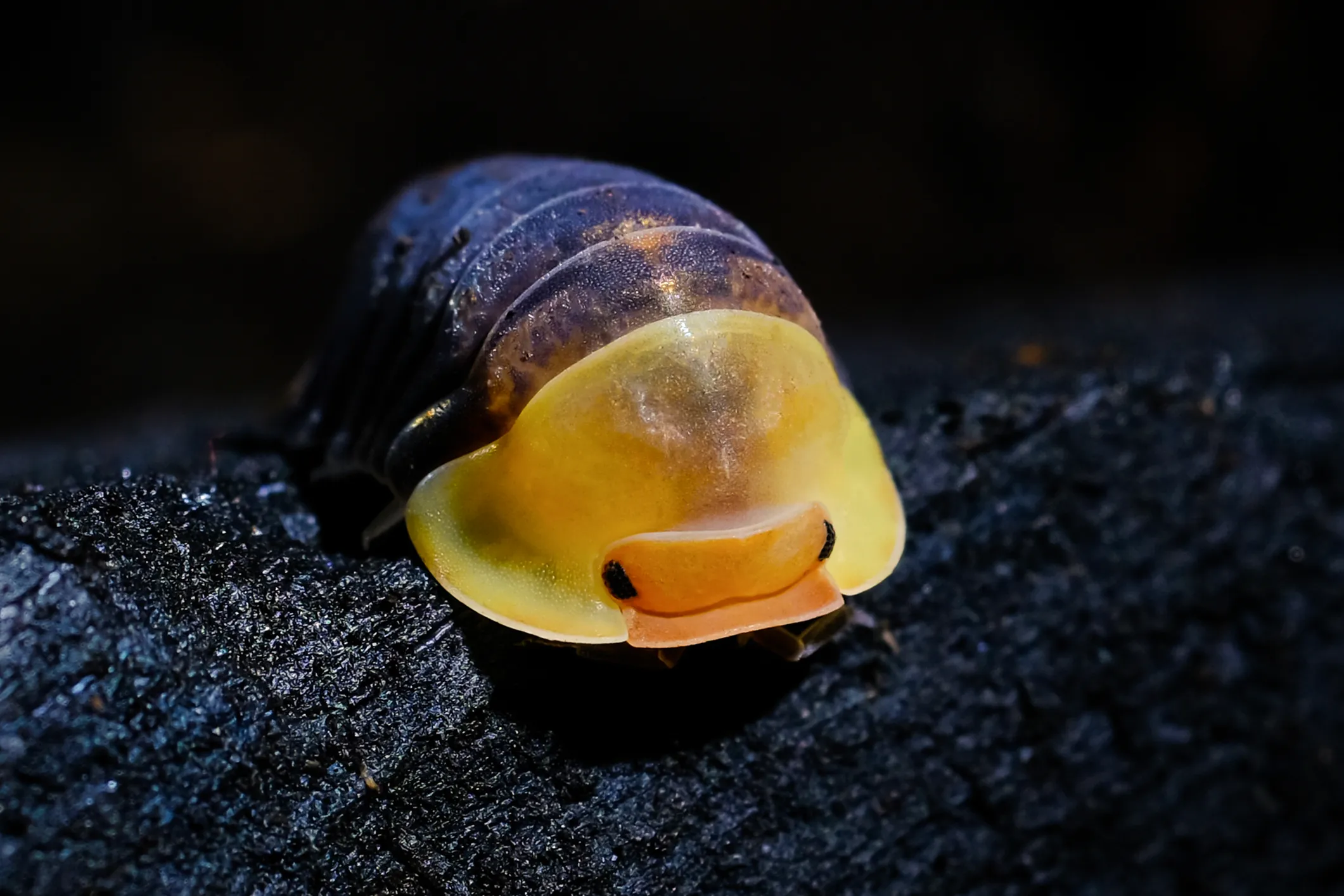


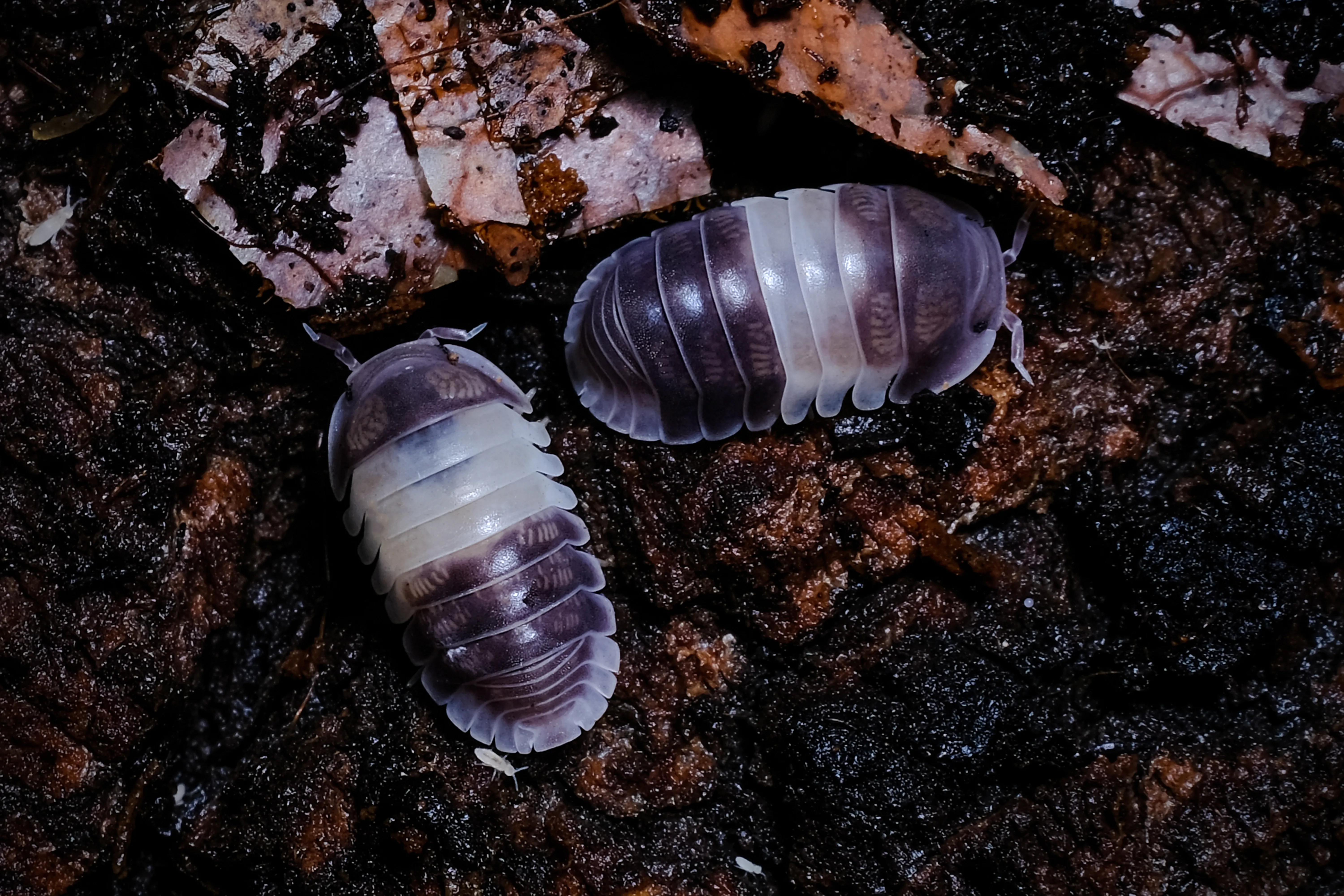
The boldest-looking isopod we keep. Cubaris sp. “Panda King” is sharp black and white, genuine high contrast rather than the muted browns and greys most isopods come in. In a planted display with pale substrate they are impossible to miss.
Like every Cubaris, they are a display colony rather than a cleanup crew, and they are slow.
What You’re Buying
A starter colony. Isopods are sold as groups because the colony is what establishes and survives. Buying “an isopod” is not a meaningful thing to do.
Set your expectations on the timeline before you order. Cubaris commonly take months to produce their first mancae, and a colony you can split is a longer wait again. The isopod care guide covers what the first six months actually look like.
Keeping Them
Same requirements as the rest of the tropical Cubaris: room temperature around 70–80 °F, stable rather than swinging, with a moisture gradient across the container instead of one uniform humidity.
They need deep substrate to burrow and breed in, a permanent calcium source for moulting, leaf litter and decaying hardwood as their staple food, and cross-ventilation so the damp side stays damp without souring. The care guide has the full setup and the troubleshooting for when a colony stalls.
Panda King vs the other Cubaris
Rubber Ducky is the one people recognise, Panda King is the one that photographs best, and Frosty Gator has the most unusual texture. None of our Cubaris is a practical cleanup crew. For that, springtails do the job in weeks instead of months.
Frequently Asked Questions
Are Panda King isopods hard to keep?
No harder than any tropical Cubaris: they want damp substrate, calcium, and to be left alone. The difficulty is patience, not husbandry.
How fast do Panda Kings breed?
Slowly. Months to first mancae is normal. If a colony looks empty for the first several weeks, that is expected behaviour rather than a problem.
Do they need a heat mat?
Usually not. Room temperature is fine, and a mat under a small container is an efficient way to dry a colony out. Warm the room instead if yours runs cold.
Can I mix them with Rubber Duckies?
Better not to. They have near-identical requirements, so nothing goes wrong husbandry-wise, but you lose the ability to tell which colony is actually producing.
Are they safe with my mantis or gecko?
Isopods don’t attack healthy animals, but a molting mantis isn’t one for a few hours; keep Cubaris in their own bin.