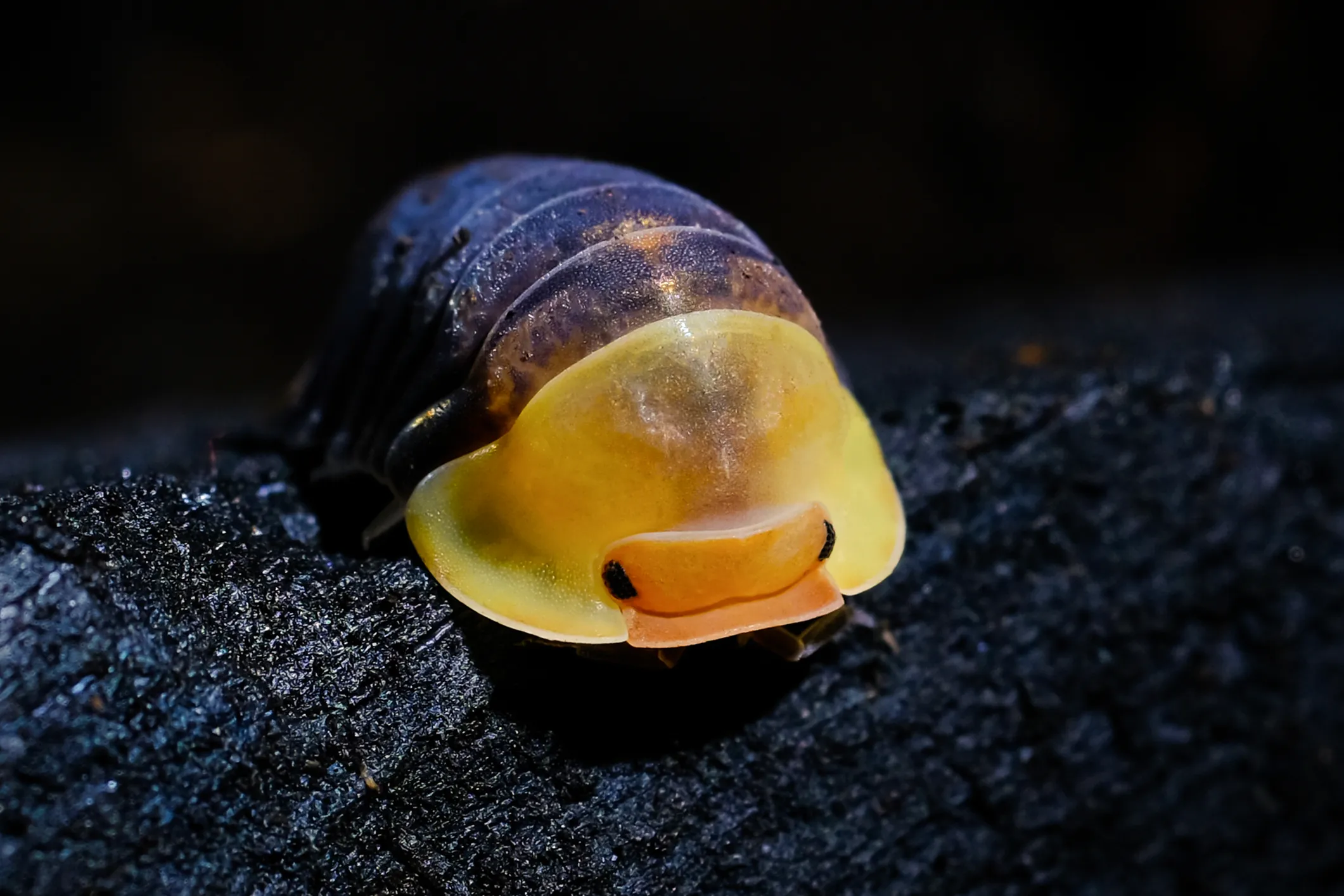
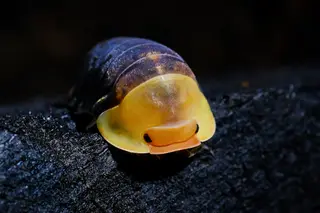



The texture is the point. Reductoniscus tuberculatus is a small tropical isopod whose shell is covered in raised tubercles, a ridged, armoured, faintly reptilian surface that catches light in a way smooth isopods don’t. Hence “Frosty Gator”.
They stay small, they are slow, and like the Cubaris we keep they earn their place as a display colony rather than a working cleanup crew.
What You’re Buying
A starter colony sized to establish. As with every isopod, the colony is the unit that survives, not the individual animals in it.
Frosty Gators are small enough that a new colony is genuinely easy to lose track of in deep substrate. Resist the urge to dig for them; that is how mancae get crushed. The isopod care guide covers the “my culture looks dead” check that almost always turns up a live colony.
Keeping Them
Room temperature, roughly 70–80 °F, and stable. Build a moisture gradient across the container rather than aiming at a single humidity number, and let them pick their spot.
The requirements are the standard tropical set: deep substrate for burrowing and breeding, a permanent calcium source for moulting, plenty of leaf litter and decaying hardwood as the staple food, and cross-ventilation so the damp side never goes stagnant. Because they are small, they benefit noticeably from a thicker litter layer than you might give a larger species: more surface to graze, more places to hide.
Full setup and troubleshooting is in the isopod care guide.
Frosty Gator vs the other Cubaris
Rubber Ducky is the recognisable one and Panda King is the high-contrast one. Frosty Gator is the one people pick up a loupe for. If what you actually need is mould and waste control rather than something to look at, springtails establish far faster and cost far less.
Frequently Asked Questions
How big do Frosty Gator isopods get?
Small, noticeably smaller than the Cubaris species. The appeal is the shell texture rather than size.
Are they good in a bioactive enclosure?
They will do the job eventually, but they’re slow to build numbers and small enough to be easy prey. A dedicated display bin suits them better, with springtails doing cleanup duty in the vivarium.
How fast do they breed?
Slowly, like most tropical display isopods. Plan in months, not weeks.
Do they roll into a ball?
They conglobate (roll up defensively), which is part of what makes the tuberculate shell so visible when they do it.
What do I feed them?
Leaf litter and decaying hardwood do most of the work, supplemented with small amounts of vegetable scraps and a permanent calcium source. Details, including the fish-flake debate, are in the care guide.