

You found a praying mantis egg case stuck to a twig, or you bought one online, and now you want to know what to do with it. Here’s the honest answer from someone who hatches these for a living: most people shouldn’t. Let me explain what an egg case actually is, how to identify the one you found, and why hatching it is harder than anyone tells you.
What is a praying mantis egg case?
A praying mantis egg case is called an ootheca (plural: oothecae). The female mantis produces it from a frothy secretion that hardens into a tough, foam-like shell. Inside that shell are dozens to hundreds of eggs, arranged in chambers.
One ootheca is not one mantis. One ootheca is a whole brood. Depending on the species, a single egg case holds anywhere from a few dozen to well over a hundred nymphs; our exotics mostly hatch 20 to 100. When it hatches, they don’t trickle out over days. They come out all at once, in a wave, within an hour or two.
That number is the entire point of this article. People find an egg sac, picture a single pet mantis, and have no idea they’re holding a population.
How to identify an ootheca in your yard
If you live in North America and found an egg case outdoors, you almost certainly have one of two species, neither of which is something we breed or sell.
Chinese mantis (Tenodera sinensis) ootheca: Big, rounded, tan to light brown, about the size of a walnut. Puffy and almost styrofoam-looking. Usually stuck to a sturdy twig, fence wire, or plant stem a foot or two off the ground. This is the most common egg case people find in the US, because Chinese mantises were widely introduced and are sold as garden pest control. A single Chinese mantis ooth can release 100 to 300-plus nymphs.
Carolina mantis (Stagmomantis carolina) ootheca: Smaller, longer, and flatter. More elongated and streamlined than the Chinese ooth, often grayish. Native to much of the US.
Both are typically laid in fall and overwinter outdoors, hatching in late spring when temperatures climb. If you found one in winter, it’s dormant and waiting for warmth. That timing detail matters more than you’d think, and we’ll get to why.
A quick note: if you found an ootheca outside, the best thing you can usually do is leave it where it is. It’s a native or naturalized garden insect doing its job. You don’t need to rescue it.
Should you hatch a praying mantis egg case?
Honest answer: probably not. I say that as someone whose whole business is producing healthy mantises. Here’s what people don’t see coming.
The timing is out of your control. An overwintering ooth hatches when it decides to, often after weeks of warmth. You can’t schedule it. People put an egg case in a jar, forget about it, and walk into a room full of escaped nymphs.
A hundred-plus pinhead nymphs will escape. L1 mantis nymphs are the size of a mosquito and thinner. They walk through the mesh on most “ventilated” containers. They fit through the gap around a jar lid. The moment they hatch, every one of them is looking for a way out and something to eat. If you weren’t ready, your hatch becomes a hunt for nymphs across your house.
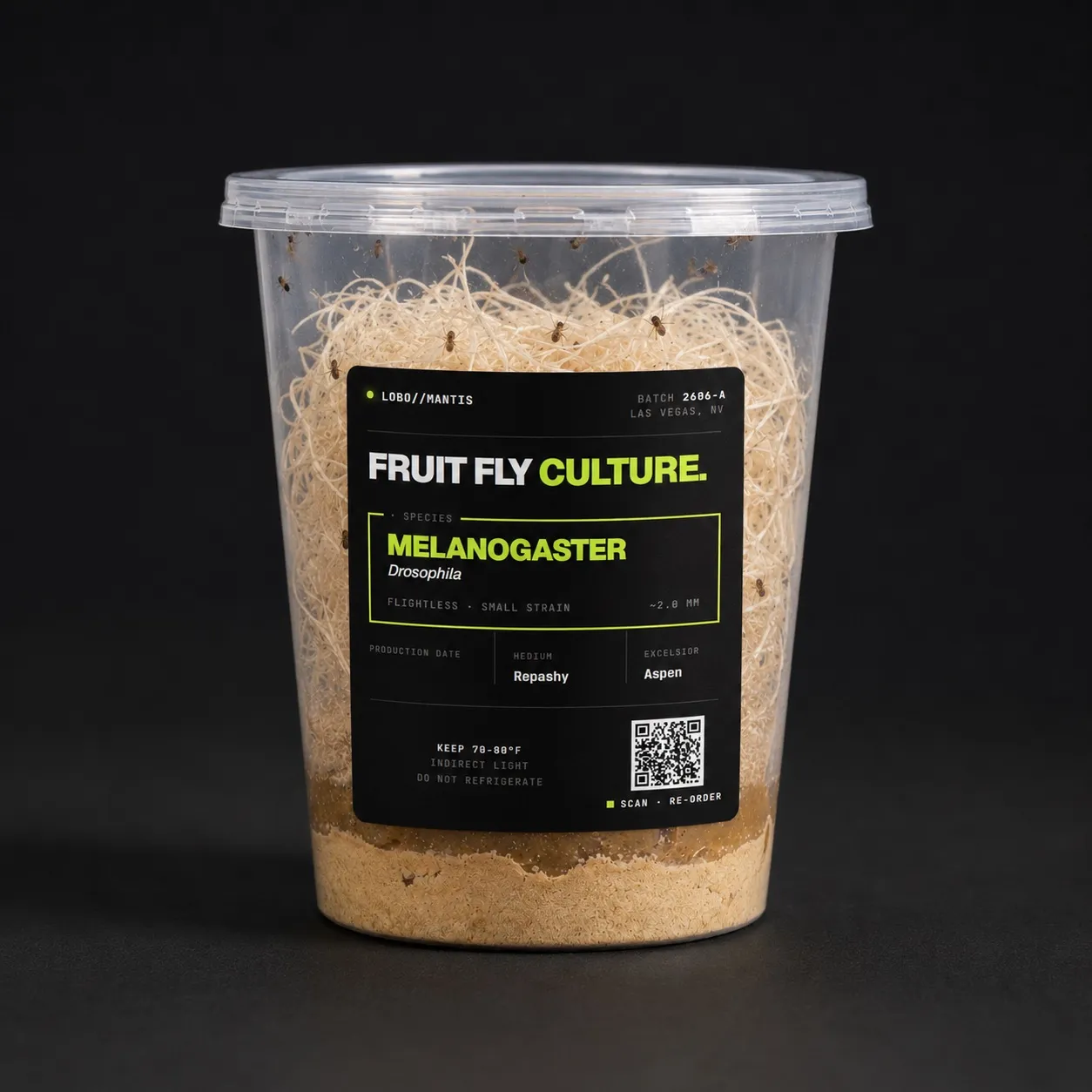
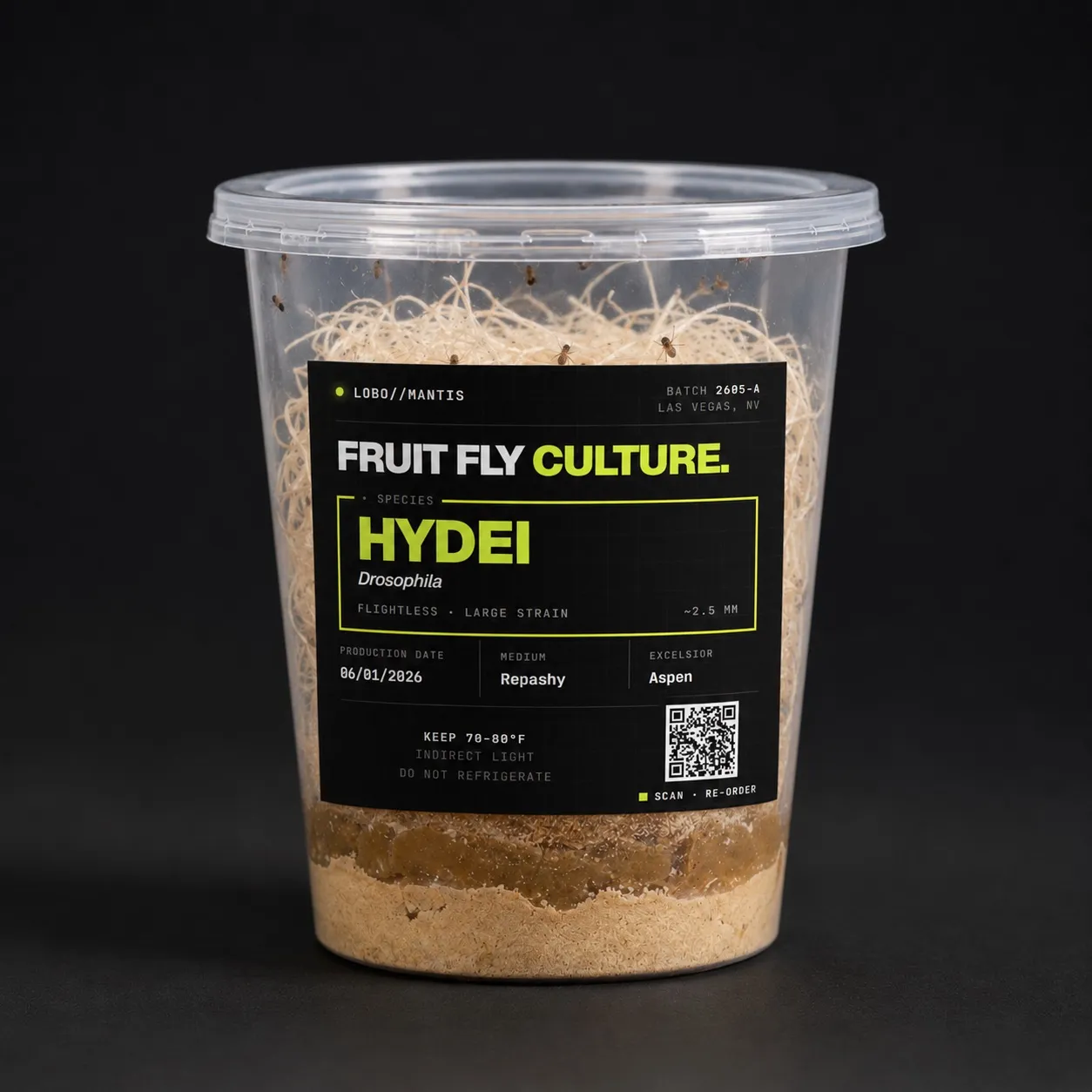
Feeding is a logistics problem, not a chore. Newly hatched nymphs are too small for anything but flightless fruit flies (Drosophila melanogaster), and we never feed crickets anyway. They eat constantly. One hatch of 150 nymphs needs hundreds of fruit flies a week. That means keeping active fruit fly cultures going before the hatch, not after. If you don’t have live food the day they hatch, they starve.
Then they eat each other. Mantises are cannibals. Crowd 150 hungry nymphs in one container and within a few days you have far fewer, because they treat their siblings as prey. This isn’t a failure you can prevent by being nice. It’s biology. The only real fix is separating them, which means having dozens of individual containers ready.
If you read all that and still want to do it, fine. Here’s how to do it right.
How to hatch a praying mantis egg case properly
If you’re determined, set up before anything hatches. Scrambling after the fact is how broods die.
Container. Use a tall container with truly fine mesh ventilation, finer than window screen. Fabric like fine no-see-um netting works. Mount the ootheca near the top so nymphs have room to hang and drop. They hatch by lowering themselves on a thread inside a thin pre-larval skin, which they shed within minutes to become free-running L1 nymphs. Their first true molt, to L2, comes roughly a week or two later, and every molt after that carries its own risks.
Temperature. Most temperate species (Chinese, Carolina) need a cool dormancy period first, then a warm-up to trigger hatching. After the cold period, hold them around 75 to 82°F. Steady warmth is the trigger.
Humidity. Light mist every couple of days. You want the air humid, not the egg case wet. Mist the container walls, never soak the ooth. Too much moisture grows mold and kills the brood; too little and the nymphs can’t emerge cleanly.
Timing. From the warm-up, hatching can take anywhere from a few weeks to a couple of months. There’s no exact countdown. Watch daily.
The hatch event. It happens fast. One morning the case is dormant; an hour later there are nymphs hanging in clusters and dropping everywhere. This is when all the prep pays off or doesn’t.
Immediate separation. Within the first day or two, move nymphs into individual cups before cannibalism sets in. This is the labor wall that stops most hobbyists cold.
What do you do with 150 mantises?
This is the question nobody asks until it’s too late. You hatched the ooth. Now you have 150 living animals that each need their own container, daily fruit flies, and misting.
Realistically, you cannot keep them all. You can house a handful. The rest need homes fast, before they cannibalize or starve. Selling or giving away that many nymphs, all the same age, all needing the same care, is its own project. Most people end up overwhelmed, and the brood collapses to a few survivors by attrition. That’s not a happy outcome. It’s just the common one.
This is exactly why breeders exist
Here’s the honest pivot. Everything above is the brutal part of the mantis life cycle, and it’s the part we absorb so you don’t have to.
Hatching an ootheca is the hardest, highest-loss stage in the entire hobby. The timing gambling, the pinhead escapes, the fruit fly marathon, the cannibalism, the separation labor across a whole brood. A captive-bred nymph skips all of it (here’s how we breed and raise ours).
When you buy a nymph from us (an established young nymph past the hatchling stage; the exact stage varies with each hatch), someone already ran the hatch, already fed the brood through its most fragile instars, already separated everyone into individual cups, and already culled and selected for the strong ones. You get a healthy, eating, established young mantis. One animal. One enclosure. A clean start.
That’s the whole value of captive breeding. We do not sell egg cases, and we never will, because handing a beginner an ootheca is handing them the worst version of this hobby. We sell the thing on the other side of that wall. If you’re weighing your options, our praying mantis buying guide and our breakdown of how much a praying mantis costs walk through what a captive-bred nymph actually runs.
If you’re trying to figure out which species to start with, read our best pet mantis for beginners guide. When you’re ready, browse what’s hatched and available in the shop. And before your nymph arrives, read getting started so the enclosure is set up first.
Frequently Asked Questions
How many mantises hatch from one egg case?
Depending on species, a single ootheca produces anywhere from a few dozen to well over a hundred nymphs (our exotics mostly hatch 20 to 100), and they typically all hatch within an hour or two of each other. You’re not getting one pet. You’re getting a brood that needs immediate separation and a constant supply of fruit flies.
Does LOBO//MANTIS sell praying mantis egg cases?
No. We don’t sell oothecae and we don’t plan to. Hatching an egg case is the hardest, highest-loss stage in the hobby. We do that work ourselves and sell healthy captive-bred young nymphs, past the hatchling stage, that have already cleared it. Browse them in the shop.
How long does it take a mantis egg case to hatch?
After temperate species get their cool dormancy period and then warm up to around 75 to 82°F, hatching usually takes from a few weeks to a couple of months. There’s no precise countdown, which is part of why hatching one yourself is so unpredictable.
Can I just leave an ootheca I found outside?
Usually yes, and that’s often the best choice. A Chinese or Carolina mantis ootheca in your yard is a native or naturalized garden insect. Leave it on its twig and let it hatch in spring on its own schedule. You don’t need to bring it indoors to “save” it.
Why is it so hard to keep all the nymphs alive?
Three reasons stacked together: newly hatched nymphs need live fruit flies immediately and in huge numbers, they escape through almost any normal container, and they cannibalize each other when housed together. Keeping a full brood alive means dozens of individual cups and a fruit fly operation running before hatch day. That’s why most home hatches end with only a few survivors.