

Ghost Mantis
vs African Twig Mantis
Both species are rated beginner-level. Your choice comes down to what you want from the animal — appearance, size, lifespan, and personality differ significantly.

| Ghost Mantis | African Twig Mantis | |
|---|---|---|
| Scientific name | Phyllocrania paradoxa | Popa spurca |
| Care level | Beginner | Beginner |
| Adult size (female) | 5 cm | 8 cm |
| Adult size (male) | 4.5 cm | 7 cm |
| Lifespan | 8–18 months | 6–12 months |
| Temperature | 68–80°F | 68–86°F |
| Humidity | 60–70% | 40–60% |
| Molts to adult (female) | 7 (adult at L8) | 8 (adult at L9) |
| Molts to adult (male) | 6 (adult at L7) | 7 (adult at L8) |
| Diet | Flying insects preferred: fruit flies → houseflies → bottle flies | Will chase prey: flies, roaches (we don't feed crickets) |
| Communal? | Yes | No |
| Origin | Sub-Saharan Africa, Madagascar | Sub-Saharan Africa and Madagascar |
Care Difficulty
Both species are rated Beginner. Ghost Mantis needs 60–70% humidity while African Twig Mantis needs 40–60%. Temperature ranges overlap but check each species' care guide for specifics.
Size & Lifespan
African Twig Mantis is the larger species. Ghost Mantis lives longer on average. Females of both species typically live longer than males.
Appearance
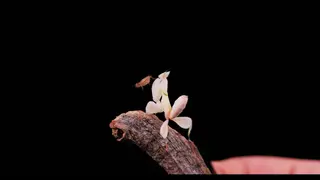
Ghost Mantis: The best "first exotic mantis." Leaf-mimicking camouflage, low cannibalism, and tolerant of typical room conditions. Long-lived for a mantis. African Twig Mantis: If you've never kept a mantis, start here. Bark-textured camouflage, will chase its food, tolerates dry indoor air, and females live close to a year. The forgiving exotic. Both are visually striking in completely different ways — check the photos above and the product pages for gallery images.
Best For
Both species are rated beginner-level. Your choice comes down to what you want from the animal — appearance, size, lifespan, and personality differ significantly. Both species are captive-bred at our facility in Las Vegas and ship with a live arrival guarantee on Priority Overnight.
Ghost Mantis
The best "first exotic mantis." Leaf-mimicking camouflage, low cannibalism, and tolerant of typical room conditions. Long-lived for a mantis.
African Twig Mantis
If you've never kept a mantis, start here. Bark-textured camouflage, will chase its food, tolerates dry indoor air, and females live close to a year. The forgiving exotic.