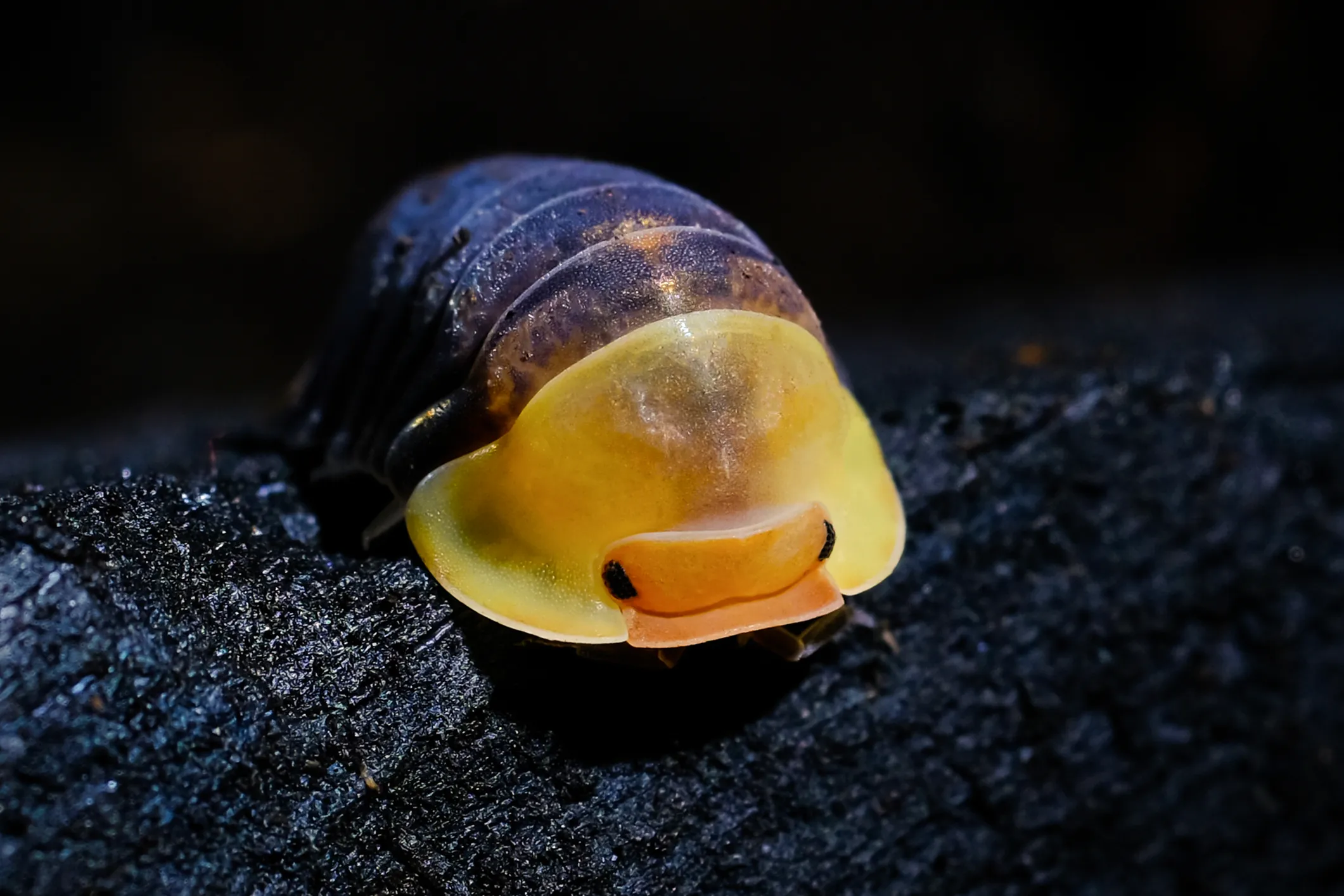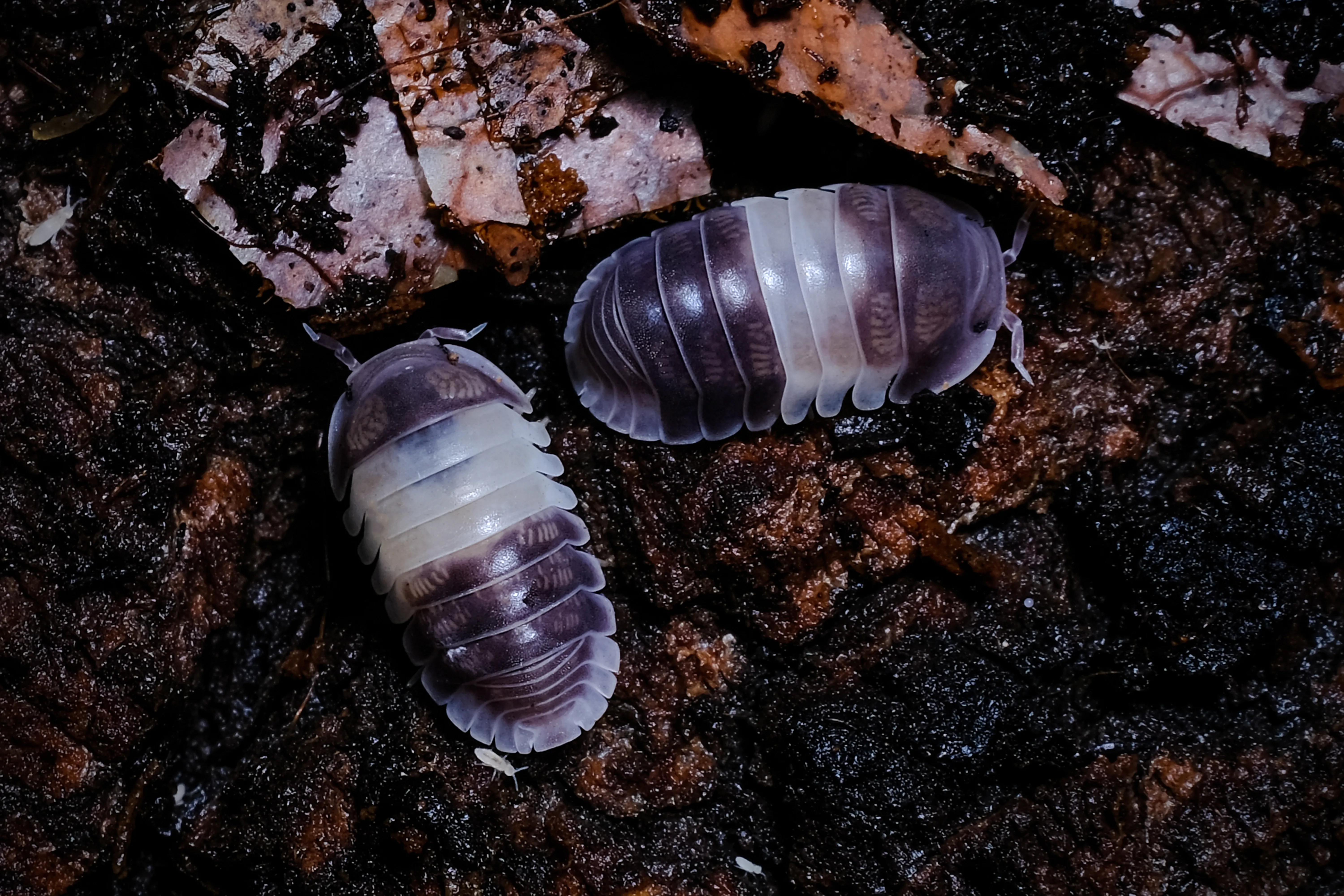
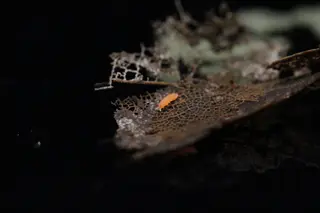


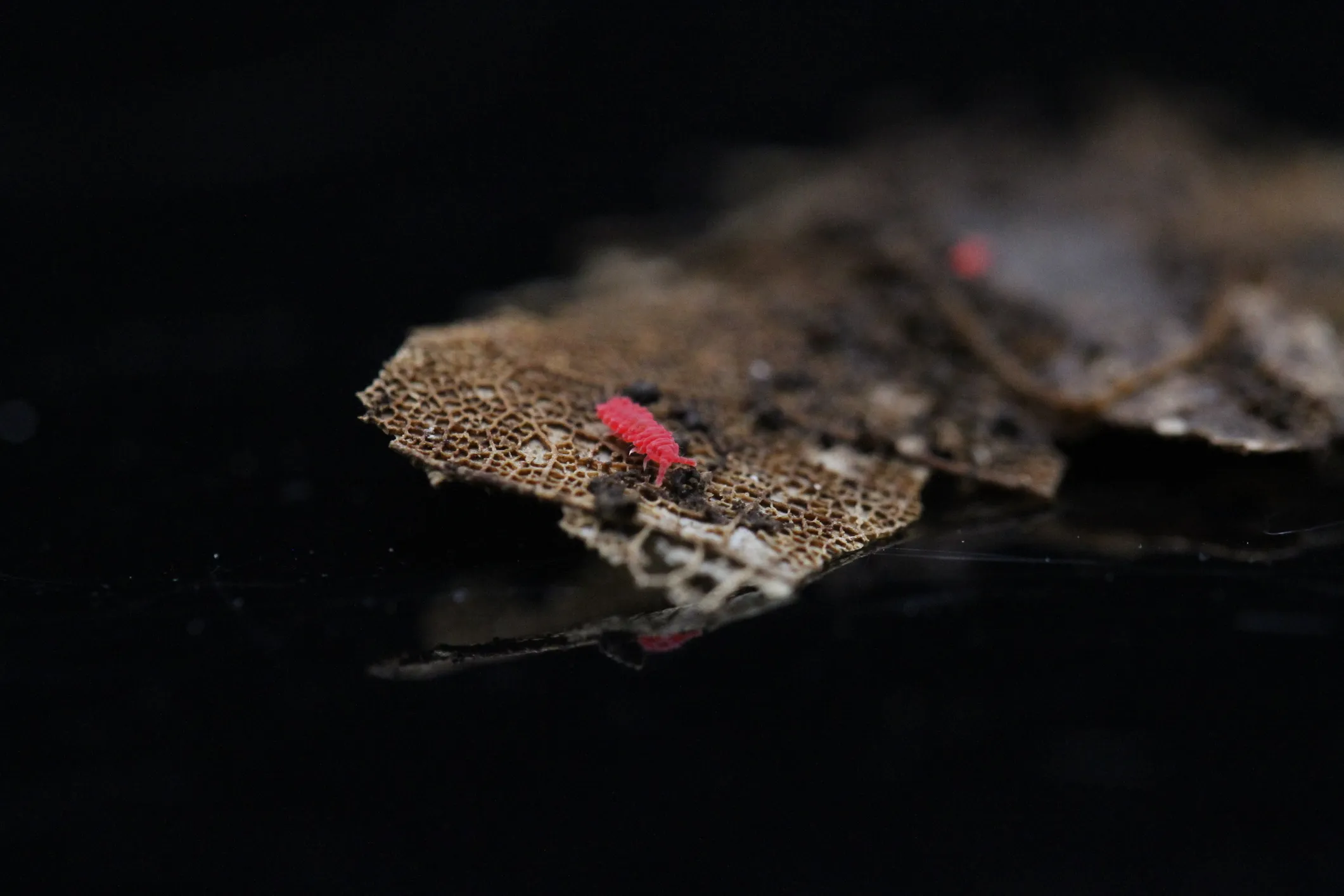
The springtail you can actually see. Lobella sp. from Thailand is a distinct red-orange rather than the usual white, which makes it the one springtail people keep for looks as much as for function.
That comes with trade-offs. Thai Reds are slower and fussier about temperature than Tropical Whites, which is why the whites remain the right answer for a working cleanup crew and these are better thought of as a display culture.
What You’re Buying
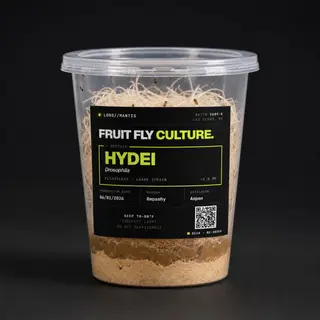
A live producing culture: moist media, an established population, and a food source. As with any springtail, the count is an estimate; the culture is the product.
What They Do
The same job as any springtail (grazing mould, fungus and decaying matter), just more slowly and more visibly. In a pale-substrate display vivarium a Thai Red population is genuinely part of the look.
Like all springtails, they are not feeders. Too small to interest a mantis nymph. Buy fruit flies for feeding.
Keeping the Culture Going
Narrower comfort band than the whites, roughly 68–78 °F, and they notice heat. Otherwise the rules are the same and the failure modes are the same: never let the medium dry out, and feed sparingly, because over-feeding sours the medium and invites mites far more often than under-feeding causes problems.
Split every couple of months to keep a culture producing indefinitely. Method, media options, and harvesting are all in the springtail culture care guide.
Because they’re slower to bounce back than Tropical Whites, splitting before you need to matters more here. A Thai Red culture that gets harvested hard and never split takes a long time to recover.
Frequently Asked Questions
Are Thai Red springtails good for a cleanup crew?
They work, but Tropical Whites work better: faster, hardier, and cheaper. Buy Thai Reds because you want to see them.
Can I keep Thai Reds and Tropical Whites together?
You can, but the whites breed faster and will dominate a shared culture within a few months. Keep the Thai Reds separate if you want them to stay Thai Reds.
Do they need different care?
Same fundamentals: moist medium, light feeding, regular splitting. The differences are a narrower temperature range and less tolerance for being over-harvested.
Do springtails bite or carry disease?
No to both. They have no mouthparts that affect people and are not parasites.
How long does a culture last?
Indefinitely, if it’s kept moist, fed lightly, and split occasionally. Cultures die from drying out or over-feeding, not old age.