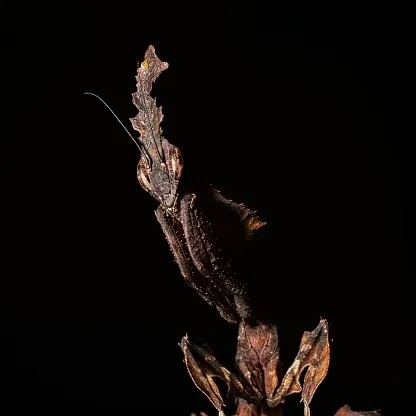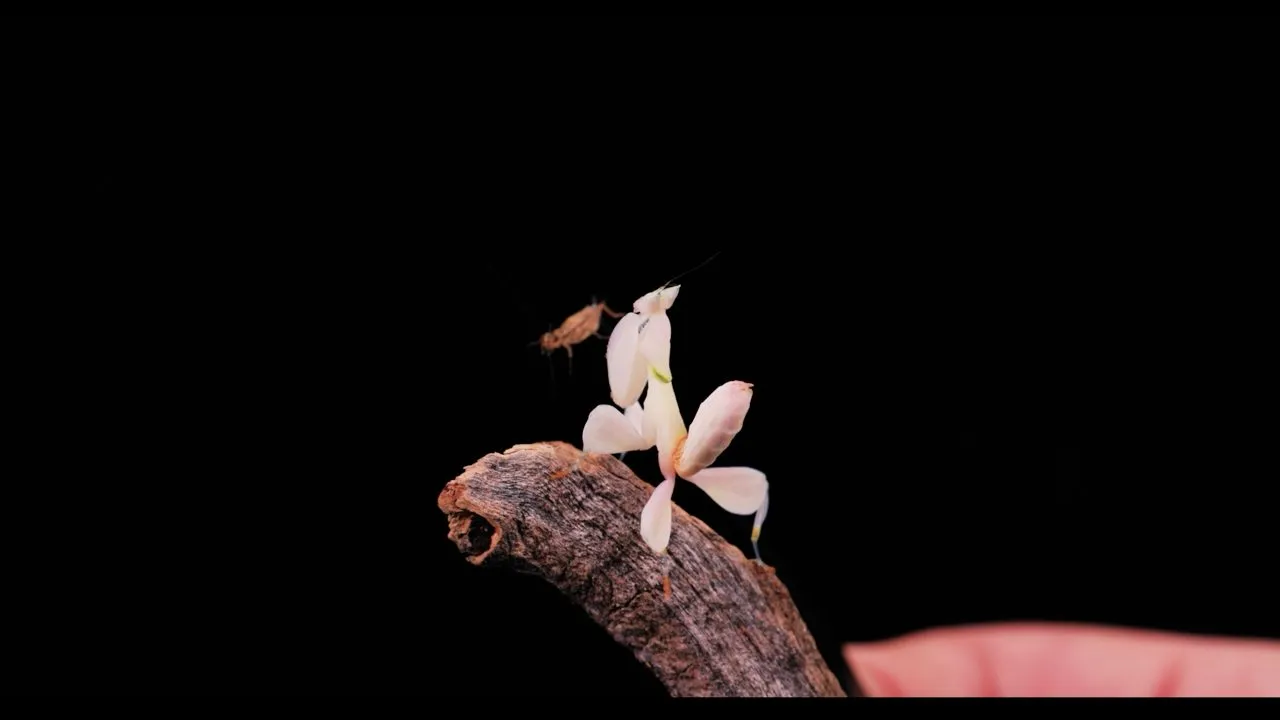


I breed praying mantises in a small dedicated facility in Las Vegas, and every animal we sell came out of that room. This is how it actually works, start to finish. Not the clean version. The real one, with the cannibalism, the culling, and the reason batches are small.
Why captive breeding matters
You can buy a wild-caught mantis. I don’t recommend it, and I don’t sell them.
Wild-caught animals arrive stressed from collection and transit. Many are already mature, which means you’re buying the last few months of an animal’s life without knowing it. Some carry parasites, mites, or pesticide residue from wherever they were grabbed. You don’t know the age, you don’t know the history, and you don’t know what’s wrong until it dies early.
Captive-bred is the opposite, and I go deeper on that tradeoff in the praying mantis buying guide. I know the parents. I know the hatch date. I know exactly what every nymph has eaten since it emerged. When I ship you a nymph, I can tell you its instar, its age in days, and what it’ll need next. That’s not marketing. That’s just what breeding under your own roof gives you.
The realities of pairing mantises
Breeding starts with pairing, and pairing mantises is a fight you have to manage, because the female will eat the male if you let her.
Sexual cannibalism is real and it’s routine, not rare. The female is bigger, she’s hardwired to treat moving things as prey, and a male climbing onto her back is a moving thing. My job is to stack the odds.
Well-fed female first. I feed the female heavily for days before any introduction. A full female is a calmer female. A hungry one is a predator looking at lunch.
An escape room, literally. I pair in a large enclosure with plenty of cover and vertical space so the male has somewhere to bolt. Cramped quarters get males killed.
Supervision. I don’t introduce a pair and walk away. I watch. If the female swivels on the male or lunges, I intervene. Some species are far worse than others. Double Shield, for example, is brutal enough that I plan around losing males. Ghost mantises are far more relaxed about the whole thing.
Even with all of that, you lose males sometimes. It’s part of the deal. The successful pairings are the ones where the male connects, disengages, and gets clear before the female decides he’s done being useful.
Ooth production and incubation
A successfully mated female starts laying oothecae a couple of weeks later. Each ootheca is that hardened foam case packed with eggs, and a single healthy female can produce several over her adult life.
The oothecae go onto a rack in the bug room. Vegas is the wrong climate for this naturally. It’s bone dry here, so the whole room runs on controlled heat and humidity, not on what’s happening outside. I hold incubating ooths warm and lightly humid, misting the surfaces around them, never soaking the case itself. Too wet and mold takes the brood. Too dry and the nymphs can’t emerge.
Then I wait. From a tropical species ooth, incubation usually runs 4 to 10 weeks depending on the species and how warm I run them, with Ghost and Orchid ooths usually on the shorter end (4 to 6 weeks) and Double Shield on the longer. I label every case with the species and the date it was laid so I know roughly when each one is due, because once they go, they go fast.
Hatch day chaos
Hatch day is the most intense day in the cycle, and it’s never quite on schedule.
A case sits dormant for weeks, and then one morning there are nymphs hanging off it in clusters, dropping on threads, molting into their first mobile instar, and immediately starting to wander. From one ooth that’s potentially a hundred-plus L1s, all at once, all hungry, all looking for the exit and for something to grab.
This is why the room is built the way it’s built. Fine mesh on everything, because L1 nymphs are thinner than a sewing needle and will walk straight through normal screen. Live food staged and ready, because a brood with nothing to eat by day two is a dead brood. I’m not improvising on hatch day. Everything’s prepped before the case ever opens.
Raising hundreds of L1s
This is the grind nobody outside the hobby sees. A fresh brood of L1s needs feeding constantly, and they only eat live, moving prey small enough to handle.
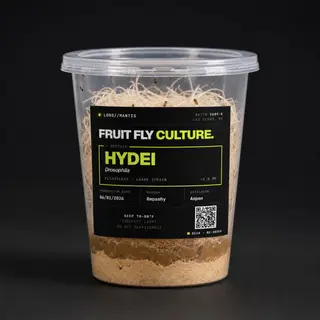
Fruit flies, by the culture. L1s eat flightless Drosophila melanogaster. A single brood burns through hundreds of flies a week, so I keep cultures rotating on a schedule, always staying ahead of demand. Run out of flies mid-brood and you lose animals. As they grow I step them up to the larger Hydei fruit flies, then to houseflies and bigger prey as the instars climb.
Separation. Within the first days, the brood has to come apart. Mantises housed together eat each other. One mantis per enclosure; the Ghost Mantis is the only species we’d group long-term, and only as nymphs. So hundreds of nymphs get moved into individual deli cups, one animal per cup, lined up on the racks. Paper towel, a perch, a cup. Hundreds of them. This is the labor that makes or breaks a batch, and it’s most of what I’m actually doing in that room.
Culling, honestly. Not every nymph makes it, and not every nymph should. Some hatch weak, some have a bad first molt, some just don’t thrive. I don’t ship those. Part of breeding responsibly is selecting for the strong animals and not passing along the ones that were never going to do well in someone’s home. I’d rather you never see them than have one die on you in week two.
Why batches are small
Here’s the part that frustrates some customers, so I want to be straight about it.
Our batches are small because they’re real. A drop is however many healthy nymphs came out of an actual round of breeding and survived the early instars in good shape. It’s not a number I pick to look impressive. It’s what the animals gave me.
When a species sells out, it’s out. I won’t fake-restock. I won’t relist an animal that isn’t sitting in a cup on my rack right now. That means a given drop sometimes has a species you wanted and sometimes doesn’t, and I know that’s annoying. But the alternative is selling you something I don’t actually have, or rushing a brood to market before it’s ready, and I won’t do either. When the shop says sold out, it means I’m back in the room raising the next batch. Stock is released in periodic drops; new stock ships on the next ship day, Monday or Tuesday. Watch the shop, or take the quiz so you know what you’re waiting for.
What “captive-bred” actually guarantees you
When you buy a captive-bred nymph from us, here’s what you’re actually getting.
A known age and a known instar, because I logged the hatch. An animal that has eaten well and consistently since the day it emerged. A nymph that already cleared the most fragile, highest-loss stage of life under controlled conditions, not in a stranger’s backyard. No parasites carried in from the wild. No mystery clock counting down because it was already an adult when someone caught it.
You’re also getting an animal backed by a real Live Arrival Guarantee: on Priority Overnight orders, with a continuous unboxing video and a claim filed within 24 hours of unboxing, we replace a DOA, or refund the animal’s price if we can’t restock soon. We ship every Monday and Tuesday with an 8 AM Pacific cutoff (order after that and it rolls to the next ship day), and when the forecast dips to 40°F or lower, or climbs to 90°F or higher, we don’t just send it anyway: heat re-routes the overnight box to a staffed FedEx counter for pickup, cold adds a free heat pack, and only severe weather or a carrier alert holds the order outright, because cooking or freezing an animal in transit is the opposite of everything above.
That’s the whole point of doing this by hand in one room. Every choice, from the well-fed female to the individual cups to the culling, exists so the animal that lands on your doorstep is a clean, healthy start. Not a gamble.
If you’re new, start with getting started and the beginner species guide, and read up on what to do the day your mantis lands in the shipping and arrival guide. When you’re ready, the shop shows exactly what’s hatched and available right now.
Frequently Asked Questions
Do you sell praying mantis egg cases?
No. I don’t sell oothecae and I don’t plan to (if you want to hatch one yourself, our egg case guide walks through why it is the hardest stage). Hatching an egg case is the hardest, highest-loss stage in the entire life cycle, and handing a beginner an ootheca is handing them the worst version of this hobby. I do that work in the bug room and sell established young nymphs past the hatchling stage (the exact stage varies with each hatch) that have already cleared it.
How do you keep the female from eating the male during breeding?
I stack the odds: feed the female heavily for days first so she’s not hunting, pair in a large enclosure with lots of cover so the male can escape, and supervise the introduction instead of walking away. Even then you lose males sometimes. Sexual cannibalism is normal in mantises, not a fluke, and managing it is most of what pairing is.
Why do you release mantises in drops?
Because the batches are real. A drop is however many healthy nymphs an actual round of breeding produced and raised through the fragile early instars. When a species is gone, it’s gone, and I won’t fake-restock or relist animals I don’t physically have. Sold out means I’m back in the room raising the next batch.
Is a captive-bred mantis really better than a wild-caught one?
Yes, and it’s not close. Wild-caught animals arrive stressed, are often already mature (so you’re buying the end of their life), and can carry parasites or pesticide exposure. A captive-bred nymph comes with a known age, a known feeding history, no wild parasites, and a full life ahead of it.
Why is your bug room in Las Vegas if mantises like humidity?
Because the room is climate-controlled, not the city. Vegas is dry, which actually keeps mold down, and I run controlled heat and humidity inside the enclosures and incubation racks regardless of what’s happening outside. The desert climate is a feature for the parts of breeding where dryness helps and a non-issue for the rest, because I’m managing the microclimate, not the weather.