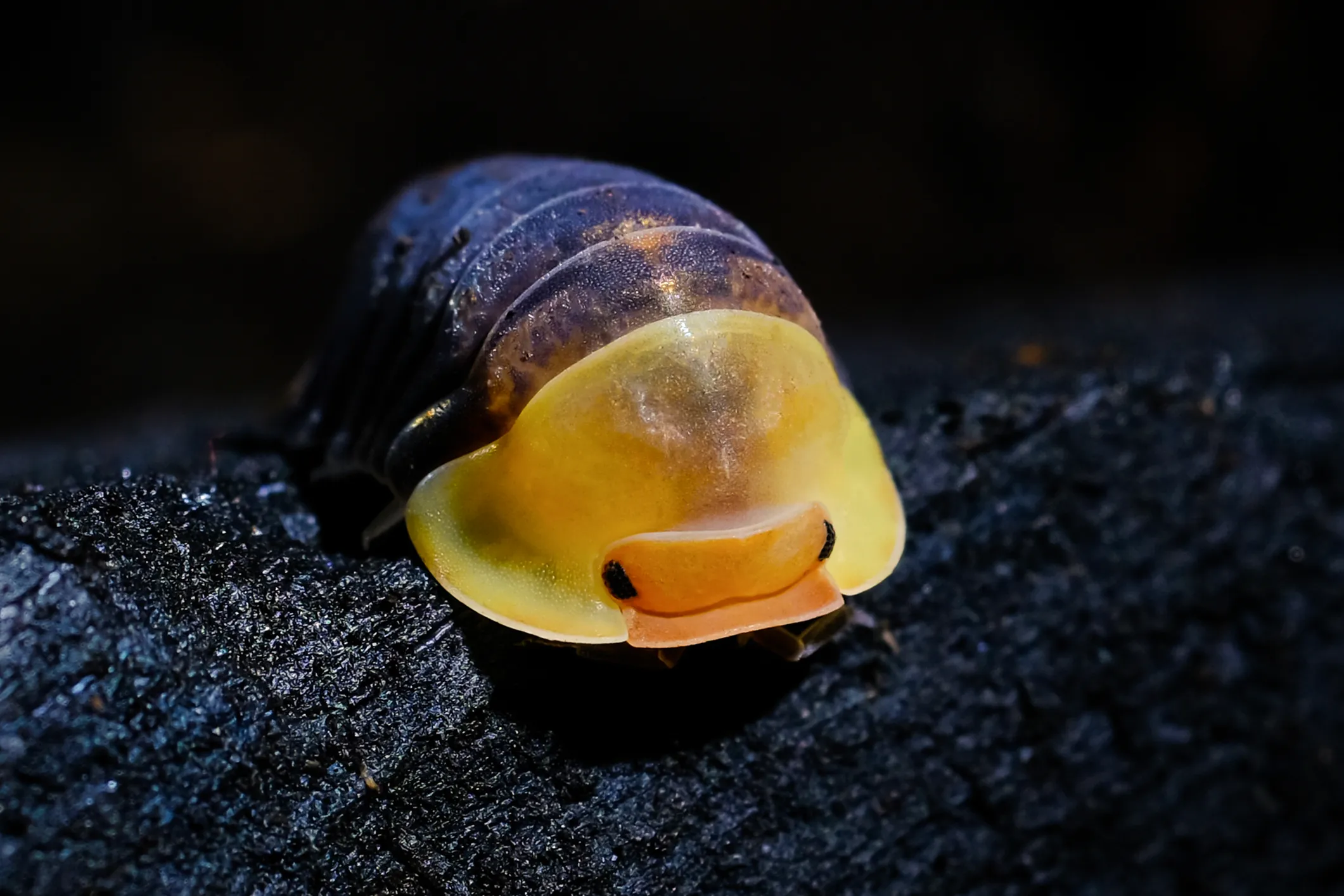
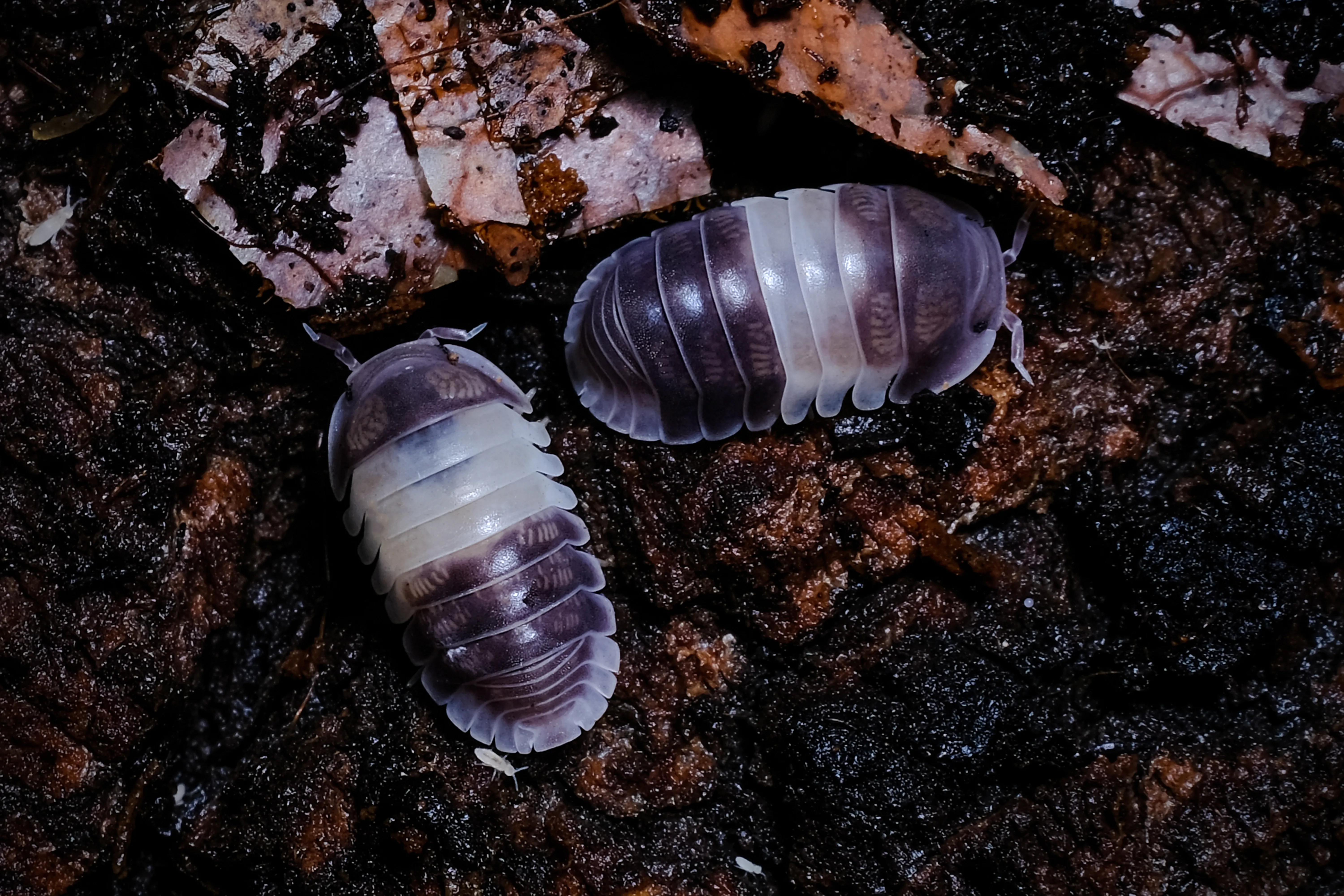
What You Bought
An isopod culture is a colony, not a pet. What arrives is a vented container holding damp substrate, a piece of leaf litter or cork bark, and a starting count of live isopods — usually somewhere between six and twenty-five depending on the species and the tier you ordered.
That count is a starting population, not a finished one. A healthy culture roughly doubles on its own schedule, and the whole point of buying isopods is that you should never need to buy them twice. Your job for the first two months is to not kill the colony while it establishes.
Isopods are crustaceans — land-dwelling cousins of shrimp and crabs. They breathe through structures that need moisture to work. Almost every isopod problem traces back to that one fact.
What to Expect, Week by Week
Week 1 — you will not see them. Isopods hide. After shipping they will burrow into the substrate and stay there. This is the single most common panic email in the hobby, and it is almost always nothing. Do not dig through the substrate looking for them; you will crush animals and stress the rest.
Weeks 2–4 — night activity. Check with a red light or a phone light an hour after dark. You should see adults on the surface, on the underside of bark, or grazing on leaf litter.
First mancae. Baby isopods are called mancae, and they are tiny, pale, and slow. Seeing them is the signal that the colony has accepted the setup. Fast temperate species manage this in 4–10 weeks. Cubaris take far longer — realistically 3–6 months, and the premium cave morphs longer still.
A usable colony — one you can split or harvest from. For the common beginner species, 3–6 months. For Cubaris, plan on 12–18 months.
That gap is the single most important thing to understand before buying a cave species, and it’s the reason they cost what they do. You are not buying a cleanup crew that will populate a vivarium this year; you’re buying a slow-growing display colony. Anyone who tells you a Rubber Ducky culture will be producing in a few months is selling optimism.
Where to Keep It
Room temperature suits nearly every species sold in the hobby. The practical range is roughly 68–80°F, and the thing that matters more than the number is stability — a culture that swings twenty degrees a day does badly even if the average looks fine.
The numbers, by group:
| Group | Temperature | Humidity |
|---|---|---|
| Tropical — Cubaris (Rubber Ducky, Panda King, Bumble Bee, White Ducky), Cherry Blossom | 70–80°F | 75–85% |
| Temperate — Zebra, dairy cow, powder orange, giant canyon | 65–78°F | 60–75% |
| Arid / Mediterranean — Spiky Pineapple, desert species | 65–82°F | 40–70%, drier with one damp corner |
Tropicals are the demanding ones and they’re what most people come here for. Below about 65% they stop breeding, and a Cubaris colony held dry will dwindle rather than crash — which makes it easy to miss until the numbers are down.
What actually kills isopods is the extremes:
- Above ~90°F, a sealed cup becomes a hot box. Isopods cannot leave.
- Below ~65°F, tropical species stop breeding, and sustained cold below that will start killing them rather than just pausing production. Cubaris — Rubber Ducky, Panda King and the other cave species — are the least tolerant. Temperate species (dairy cows, powder oranges) shrug off a cool room; tropicals do not.
Keep the container out of direct sun and away from a heat vent or a window that gets afternoon light. In Las Vegas that mostly means “not on an exterior wall in summer.”
Humidity and the moisture gradient
Do not aim for one humidity number across the whole container. Build a gradient: dampen one half of the substrate, leave the other half barely moist, and let the animals choose. They will, constantly, and they are better at it than you are.
Tropical species — including Cubaris — want the damp side genuinely damp. Substrate should hold together when squeezed and release a drop or two of water, not run.
Ventilation
Ventilation and humidity fight each other, and both matter. Too little air and you get stagnant, mouldy substrate; too much and the culture dries out and the colony crashes quietly over a couple of weeks. Cross-ventilation near the top of the container, with damp substrate at the bottom, gives you both.
Substrate and Leaf Litter
Substrate is food, humidity buffer, and nursery at the same time. A workable mix:
- Base: coconut fibre or a peat-based, fertiliser-free soil
- Structure: decaying hardwood, cork bark, and a generous layer of dry leaf litter on top
- Calcium: cuttlebone, crushed eggshell, or limestone — non-negotiable. Isopods have a calcium-carbonate exoskeleton and must moult to grow. Without a calcium source you get failed moults and a colony that never establishes.
Depth of two to three inches on the damp side gives them somewhere to burrow and breed. Mancae live in the substrate, not on top of it.
Leaf litter is not decoration. For most species it is the primary food, and a culture with bare substrate and no litter is a culture you will be feeding constantly and still losing.
Feeding
Isopods are detritivores — they eat decaying plant matter. Leaf litter and rotting wood do most of the work. Supplement once or twice a week with small amounts of:
- Vegetable scraps — carrot, squash, cucumber, sweet potato
- A dedicated protein source, in small amounts
Remove anything that is not eaten within a couple of days. Uneaten wet food is where mould and grain mites start.
Should you feed fish flakes?
You will find this recommended constantly, and it is genuinely contested.
Several sellers list fish flakes as a standard protein source. Against that, Rubber Ducky Isopods — a US breeder — lists “Feeding Fish Flakes” under the most common causes of colony crashes, and states that fish flakes “tend to attract fungus gnats.”
Both camps are describing real experience. The likeliest reconciliation: fish flakes are protein-dense and go off fast, so a pinch that gets eaten in a day is fine and a scattering that sits in damp substrate for a week is a problem. If you feed them, feed a crumb and remove what’s left.
How Many Do I Need?
For seeding a bioactive enclosure, the practical starting counts:
| Enclosure | Isopods to start |
|---|---|
| Up to 10 gallons | 10–15 |
| 20 gallons | 15–25 |
| 40 gallons | 25–50 |
| 4×2×2 / 55+ gallons | 50+ |
Two things this table doesn’t say, and should:
More is faster, not better. A cleanup crew works once it has established, and establishment is a function of time and conditions, not of how many you dumped in on day one. Doubling the starting count buys you a few weeks, not a different outcome.
Seed the enclosure before the animal goes in, if you can — four to six weeks ahead. An isopod colony added to an enclosure that already has a hungry occupant may never get going.
Breeding and Splitting a Culture
Isopods breed on their own if the setup is right. There is no trick. The female carries eggs in a fluid-filled pouch on her underside called a marsupium, and mancae emerge from it already looking like tiny adults.
Once a culture is visibly producing, split it:
- Set up a second container the same way as the first.
- Move roughly a third of the substrate across — the substrate is the point. It carries mancae, microfauna, and established bacteria.
- Move a mixed group of adults, not just the big ones.
- Top both containers back up with fresh substrate and litter.
Splitting is also insurance. Two smaller colonies in two containers survive a mistake that would end one large one.
Troubleshooting
Why are my isopods hiding?
Because they are isopods. They are nocturnal and thigmotactic — they seek tight, dark, damp spaces. Check an hour after dark with a dim light. If you see activity then, nothing is wrong.
Why are my isopods not breeding?
In rough order of likelihood: not enough time; no calcium source; substrate too dry; not enough leaf litter; temperature too low; or the colony is too young — many species need to reach size before they reproduce at all.
Why are my isopods dying?
Check moisture first, at the bottom of the substrate rather than the surface. Then check ventilation, then check for uneaten food. Isopods die from drying out and from stagnant, fouled substrate far more often than from anything exotic.
There are tiny white things crawling in my culture.
Almost always grain mites or springtails, and almost always harmless. Both are signs of surplus moisture and surplus food. Cut back on feeding and increase ventilation slightly. Springtails in particular are a good sign — they compete with mould.
Can isopods climb glass?
Most cannot climb clean, dry, smooth glass or acrylic. They can and will climb silicone seams, condensation, mesh, and anything organic. A lid is not optional.
My culture looks dead.
Before you throw it out: sift a small amount of substrate onto a light-coloured surface and wait a minute. Isopods that appear absent are usually deep in the substrate. Most colonies that get discarded as “crashed” had animals in them.
Isopods vs Springtails — which do you need?
Not a competition. They do different jobs and most bioactive setups run both.
| Isopods | Springtails | |
|---|---|---|
| Eats | Leaf litter, decaying wood, waste | Mould, fungus, decaying matter |
| Size | Visible, 5–20mm | Nearly invisible, 1–3mm |
| Speed to establish | Weeks to months | Days to weeks |
| Handles a wet enclosure | Prefers a gradient | Thrives |
| Doubles as feeder | Some species | For very small animals only |
Springtails are the faster mould control. Isopods are the ones that process bulk waste. If you can only run one in a small, humid enclosure, run springtails.
Frequently Asked Questions
How long do isopods live?
Commonly quoted at one to three years depending on species, with tropical species generally on the longer end. A colony outlives its individuals — that is the whole point of buying one.
Do isopods need a heat mat?
Usually not. Room temperature works for nearly everything sold in the hobby, and a heat mat under a small container is a fast way to dry out or cook a colony. If your room genuinely sits below 65°F, warm the room rather than the container.
Can I keep different isopod species together?
Keep one isopod species per enclosure. The risk isn’t aggression — it’s that the faster-breeding species outcompetes the slower one until you’re left with a single-species culture anyway, and you can’t harvest cleanly or track what you have. The pairing that does work is isopods with springtails: different niches, no competition. Isopods with other isopods, no.
Will isopods hurt my mantis, gecko, or frog?
No. Isopods do not attack healthy animals. They process waste, shed skin, and uneaten food. They will scavenge something already dead, which is what you want them to do.
Do isopods smell?
A healthy culture smells like a forest floor — earthy, faintly sweet. A sour or ammonia smell means fouled substrate: too wet, too little ventilation, or too much uneaten food.
How often should I mist?
Only when the damp side stops being damp. Most keepers over-mist. Check by feel at substrate depth, not by looking at the surface.
What to Order Next
If you are setting up a bioactive enclosure, isopods are half the crew. Springtails handle mould and establish faster, and the two together are the standard combination.
Everything ships in the same box, so adding a culture to a mantis order costs nothing extra in shipping.