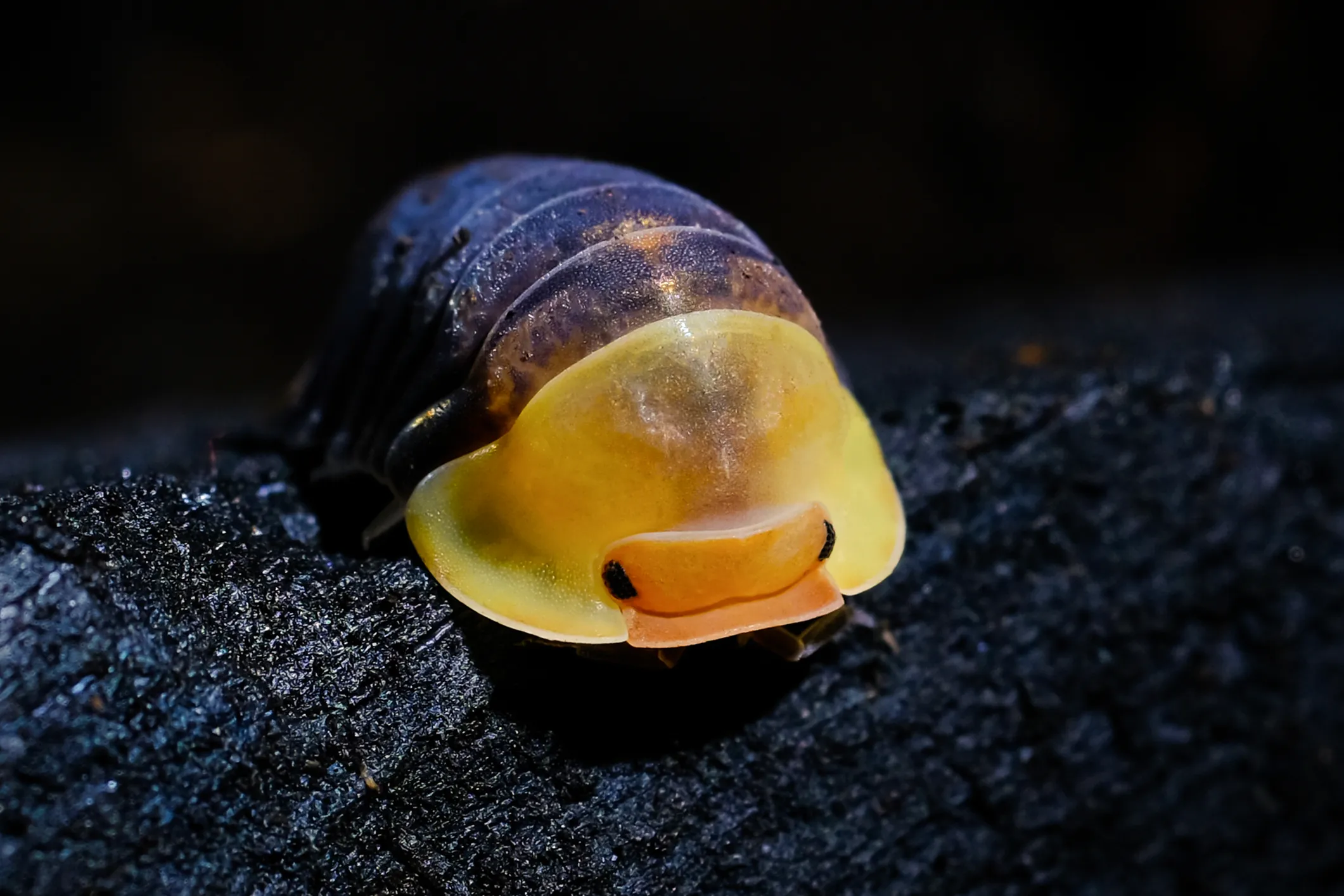
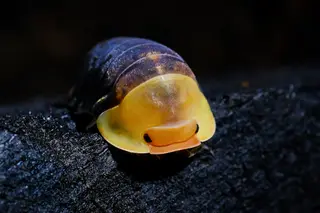



The banding is what sells it: Cubaris sp. “Bumblebee” carries bold black-and-yellow segments that make it one of the most photogenic isopods in the hobby. It’s a slow, deliberate tropical species kept as a living display, not a cleanup crew.
A note on the name: this is an undescribed Cubaris: the trade name “Bumblebee” is real, but there’s no published scientific species yet, so we list it honestly as Cubaris sp. rather than inventing a name for it.
What You’re Buying
A starter colony, not a single animal. Isopods are sold as a group because the colony is the unit that establishes and produces.
Like most Cubaris, Bumble Bees are a slow breeder, a colony that rewards a patient keeper and a stable setup. They’re a premium species, and you’re paying for the look, not the reproduction rate. Read the isopod care guide before yours lands.
Keeping Them
This is a tropical, humidity-loving species. Keep it warm and damp:
- High humidity with a moisture gradient: a consistently damp end and a drier retreat, roughly 70–85% overall.
- Deep substrate: they burrow, so give them 2–3 inches on the damp side.
- A calcium source: cuttlebone or crushed eggshell, for clean molts.
- Leaf litter and decaying hardwood as the diet base, with a small weekly protein.
- Ventilation so the humid setup stays fresh, not stagnant.
Full detail is in the isopod care guide.
Bumble Bee vs the Others
Bumble Bee sits with the other tropical Cubaris display colonies: Rubber Ducky, Panda King, Cherry Blossom, White Ducky. Same warm, humid regime, different look. If you want a hardier, temperate roller instead, Zebra is easier. For real vivarium cleanup, run springtails. New to bioactive? Start with the terrarium guide.
Frequently Asked Questions
Can I keep them with other isopods?
Keep them on their own. Mixing two isopod species means one out-competes the other and you drift toward a single-species culture anyway, and you can’t harvest cleanly. One species per enclosure.
Do they climb?
Yes. Like most Cubaris, they’ll climb a damp enclosure wall, so a secure lid matters. That also makes them a poor choice loose in an enclosure with a molting animal.
Are they a good cleanup crew?
Not really; they’re kept for looks and reproduce slowly. For actual mold and waste control, springtails do the job far faster.
Why is the scientific name in quotes?
Because it’s undescribed. “Bumblebee” is the established trade name, but no formal species has been published, so the honest label is Cubaris sp. “Bumblebee.”
How many do I get?
A starter colony sized to establish. Exact counts show on the variant when these go on sale. Join the waitlist to hear first.