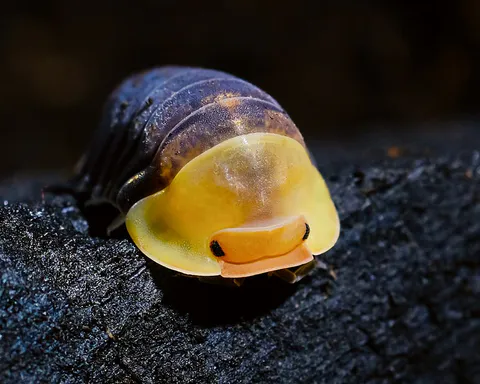


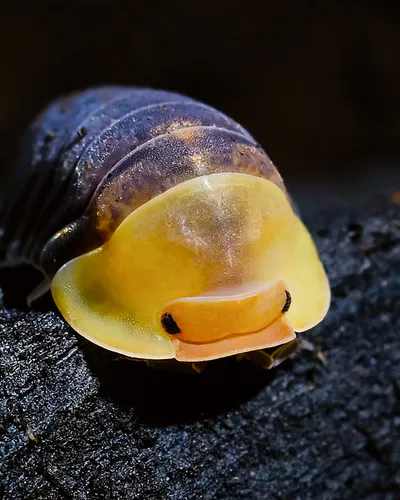
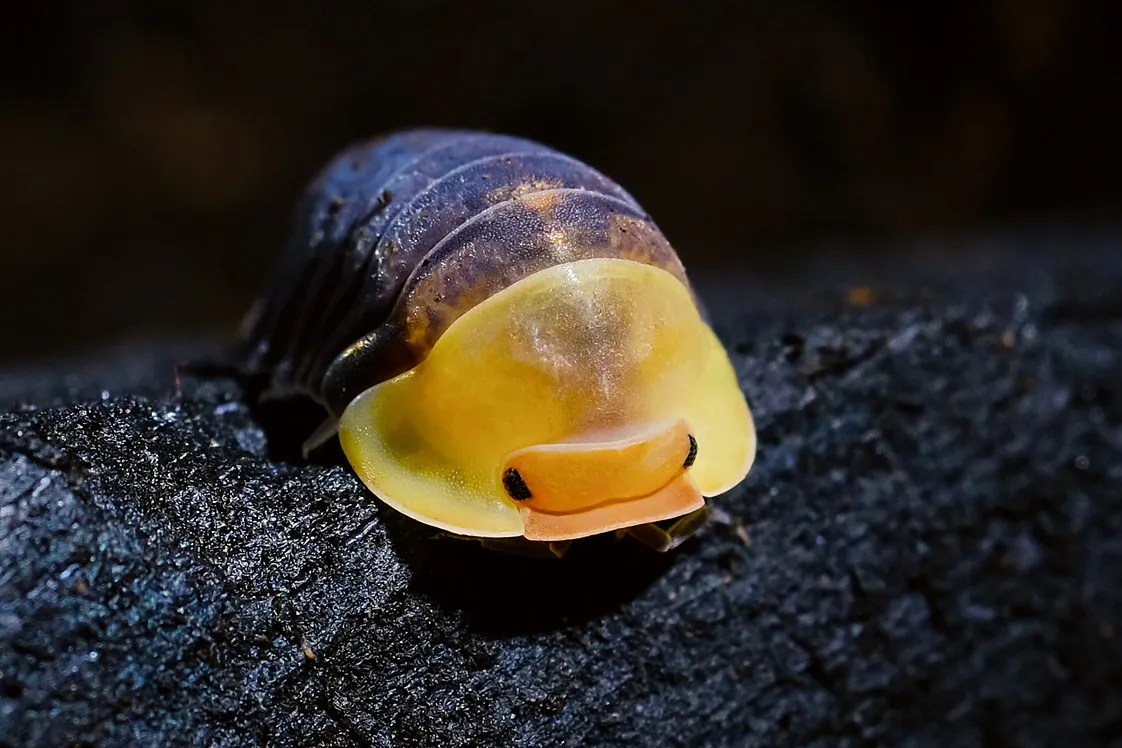
Rubber Ducky isopods are named for a pale face with dark eye spots that looks like a rubber duck’s. Sold as Cubaris sp. “Rubber Ducky” and reported from Thailand, adults reach 15–18 mm. They are easy to keep alive and slow to build: our rating is Beginner, and a new colony usually takes 3–6 months to show its first young.
Rubber Ducky isopod care at a glance
| Rubber Ducky | |
|---|---|
| Temperature | 70–80°F (21–27°C), held steady |
| Humidity and moisture | 70–85% at the damp end, which never dries out; a drier retreat at the other end |
| Substrate depth | 3 in (8 cm) or more |
| Adult size | 15–18 mm (about 0.6–0.7 in) |
| Breeding pace | Slow. First young usually 3–6 months after setup, in small broods |
| Lifespan | About 2–3 years, estimated by a keeper, a seller and a sanctuary, not measured |
| Difficulty | Beginner, our rating. Several sellers rate it intermediate, and one notes that colonies build slowly |
The Rubber Ducky is not Cubaris murina, the genus's type species (WoRMS), nor a color morph of Porcellio laevis or Armadillidium vulgare. Blonde Ducky and Pak Chong are sold as lines of their own (below); White Ducky, which most sellers sell as a white form of this line, has its own page.
What is a Rubber Ducky isopod?
A trade line in the genus Cubaris (family Armadillidae), not identified to species and thought to be undescribed. Smug Bug, a breeder, writes that it was placed in Cubaris hesitantly, without an official classification. Wikipedia calls Cubaris a wastebasket genus. It holds dozens of described species (60 in WoRMS), and none of them has been matched to this animal, so the name you buy it under may change.
Nearly every seller reports it from Thailand. Smug Bug says it was found covering the walls of limestone caves there, and Terrarium Tribe and Bugpets also describe a limestone cave habitat. No locality has been published, and MicroExotics, a UK seller, gives only Southeast Asia.
Adults are charcoal gray and banded, with a yellow head and yellow toward the tail.
Several trade lines carry Ducky names, and nobody has published which of them are one species. Invertebrate Dude, a keeper who blogs about both orange lines, separates Blond-ish, picked out of ordinary Rubber Ducky stock, from Blonde Ducky, said to come from another locality (more in the FAQ). Pak Chong and Red Pak Chong are sold as lines of their own, and Rubber Ducky Isopods, a US breeder, sells Red Pak Chong as a Rubber Ducky with a red face. The pale form is sold as White Ducky; its other names and its relation to this line are unresolved. One keeper’s dated colony on Arachnoboards, from two breeders, appeared to hold Blonde and Rubber Duckies together, so give each line its own tub if you want to know what it will produce.
Temperature, humidity and setup
The numbers below are this animal’s own, from sources about Rubber Duckies. Where its care matches other Cubaris, the shared setup is in the hub’s Cubaris care section.
| Rubber Ducky | What its sources say | |
|---|---|---|
| Temperature | 70–80°F, steady | Antderground and MicroExotics run 72–79°F (22–26°C); BCO Mushi and Pangea prefer 75–80°F (24–27°C) |
| Heat | Keep it under about 80°F (27°C) | No tested lethal temperature has been published |
| Humidity, damp end | 70–85% | Exuvium 70–80%, Insektenliebe 70–80%, Antderground 70–90%, Pangea 80–90%. Three of the four include 70–80%, and two go up to 90%; 70–85% is the working band. No source has tested a lower limit |
| Rest of the tub | Mostly moist, with a smaller drier retreat | Most sources agree; nobody has tested how big the drier area should be |
| Air | A few small vents on opposite or alternating sides | Pangea, Creature Cache, BCO Mushi; one keeper says a closed shoebox works (below) |
| Substrate | Organic soil with no fertilizer, rotting white hardwood, sphagnum at the wet end, ground limestone mixed through | Creature Cache, Pangea, Terrarium Tribe, Bugpets |
| Depth | 3 in or more | Creature Cache 3–4 in (8–10 cm); Rubber Ducky Isopods’ listing says at least 6 in (15 cm) |
| On top | Thick hardwood leaf litter, cork bark laid on the damp end | Burrowing and hiding are reported by most sources |
| Keep away from | Heat mats, direct sun, a sunny window | Dryness, heat and frequent disturbance are the sensitivities sources list |
What differs from other Cubaris
Most of the setup is shared. Two things are this animal’s own:
- Limestone named for this species. Bugpets and Terrarium Tribe both recommend it (see the feeding section).
- Deeper, says one breeder. Rubber Ducky Isopods' listing says at least 6 in, twice the shared minimum.
Shoebox or vents, easy or hard: where keepers split
Vented tub or closed shoebox
Most sources on this animal want moderate cross-ventilation. Pangea advises small holes on alternating sides, BCO Mushi puts a few small holes over the drier side, and Exuvium calls airflow critical. Against them, a 2020 Arachnoboards keeper wrote that they need very little ventilation and that a shoebox with no added holes will do. Furry Critter’s profile leans the same way: containers with minimal ventilation holes, it says, work well.
The likeliest reading: both camps are balancing a tub that dries against a tub that goes stale. A closed box holds water but needs watching for mold; a vented tub stays fresh but dries sooner. Start with a few small vents and adjust. If the damp end dries within a few days, tape over a vent. If the walls stay fogged and fuzz creeps over the litter, open one.
Easy or hard
Ratings run from very easy to hard. One Arachnoboards keeper called it one of the easiest, in 2020 and again in 2021, and another said bulky Cubaris are much hardier than people make out; a third had been told they suit experienced keepers better. Bugpets and Antderground say it needs relatively little care. Creature Cache, Isopod Shop and Tropical Isopods rate it intermediate, and MicroExotics gives it 3 of 5, “moderately easy”, noting that colonies establish slowly. Insektenliebe rates it hard, and Terrarium Tribe calls it challenging to breed.
The split follows the question. The easy camp means keeping adults alive; the hard camp means growing a colony. Our rating is Beginner; if you want a growing colony, plan on months.
What to feed them: limestone, leaf litter and a little protein
Calcium has to be in the tub at all times, because every molt rebuilds the shell from it. Two sources on this animal go further and name the form. Bugpets, a UK seller, names cuttlebone but recommends limestone for this species. Terrarium Tribe recommends limestone too, and says keepers add it to the substrate mix with good results; limestone is mostly calcium carbonate, the material of the exoskeleton. Formiculture’s genus guide notes that keepers argue over whether hard limestone chunks are any use; it sprinkles pelletized limestone on the soil and says cuttlebone or eggshell powder also works.
In the tub, that means crushed or ground limestone spread through the substrate, where they burrow, plus a piece of cuttlebone on the surface. If you buy garden lime, check that the bag says ground limestone or calcium carbonate. Hydrated lime and quicklime are caustic and do not belong in an isopod tub.
The rest of the diet is ordinary isopod food: hardwood leaf litter and rotting white wood make up most of it. Three details come from sources on this animal.
- Protein, a little. Once or twice a week; Furry Critter warns against overdoing it. Dog food, fish flakes and dried shrimp all appear in keepers’ and sellers’ notes.
- Vegetables are optional. Sources split on whether they eat them at all (see the FAQ). A small piece now and then, removed within a day, does no harm.
- Live moss may get eaten. A 2020 Arachnoboards poster had heard that they take live moss and some fungi, so a patch at the damp end may be food as well as cover.
Molting: why they vanish
Rubber Duckies molt like other isopods, in two halves, as the hub’s molting pillar shows. Sources on this animal add the part that catches new keepers out: Rubber Duckies go down into the substrate before and after a molt and can stay buried for long stretches, so a colony can seem to vanish. A freshly molted animal is soft, and digging for it is how it gets hurt.
How fast Rubber Duckies breed
- A dated keeper log on Arachnoboards. The thread opens on December 2, 2025. On February 7 the keeper described a colony of 15 from two breeders, feeding at night, with no young yet. On March 13, 2026, about 3.3 months after the first post, the keeper found the first babies, under 1 mm. In a post on April 25 the keeper reported another clutch of seven, found under the bark, and some dead older adults, put down to a group of mixed ages.
- A second keeper on Arachnoboards (2021). This keeper bought about a dozen animals in February and moved every one, counted, to a new tub three weeks later. Left alone until June, the old tub held six or more young, so they were born in those first three weeks and went unnoticed for months.
- Sellers and readers. Rubber Ducky Isopods and Creature Cache both say a new group takes a few months to get going, and BCO Mushi describes months of near silence first. Three readers under Terrarium Tribe’s guide report first young after 2 weeks, 2 months and 7 months.
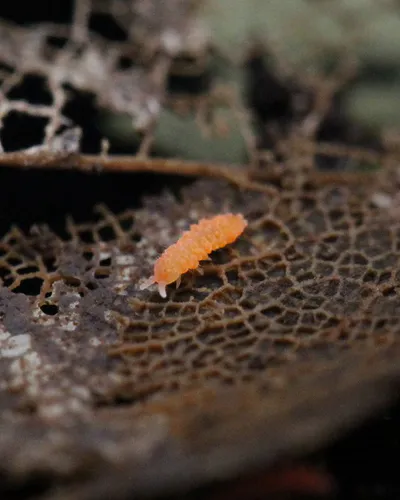
Sellers’ “a few months” and the dated log fit the usual 3–6 month window; some keepers have found young within weeks of arrival, others waited seven months. Broods are small: Rubber Ducky Isopods gives 1–10 per brood, and the dated log counted seven. Once settled, colonies are reported to breed year-round (Rubber Ducky Isopods, Creature Cache). Smug Bug gives a gestation of six weeks or more for Cubaris in general; nobody has published one for this line.
To check for young without digging, lift the bark at the damp end after dark, look, and put it straight back. The babies are pale and under 1 mm, so look closely.
Small broods are why the size of the founding group matters. Creature Cache treats about 20 or more adults as a settled, producing colony. Group sizes are on the Rubber Ducky starter colony page.
Problems: dry lower layers, buried molts and lost young
These are the failures sources on Rubber Duckies describe.
Frequently Asked Questions
Are Rubber Ducky isopods easy to care for?
They are easy to keep alive and slow to build into a colony. We rate them Beginner. A deep tub with a damp end that never dries, leaf litter and calcium covers what they need. Several sellers rate them intermediate; broods are small, and first young usually take 3–6 months.
How big do Rubber Ducky isopods get?
Adults are usually 15–18 mm long, about 0.6–0.7 in. Pangea and Rubber Ducky Isopods give 15 mm, Creature Cache 12–18 mm and Insektenliebe under 18 mm. Larger figures come from Terrarium Tribe and Antderground (about 2 cm) and Isopod Site (21 mm). MicroExotics, a UK seller, gives 10–12 mm, well below the rest.
How long do Rubber Ducky isopods live?
About 2–3 years, though that is an estimate. The figure comes from Alveus Sanctuary, Creature Cache and an Arachnoboards keeper, and none of them measured it. Furry Critter gives 3–5 years. In a healthy colony, older adults die off while young replace them, which is normal for a group of mixed ages.
How often do Rubber Ducky isopods reproduce?
First young usually appear 3–6 months after setup; one dated keeper log found the first babies about 3.3 months after it began. Other keepers report anything from a few weeks to seven months. Broods are small: Rubber Ducky Isopods, a US breeder, gives 1–10 per brood, and the same log counted a clutch of seven.
Do Rubber Ducky isopods eat vegetables?
They may, but don’t count on it. Terrarium Tribe says they show little interest in vegetable scraps, while BCO Mushi lists squash and zucchini, Antderground lists vegetables in small quantities and Insektenliebe lists vegetables among their foods. Their real diet is hardwood leaf litter and rotting white wood, with a little protein once or twice a week. Offer a small piece of vegetable now and then and take it out within a day.
Do Rubber Ducky isopods need limestone?
They need calcium, and limestone is the form two of their sources recommend (Bugpets and Terrarium Tribe). Cuttlebone, oyster shell and eggshell supply calcium too. If you use limestone, use crushed or ground calcium carbonate, never hydrated lime.
Where do Rubber Ducky isopods come from?
Thailand, by nearly every account. Smug Bug reports them from the walls of limestone caves there, and Terrarium Tribe and Bugpets also describe limestone caves. No exact locality has been published, and the animal has not been identified to species, so its scientific name is still Cubaris sp. “Rubber Ducky”. It is not Cubaris murina.
Is a Blonde Ducky the same as a Rubber Ducky?
Nobody knows yet. Blond-ish is an orange strain picked out of ordinary Rubber Ducky stock, and it does not yet breed true. Blonde Ducky is an orange line that breeds true, said to come from another locality, and Invertebrate Dude, who blogs about both, notes an open debate over whether it is the same species. No source gives it different care. Keep the lines in separate tubs if you want to know what you are breeding.
Why is my Rubber Ducky chalky and not moving?
It is most likely about to molt, or partway through one. Isopods look pale and patchy before a molt and shed in two halves, and Rubber Duckies often bury themselves around it. Leave it alone rather than digging it out. Then check the two things sources blame for failed molts in this animal: calcium in the tub, and a damp end that has not dried.
Sources
Care sheets and seller pages:
- Antderground, Cubaris sp. “Rubber Ducky”
- BCO Mushi, Rubber Ducky Isopod Care Guide (March 2026)
- Bugpets (UK), Rubber Ducky isopods
- Creature Cache, Rubber Ducky Isopod Care Guide (April 2026)
- Exuvium (Netherlands), Cubaris sp. “Rubber Ducky”
- Furry Critter Network, Rubber Ducky isopod profile and article
- Insektenliebe (Germany), Cubaris spec. “Rubber Ducky”
- Isopod Shop (US), Cubaris sp. “Rubber Ducky”
- MicroExotics (UK), Cubaris sp. “Rubber Ducky”
- Pangea Reptile (US), Cubaris sp. “Rubber Ducky” and Blonde Rubber Ducky
- Rubber Ducky Isopods (US breeder), Rubber Ducky and Red Pak Chong listings
- Terrarium Tribe, Rubber Ducky isopods guide and reader comments
- Tropical Isopods (US), Cubaris sp. “Rubber Ducky”
Keepers, breeders and other references:
- Arachnoboards, “Cubaris Sp. Rubber Ducky Care” (June 2020)
- Arachnoboards, “Cubaris sp. rubber ducky are a hardy species” (June 2021)
- Arachnoboards, “Cubaris sp Rubber Ducky”, a keeper’s log (December 2025 to April 2026)
- Invertebrate Dude, “Blonde & Blond-ish Rubber Duckies!” (November 2021)
- Smug Bug, “The Great Cubaris Dilemma” (October 2020)
- Formiculture, “The ultimate Cubaris guide: from the wild to captivity” (February 2025; genus-wide)
- Alveus Sanctuary, Ducky ambassador page
- Isopod Site, Cubaris sp. “Rubber Ducky”
Taxonomy:
- WoRMS (World List of Isopoda), Cubaris Brandt, 1833
- Wikipedia, Cubaris
Change log: October 2026: first published.
23 care sheets, seller pages and papers read for this guide (listed under Sources). Research and first drafts were prepared with AI tools.