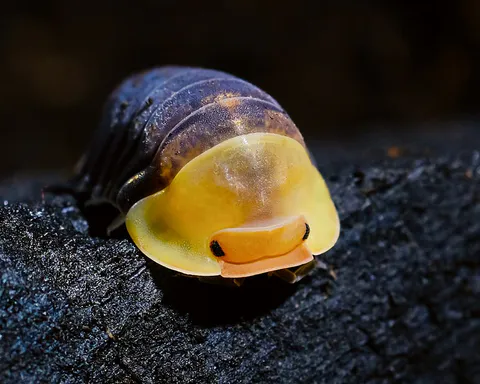


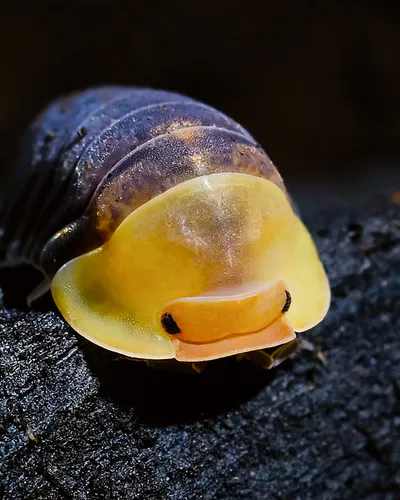
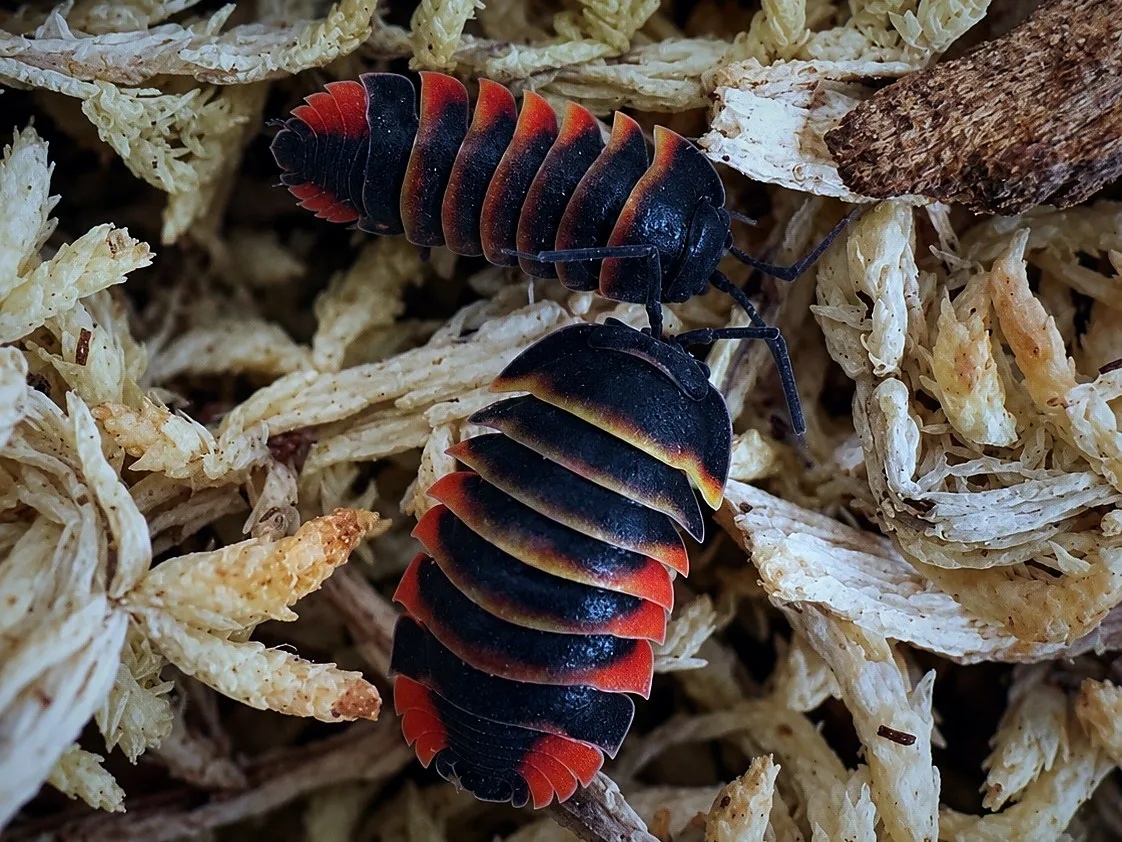
Black, banded in orange and yellow, and out in the open. Ardentiella sp. “Ember Bee” is the isopod people buy because they want to watch their isopods: it grazes, climbs and roams in daylight instead of hiding under bark for weeks.
It is also the most forgiving animal in its genus, which makes it the usual first Ardentiella.
A note on the name: you will still see these sold as Merulanella. The genus was split in 2025 and the Southeast Asian animals moved to Ardentiella. Same animal, newer name. The Ardentiella care guide explains the change.
What You’re Buying
A starter colony, not a single animal. The colony is what establishes and breeds.
Set the timeline before you order. Ardentiella are slow, deliberate breeders: months to the first brood and a year or more to a colony you can split. The care guide has the week-by-week.
Keeping Them
- Cool room temperature, 66–79 °F. The cool end is the safe end. No heat mat.
- Humidity about 60–80% as a gradient: one end damp, the other just moist. Drier than most Cubaris setups.
- Cross-ventilation: mesh on two opposite sides. Damp air that never moves is what kills this genus.
- A secure lid. They climb, and young ones can walk up plastic.
- Leaf litter, rotting hardwood and a calcium source as the base of the diet.
Full detail is in the Ardentiella care guide.
Ember Bee vs the Others
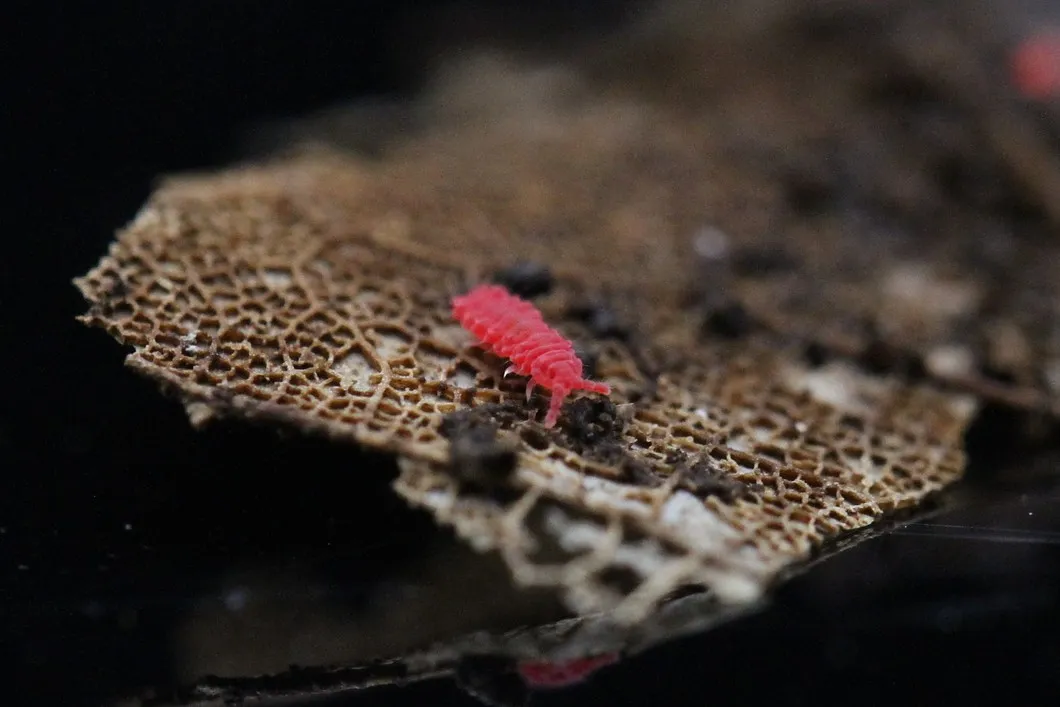
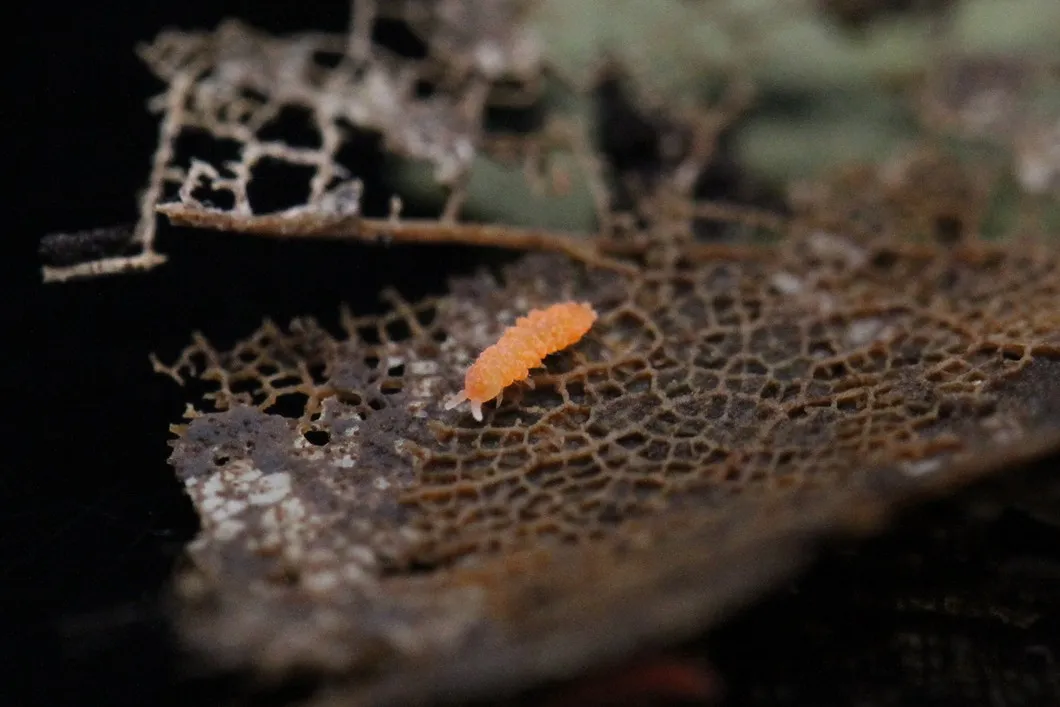
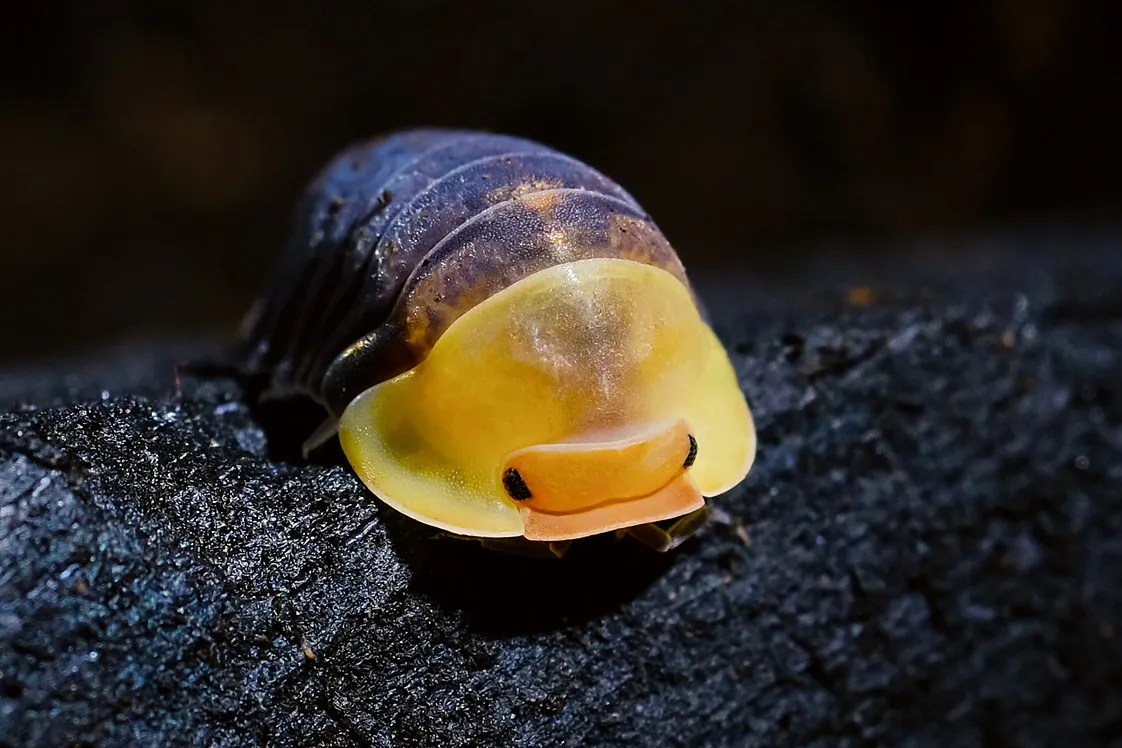
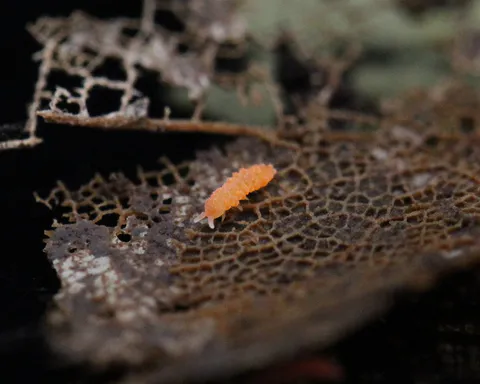
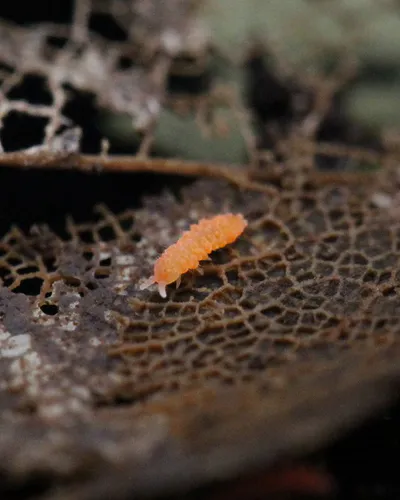
Ember Bee sits with Scarlet, Tricolor and Wing Wing, our other Ardentiella: same care, different color. If you want a burrowing tropical Cubaris instead, look at Rubber Ducky. For vivarium cleanup, run springtails.
Frequently Asked Questions
Is Ember Bee the same as Red Ember Bee?
Related, not the same. The standard Ember Bee carries yellow-orange banding. Red Ember Bee is a line selected toward red-on-black with little yellow. Care is identical.
Will I actually see them?
Usually, yes. Once settled, Ardentiella come out in daylight. If an established colony is never on the surface, check ventilation first.
Can I keep them with other isopods?
Keep them on their own. One species per enclosure is how you know which colony is producing.
How many do I get?
Pick a pack size on this page. Each is a group of mixed sizes, enough to establish.