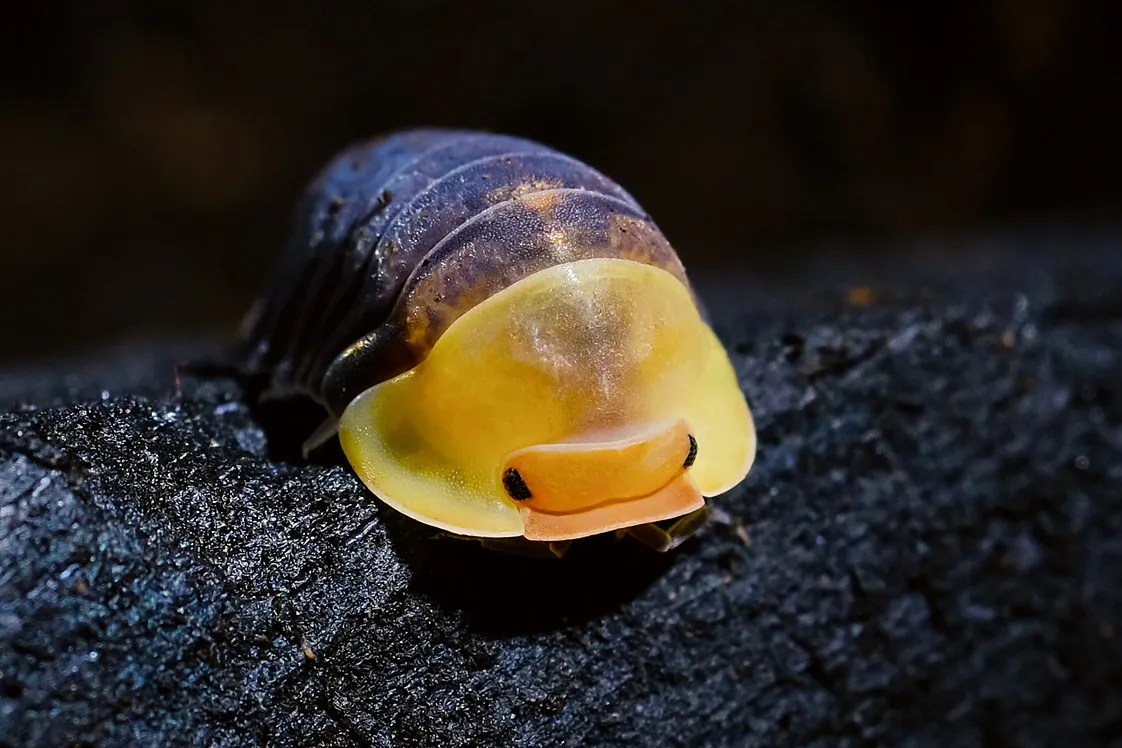
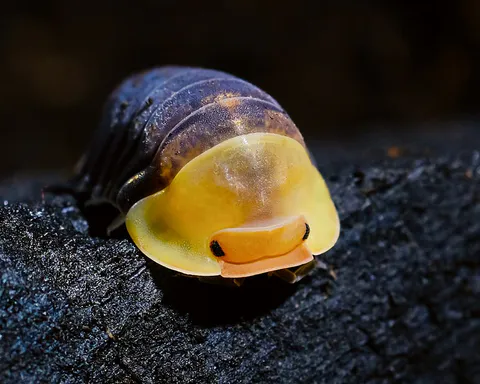


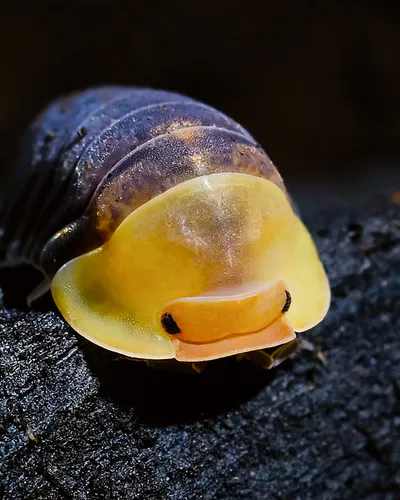
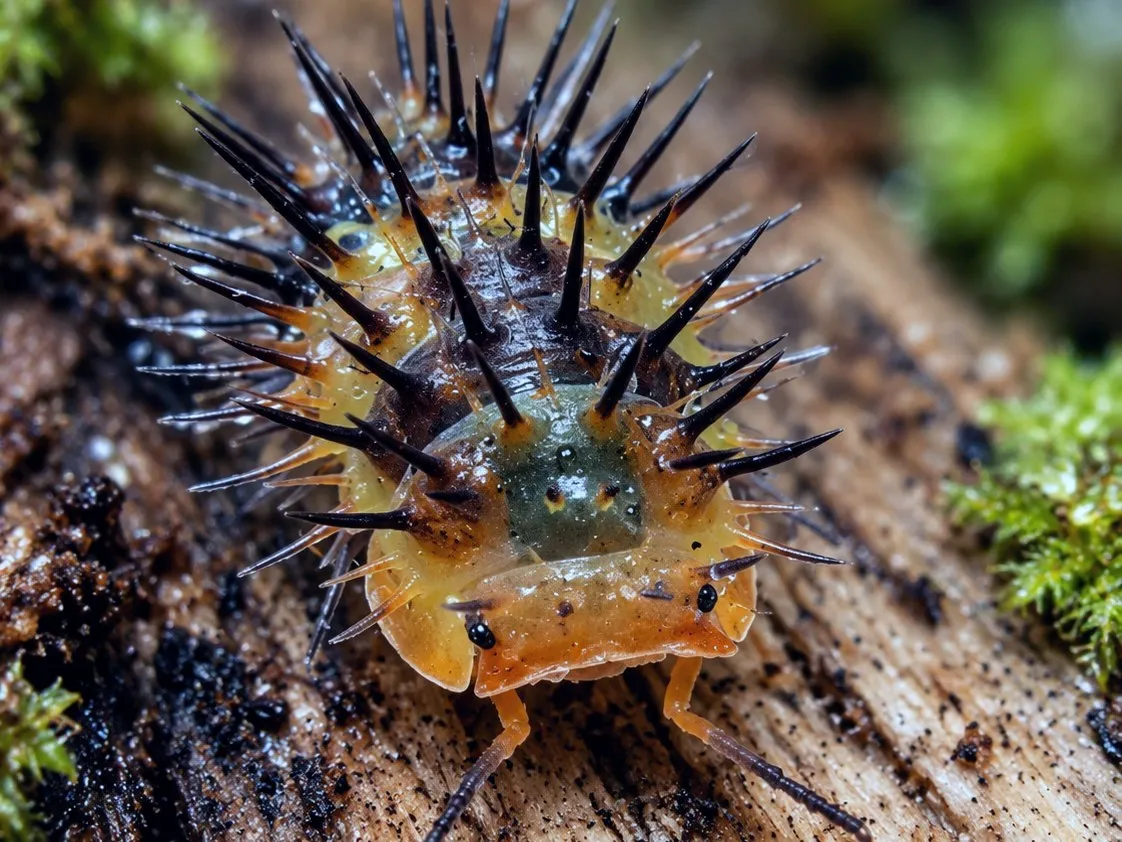
Amber, translucent and covered in long black-tipped spines. Laureola sp. “Durian” is named for the spiky fruit, and it is one of the strangest-looking isopods in the hobby.
It is also one you get to see. Durians climb rather than dig, so they spend their time on bark, wood and moss instead of under the substrate.
A note on the name: it has no species name yet. It is an undescribed Laureola from Vietnam that reached the hobby in 2024, and you may see it sold as “Durian Spiky”.
What You’re Buying
A starter colony, not a single animal. The colony is what establishes and breeds.
Durians are small, and the young are tiny. Expect months to the first young and patience before the colony fills out.
Keeping Them
- Warm room temperature, 72–80 °F.
- High humidity as a gradient: the damp end always damp, the other just moist.
- Airflow without drying out. Damp air that never moves is the danger, so ventilate, but keep the damp end damp.
- Things to climb: cork bark, rotting hardwood and moss stacked upright, not just a flat layer of substrate.
- Leaf litter, rotting hardwood and a calcium source as the base of the diet, with vegetables and a little protein once or twice a week.
Full detail is in the isopod care guide.
Durian vs the Others
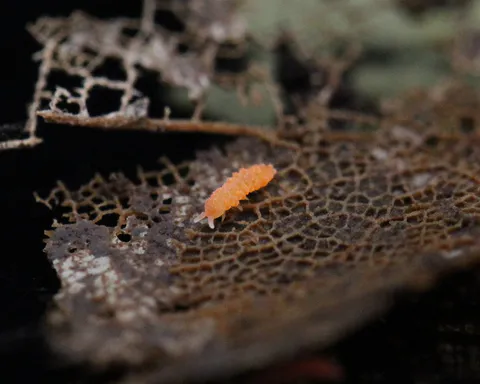
Durian is our only Laureola. For another textured shell, look at Frosty Gator or the drier-kept Spiky Pineapple. For a colorful isopod that is also out in daylight, see Ember Bee. For vivarium cleanup, run springtails.
Frequently Asked Questions
Will I actually see them?
Usually, yes. They climb and graze on bark and moss rather than burrowing, so the colony stays in view.
Are Durian isopods hard to keep?
Not day to day, but the balance matters: humid enough at the damp end, with enough airflow that the air never goes stale. Give them height to climb.
Can I keep them with other isopods?
Keep them on their own. One species per enclosure.
How many do I get?
Pick a pack size on this page. Each is a group of mixed sizes, enough to establish.